The driving force


Today, November 2nd, is traditionally the day that we remember those close to us who have died and gone before us

All men should strive to learn before they die,

what they are running from,

and to, and why.

James Thurber

In our darkest night

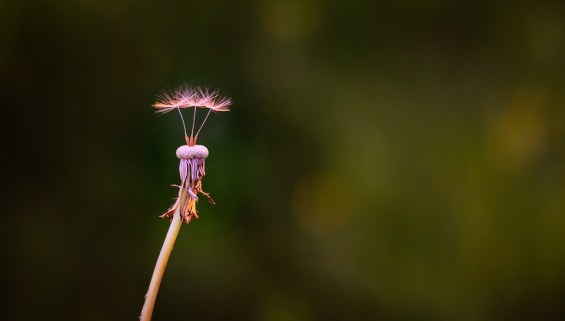
No seed ever sees the flower.

Zen saying

 November is the beginning of Winter in the Celtic Calendar and so today signals the beginning of the “darker half” of the year. The balance between light and darkness continues to shift. In the northern hemisphere the earth becomes colder and nature more dormant. Similar processes can occur in our lives. For example, we can choose to go with the rhythm of nature and become more reflective in this period, slowing down and simplifying things. Or our lives can have parts that seem dormant and not going anywhere. Or maybe difficulties are occurring which can seem dark and we see no escape.  However, darkness does not mean that nothing is happening.  I really like this saying from the Zen tradition – things that are now hidden or buried will eventually be seen or bear fruit.  That what is now just germinating will be full of life in time. As humans we like to see immediate results. However, for now, all we can do is wait and trust. Peace comes from knowing the right way to let go. 

Hold what is happening lightly

Just stay at the center of the circle,

and let all things take their course. 

Tao Te Ching

Sunday Quote: Kindness

Modern society prizes intelligence, achievements or efficiency…

What wisdom can you find

that is greater than kindness?

Jean-Jacques Rousseau

Quelle sagesse trouverez-vous supérieure à la bonté?

Where are you going?

We frequently get caught up in work, and identify with the pressing demands there, which pull us along and create a sense of great importance.

There is a story in Zen circles about a man and a horse. The horse is galloping quickly, and it appears that the man on the horse is going somewhere important. Another man standing alongside the road, shouts, “Where are you going?” and the first man replies, “I don’t know! Ask the horse!” This is also our story. We are riding a horse, we don’t know where we are going, and we can’t stop. The horse is our habit energy pulling us along, and we are powerless. We struggle all the time, even during our sleep. We are at war within ourselves…We have to learn the art of stopping – stopping our thinking, our habit energies, our forgetfulness, the strong emotions that rule us. 

 Thích Nhât Hanh, The Heart of the Buddhas Teaching

The place from which all other parts are named


It is always a trauma for the human psyche when those elements it has over-invested itself in at the periphery of life are withdrawn, and the spring-like world of growth and opportunity seems to close down, as if the old currencies have become worthless while we as yet do not know how to value or harvest the following season. But this form of trauma has also been seen by many of our great religious, contemplative and artistic traditions as an invitation back to another kind of valuation, a return to a more internal focus, an opportunity to revive an old friendship with the place from which all the peripheries are recognized, priced and named. This internal, alchemical, almost catalytic core of identity-making and decision-making has long been associated with the soul of an individual; the part of us attempting to belong to the world in the biggest way it can; the part that witnesses our outer actions, stirs our conscience and quite often seems to be at odds with those other parts of us trying to game the system at the periphery.

David Whyte