
If there is a sin against life, it consists perhaps not so much in despairing of life
as in hoping for another life
and in eluding the implacable grandeur of this life.
Albert Camus
photo Håkon Dahlmo
If there is a sin against life, it consists perhaps not so much in despairing of life
as in hoping for another life
and in eluding the implacable grandeur of this life.
Albert Camus
photo Håkon Dahlmo

[Thomas] Merton taught me the importance of looking at life not merely in terms of either-or, but also in terms of both-and. Paradoxical thinking is key to creativity, which comes from the capacity to entertain apparently contradictory ideas in a way that stretches the mind and opens the heart to something new. Paradox is also a way of being that’s key to wholeness, which does not mean perfection: it means embracing brokenness as an integral part of life…..To be whole I have to be able to say I am both shadow and light.
Parker Palmer, A Friendship, A Love, A Rescue
photo wabi-sabi tea bowl by ottmarliebert

As human beings we share a tendency to scramble for certainty whenever we realize that everything around us is in flux. In difficult times the stress of trying to find solid ground — something predictable to stand on — seems to intensify. But in truth, the very nature of our existence is forever in flux. Everything keeps changing, whether we’re aware of it or not.
Pema Chodron, The Fundamental Ambiguity of Being Human
photo USASOC news service
The beginning of love is the will to let those we love be perfectly themselves, the resolution not to twist them to fit our own image. If in loving them we do not love what they are, but only their potential likeness to ourselves, then we do not love them: we only love the reflection of ourselves we find in them.
Thomas Merton, No Man is an Island
photo paul stocker
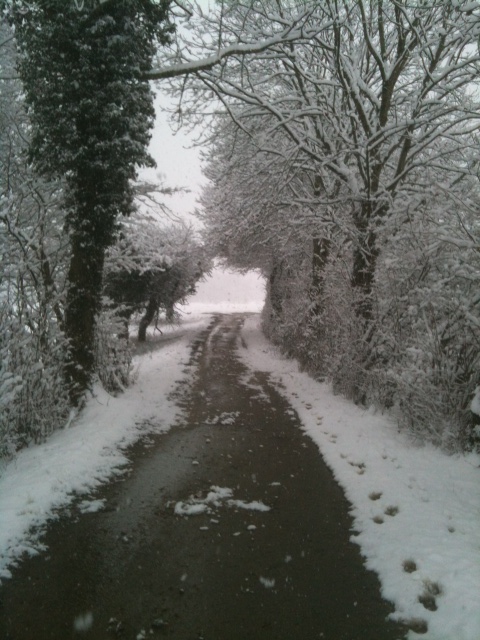
We had a wild, wet and windy Sunday, and snow early this morning, and we see the reports of very cold weather in the US and in Eastern Europe. Always a useful way to practice – we see that we like to label our experience (“bad weather today”) and it also prompts us to reflect on how we are working with the changing conditions in our inner lives and in each day. as this quote from Toni Parker reminds us:
We call it “weather” but what is it really? Wind. Rain. Clouds slowly parting. Not the words spoken about it, but just this darkening, blowing, pounding, wetting, and then lightening up, blue sky appearing amidst darkness, and sunshine sparkling on wet grasses and leaves. In a little while there will be frost, snow and ice-covers. And then warming again, melting, oozing water everywhere. On an early spring day the dirt road sparkles with streams of wet silver. So — what is “weather” other than this incessant change of earthly conditions and all the human thoughts, feelings, and undertakings influenced by it: Like and dislike. Depression and elation. Creation and destruction? No entity “weather” to be found except in thinking and talking about it.
Now — is there such an entity as “me,” “I,” “myself?” Or is it just like the “weather” — an ongoing, ever-changing stream of ideas, images, memories, projections, likes and dislikes, creations and destructions, which thought keeps calling “I,” “me,” “Toni,” and thereby solidifying what is evanescent? What am I really, truly, and what do I think and believe I am? Are we interested in exploring this amazing affair of “myself” from moment to moment?
Toni Parker, The Wonder of Presence and the Way of Meditative Inquiry

We pray for the big things
and forget to give thanks for the ordinary, small (and yet really not small) gifts
Dietrich Bonhoeffer, Life Together
photo maxo


