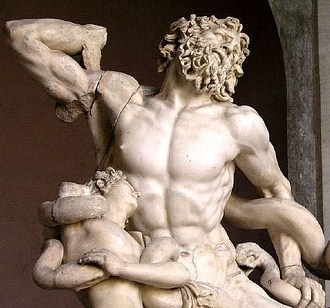
Don’t turn away. Keep your gaze on the bandaged place. That’s where the light enters you. Rumi
It is a bewildering thing in human life, that the thing that causes the greatest fear is the source of the greatest wisdom. Jung
Don’t turn away. Keep your gaze on the bandaged place. That’s where the light enters you. Rumi
It is a bewildering thing in human life, that the thing that causes the greatest fear is the source of the greatest wisdom. Jung
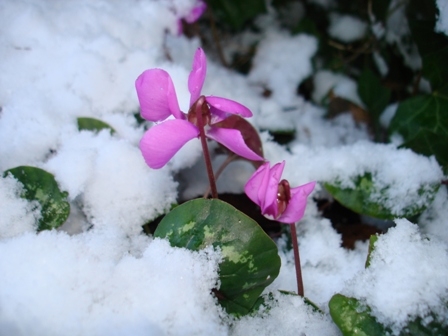 When we consider that Helen Keller was blind and deaf, her words on how to make the most of life are reminders to all of us to look beyond the difficulties that come our way each day. Her focus was on what she could do for others and on not what the thoughts in her mind or others’ minds said she could not do.
Join the great company of those who make the barren places of life fruitful with kindness. Your success and happiness lie within you. External conditions are the accidents of life, its outer wrappings. The great, enduring realities are love and service. Joy is the holy fire that keeps our purpose warm and our intelligence aglow. Resolve to keep happy, and your joy and you shall form an invincible host against difficulty.
Helen Keller
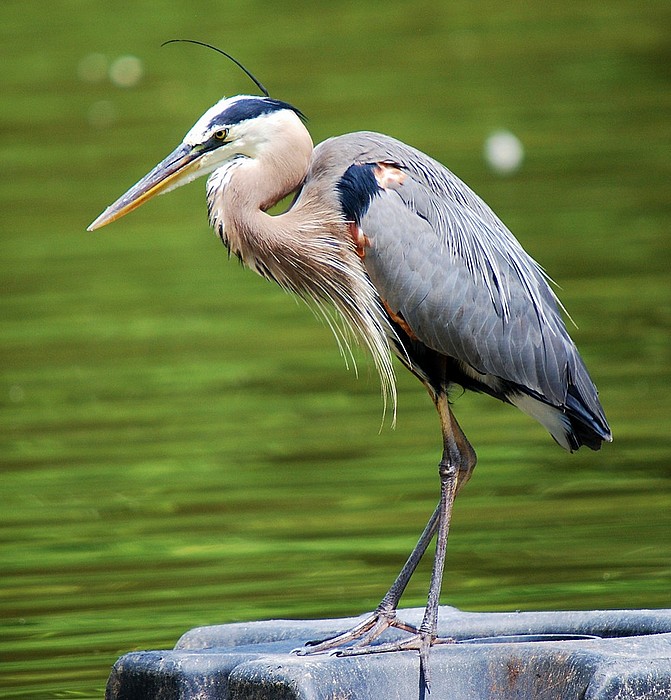 Judith sent me this beautiful poem, by a Canadian poet. Again, the action of a heron – this time its almost “monastic” stillness – confronts the poet and prompts reflections on how some moments contain everything:
A hunched grey shape
framed by leaves
with lake water behind
standing on our
little point of land
like a small monk
in a green monastery
meditating
almost sculpture
except that it’s alive
brooding immobile permanent
for half an hour
a blue heron
and it occurs to me
that if I were to die at this moment
that picture would accompany me
wherever I am going
for part of the way
Al Purdy, The last picture in the world
 Good and bad,
happy and sad,
all thoughts vanish into emptiness
like the imprint of a bird in the sky.
Chogyam Trunkpa Rinpoche
 Last night the first snow of this winter fell, and this morning awoke cold and grey. Just ten days ago we were having unusually warm and sunny autumn. The change feels sudden and even though it was clear that winter was on its way, it can leave us feeling surprised. Frequently things that happen outside of us have an impact on how we view life and the weather is no exception. In this way it becomes an interesting teacher and metaphor for us. We can learn about our mind seeing how it responds to something new. The most important thing is not the weather but to see that the change is mostly inside us and not in the world around us. Things, like the weather, are a given; happiness – or unhappiness – comes from our response to that given.
One thing that strikes me is that sudden change is not unusual and is frequent in nature. However, we tend to see it as an interruption and try and hold on to things remaining the same. We seem to instinctively be always plotting to make some moments last forever. The weather teaches us that no matter how much we wish or try to control things, tomorrow may not look the same as today. Some things will change or end. People move away; relationships end; airports are closed. We can work with these events when they happen. But for the moment all we have is today. We try and make living well, each moment, our focus.
The second thing that strikes me is that our moods can change as suddenly as the weather does. Sometimes our days can seem dark and bleak and cold. And that can seem very bad to us. However, maybe some low moods can be just natural changes or periods of calm. Maybe our psyche or soul has need of some rest, for its own good reasons. It may not always be a problem that needs to be fixed but rather a period of growth that has its own lessons. Just as the seeds are growing under the snow-covered soil this morning, things are coming to birth whether we notice it or not. Our instinct and modern society tells us to move away from low periods and that life is equated with movement. Nature reminds us that life is not always obvious growth, and does not always have to be bright. There is a time to be patient as we wait for new life to blossom forth.
One thing mi ndfulness practice encourages us to make space for what is going on in our life, notice it, and express it clearly and concretely. It is a good practice in working with what is going on inside us, as well as what is going on between us and others. Simply naming can be a first step in dealing with difficult situations, as was shown in two UCLA studies which looked at the practice of labeling emotion states .
Using functional magnetic resonance imaging (fMRI) to record brain activity, researcher Matthew Lieberman Ph.D, found that assigning names to negative emotions reduces the intensity of activity in the amygdala — the part of the brain that acts as an alarm system and sets off stress-related reactions. By simply putting a name on the distress, Lieberman says, you can wield more power over your amygdala’s activity. For example, when you attach the word ‘angry,’” he explains, “you see a decreased response in the amygdala”.
We are shown how to do this simple, gentle naming of experience in this poem by American writer David Budbill:
Say rather: Its a nice day. Pass the mashed potatoes please Look, there’s a chickadee. Your voice makes me swoon. Let’s plant the beans. I miss my dead mother so much today I want to touch your face. Clean up the mess! What’s better than a cool glass of water? I feel so sad, all I want to do is cry. What time is it? I want to touch you everywhere. Let’s go for a walk. Will you have tea with me? Let’s play some music. I dont want to die. Come visit again soon.David Budhill, Don’t Speak in the Abstract

