Travels outward and inward

It is no easy matter to stop short at just seeing.  Mahasi Sayadaw.

These days a lot of us are travelling, or on holidays, and come face to face with new environments or with sights of great beauty.  Breaks are good as they allow us discover a new gear between the full fast-forward at which life is normally conducted and full reverse – a kind of slowed-down,  steady pace of reflection and ease. However, sometimes the travel and the changes involved, or even seeing places of great beauty can trigger sadness or lead us into a sense of questioning or comparing the current state of our life and its history to date. This is maybe not surprising since all travel is perhaps related to our inner sense of “home”. So we notice that it is sometimes hard to just see things directly, without them setting off the continual chatter and commentary that accompanies our daily experience.  I once read Thomas Merton where he stated that he longed for some moments in which he was able to live a life without always examining it. It seems to me that we are all striving for that inner peace that allows us inhabit our lives without regret. To this end, the ascetic Bahiya came to the Buddha with the simple request – one which we all share  – to teach him the path that leads to happiness. The Buddha’s reply was incredibly simple and seems in some ways uninspiring : “When seeing, just see; when hearing, just hear; when knowing, just know; and when thinking, just think.”.  However, there is a great practical wisdom here that both points to the end result and is at the same time the method that leads to contentment. Real happiness can be learnt. It is related to the peace we get when we reduce the inner questioning and critical commentary, allowing us pay complete attention to whatever is before us, and thus live each moment fully, for what it is.

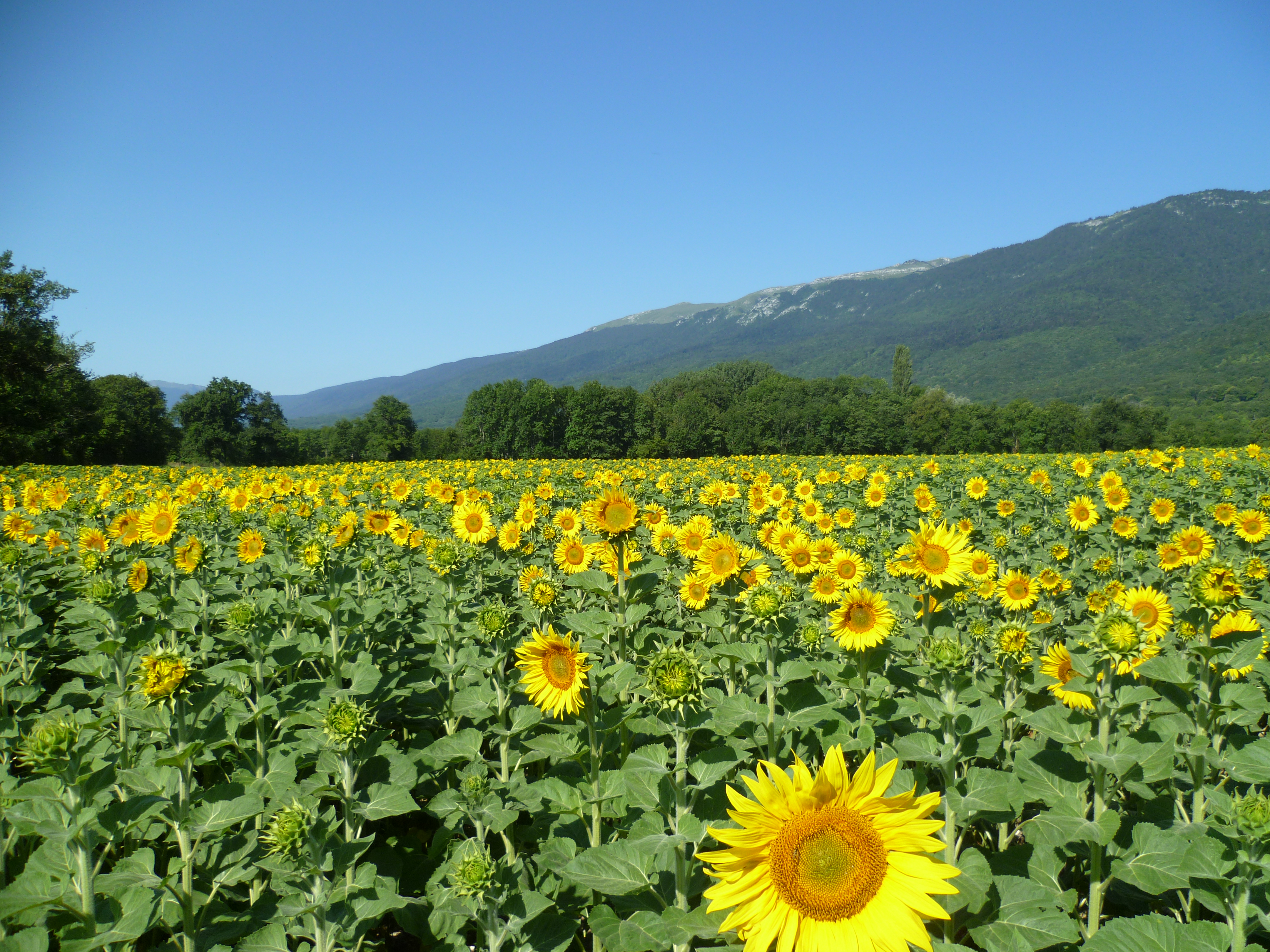
I should be content

to look at a mountain

for what it is

and not as a comment

on my life.

David Ignatow
Internal focus

Mindfulness practice tells us that the best way to work with the changes that face us today is to look inside,  and that a large part of our contentment comes from the internal ways we work with what faces us. As I was reminded in a talk I heard last week, a fundamental characteristic of life is not just that it is continually changing but that it does so in ways we cannot predict. It is an ongoing challenge to remain curious and increase our interior freedom in the face of these surprises. However, this curiosity can help us to avoid holding onto situations or seeking alternatives that are actually unhealthy. This is expressed extremely well in this quotation which outlines the underlying principles beneath this day-to-day practice.

The compulsion to change the world  to calm our desires is based on an idea of how things should be, and as such is dependent upon the degree of wisdom we can bring to bear at any moment. Because we are so imbued with this notion that happiness is something to be pursued by the continual transformation of the external, it can sound odd to hear the Buddha talk of uncovering happiness within. He acknowledged the inevitable presence of disequilibrium, which he called dukkha or suffering, but suggested we seek out its internal causes, understand them and solve the problem by means of internal adjustments. According to his analysis, it is not the objective discrepancy between the internal and the external condition that is the source of unhappiness; it is the desire for the external to change (or not to change as the case may be) which is itself an internal state. Conditions in the world are notoriously unstable and subject to forces beyond our control, while internal desire are more intimate and more accessible. It is simply more efficient to adapt to the world than to alter it.

Andrew Olwendzki, Unlimiting Mind

Recommended Summer Reading 2

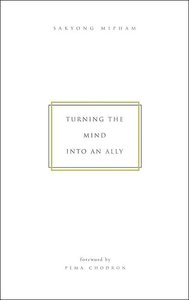
As well as books that apply mindfulness to problems or aspects of our life, it is good to strengthen our practice by reading books that focus on meditation in itself. Good ones are not easy to find, but this one – Turning the Mind into an Ally –  written by Sakyong Mipham Rinpoche in 2004 is one of the best that there is.  I have returned to it on numerous occasions over the years, because it is a serious, but accessible work that looks at meditation as an extended exercise  in mind training and gives the tools to do this.

The book “translates”  some traditional teachings from Tibetan Buddhism into a language that is easy to understand in the West. It gets across the heart of  that meditation practice without the cultural baggage which can be so off-putting in similar books. The author is fond of using imagery to convey his point, comparing the mind to a wild horse, which we have to get to know and tame:

The bewildered mind is like a wild horse. It runs away when we try to find it, shies when we try to approach it. If we find a way to ride it, it takes off with the bit in its teeth and finally throws us right into the mud. We think that the only way to steady it is to give it what it wants. We spend so much of our energy trying to satisfy and entertain this wild horse of a mind.

The author goes on to outline – in very clear language –  the basics of mindfulness and sitting meditation to tame this wild horse.  It is here that he is most successful, gently going through the steps from the first, when we place the mind on the breath:

Placing our mind on the breath is the first thing we do in meditation. In the moment of placing our mind, it’s like we’re mounting a horse: we put our foot in the stirrup and pull ourselves up to the saddle. It’s a matter of taking our seat properly. This moment of placement starts when we extract our mind from its engagement with events, problems, thoughts and emotions. We take that wild and busy mind and place it on the breath. Even though we’re placing our consciousness, which isn’t physical, placement feels very physical.  In order for placement to be successful, we have to formally acknowledge that we’re letting go of concepts, thoughts and emotions: “Now I’m placing my mind upon the breath.”

This is an excellent hands-on manual for those who wish to deepen their understanding and practice of meditation as a way of working with the mind.  It is an encouragement to practice and as such is a valuable addition to any library.

No coming, no going

No Coming. No Going.

Everything is pretending to be born and to die.

That is a lie

An interesting quote from Thich Nhat Hahn. I am not sure that I completely get it but I think it means  that  –  at one level –  nothing really comes or goes, nothing is born or dies, but rather everything simply transforms into something else.  How can I apply that to my life? Well, when I get fixed on something as it currently is and desperately want to hold on to that, I suffer. But if I am able to see that everything is in a process of transforming, and thus not ending, then I do not need to hold on and suffering does not arise. If I realize how limiting it is when I hold fixed stories about myself or my life, and instead move toward a full openness and acceptance of what may emerge, then I can  more easily deal with the inevitable changes which each moment brings.

Every moment has potential

Looking back, I can see that my biggest obstacle at the time was that I thought of meditation as something that would help me get rid of the parts of myself that I didn’t like. I sincerely hoped that meditation would lead me to happy, peaceful states of mind where panic and fear could not touch me. Yet what my father was leading me to was much more radical than that: He wanted me to see that the only way out of suffering is to move toward it; that the path of true awakening lies in experiencing every single moment, whether pleasant or painful, with complete and unconditional love.

Unconditional love is something we can immediately see the value of when it relates to others, but how often do we think of cultivating unconditional love for ourselves? How often do we not only accept, but even cherish our own tender spots and painful feelings?  What my father taught me in those early years was that when we simply let be and open ourselves to the richness of the present moment, we experience every thought, feeling, and experience as an expression of the mind’s luminous nature. From the perspective of awareness, no thought or emotion is any better or any worse than another. They are all manifestations of the mind’s infinite potential.

Yongey Mingyur Rinpoche

How to let go of sorrows

When we enter the present moment deeply, our regrets and sorrows disappear, and we discover life with all its wonders. Breathing in, we say to ourselves, “I have arrived.”  Breathing out, we say,”I am home.” When we do this, we overcome dispersion and dwell peacefully in the present moment, which is the only moment for us to be alive.

Thich Nhat Hahn, Walking Meditation