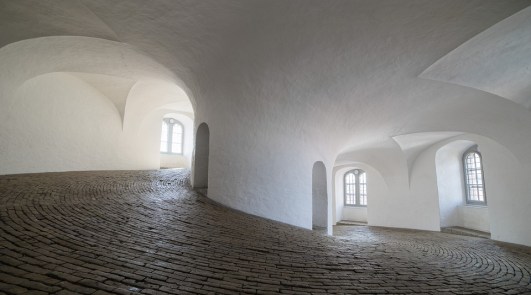
Having no place to go

Change the attitude and perspective that comes from the daily world of time and having some place to go, to one being more steady and collected in the here and now.

The time sense is important to be clear about. Notice how the future feels as a direct experience: when there’s something in the future, there’s tension. This could be either because of impatience to get to a desirable state or an achievement, or it could be worry or dread over what might go wrong. In either case you lose the open ease of being in the present. When you think of the future as a definite reality, you believe in the moods that are embedded in that sense, and in the ideas that they create. Worries start to solidify; flexibility and the capacity to deal with what arises begin to dwindle. But how real is ‘the future’? After all, we might be dead tomorrow! Isn’t it more the case that the present will unfold in line with causes and conditions ? So check the time sense; it’s caused by the moods and energies of the present. The visions and ideas are an illusion.

Take refuge in Awakening.

Direct awareness is only and always here and now; and conditions change around that sense

Ajahn Sucitto

Like a giant tree

Praise and blame, gain and loss, pleasure and sorrow come and go like the wind.

To be happy,

rest like a giant tree in the midst of them all.

The Buddha’s Little Instruction Book

An empty mind

To see the empty nature of mind is liberating. It’s like a room full of furniture. Originally the room is empty. The furniture is brought in piece by piece. The person living there knows that anything they brought into the room can also be taken out — chairs, beds, tables, and so on. Similarly anything brought into the mind by prior causes and conditions can be taken out — afflictive emotions… all kinds of suffering. Nothing is stuck. This empty nature is the direct route to freedom. Once we know it, it is only a question of doing the work. As Suzuki Roshi put it, “People who know the state of emptiness will always be able to dissolve their problems by constancy.” Constancy here means continuing with our practice of right effort. Once we know the peace of an empty mind, we only need to keep letting go of the sources of suffering. The field of awareness, like vast space, is intrinsically empty. 

Guy Amstrong, in his new book,  Emptiness, A Practical Guide for Meditators

Every day is a good day

File:Fog.jpg

In Zen practice a koan is a phrase, a conversation, or a saying that a mediator reflects on in order to point to a way of being in the world. The phrase in held in mind –  sometimes for months or years at a time –  to unravel an openness in practitioners, allowing them to enter into inner regions beyond knowing.

I like keeping this one in mind, which is presented here in a commentary on a saying of Ummon, an 8th Century Zen Master. It challenges my normal commentary and takes me out of the thoughts I buy into every day. Maybe I already have everything I need right now: 

Ummon introduced the subject by saying:

I do not ask you about fifteen days ago. But what about in fifteen days time? Come, say a word about this.

He himself replied for them: Every day is a good day.

Commentary by Suzuki : Today does not become yesterday, and Dōgen states that today does not become tomorrow.

Each day is its own past and future and has its own absolute value.

From  a transcript of a talk by Suzuki-roshi,  Thursday, November 1st, 1962

Moment by moment

File:Rosso Fiorentino - Madonna dello Spedalingo - Google Art Project.jpg

Suppose a king might hear the sound of a lute and say “What is that sound – so delightful, so tantalizing, so intoxicating, so ravishing, so enthralling?” They would say “That, sire is called a lute…” Then he would say “Go and fetch me the lute” They would fetch the lute but he then said “Enough of the lute. Fetch me just the sound”.

They had to explain that the sound could not exist independently, but was created by the separate strings, box and arch, all elements working simultaneously.

Just as the  king could not find the sound of the lute, so we cannot find our self. When we investigate, any thoughts of ‘me’ or ‘mine’ or ‘I am’ do not occur.

Based on the Buddha, Vina Sutta


Arising and returning

File:Specimen of four wild hyacinth flowers blossoming, ca.1920 (CHS-5438).jpg

The “10,000 is things”expression for all that happens in a life, or in the world of our experience. They arise and pass away, continually rearranging themselves,  and we have to learn how to work with this reality:

The ten thousand things arise together;

In their arising is their return.

Now they flower, and flowering sink homeward, returning to the root.

The return to the root is peace.

Peace: to accept what must be

and to know what endures.

In that knowledge is wisdom

Lao Tzu