Working with all our entanglements

A question that has intrigued me for years is this: How can we start exactly where we are, with all our entanglements, and still develop unconditional acceptance of ourselves instead of guilt and depression? One of the most helpful methods I’ve found is the practice of compassionate abiding. This is a way of bringing warmth to unwanted feelings. It is a direct method for embracing our experience rather than rejecting it. So the next time you realize that you’re hooked — that you’re stuck, finding yourself tightening, spiraling into blaming, acting out, obsessing — you could experiment with this approach.

Contacting the experience of being hooked, you breathe in, allowing the feeling completely and opening to it. The in-breath can be deep and relaxed — anything that helps you to let the feeling be there, anything that helps you not push it away. Then, still abiding with the urge and edginess of feelings such as craving or aggression, as you breathe out you relax and give the feeling space. The outbreath is not a way of sending the discomfort away but a way of ventilating it, of loosening the tension around it, of becoming aware of the space in which the discomfort is occurring.

Pema Chodron, Three Steps to Genuine Compassion

Why we keep ourselves busy

Our blocks of pain, sorrow,  anger and despair always want to come  up into our mind consciousness, into our living room, because they have grown big and need our attention. They want to emerge but we do not want  them to come up because they are too painful to look at. So we try to block their way. We want them to stay asleep in the basement. Because we do not want to face them our habit is to fill the living room with other guests. But whenever we have ten or fifteen minutes of  free time these internal guests will come up and make a mess of the living room. To avoid this we pick up a book, we turn on the television, go for a drive, we do anything to keep our living room occupied. When the living room is occupied, these unpleasant internal formations will not come up.

Thich Nhat Hahn, Anger

Moving close to fear

Whenever fear arises – either in a sudden wind of panic or a low-grade brooding anxiety – the approach of mindfulness is to fully feel the fear, to move towards it rather than running away. The fire of fear is usually mixed up with the smoke of explanations, abstract considerations that attempt to tame the fear through various storylines about the fear. These storylines move us away from feeling directly.

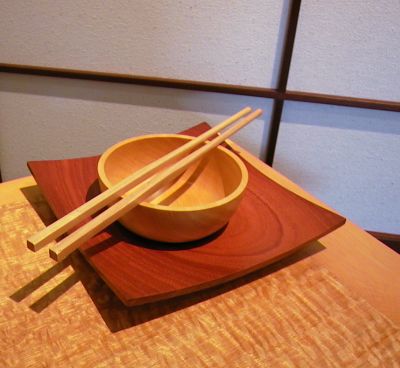
The healthiest way to be with fear is simply that – to be the fear rather than trying to solve it or successfully manipulate it from a distant vantage point. Approaching fear from a distance is like having a giant pair of chopsticks – fear is at the end of them, twenty-five feet away from us, and we keep trying to move the fear from kitchen counter to dining table and back again. No wonder it keeps spilling onto the floor! Instead we could approach fear as a finger food – using the bare hand to pick it up directly, place it in the mouth, chew and swallow.

Gaylon Ferguson, Natural Wakefulness

Being held

It took a long time for the analytical world to look at the importance of the way a baby is held, and yet when you come to think of it, this is of primary importance. The question of holding brings up the whole issue of human reliability.   Winnicott

I love the sense of natural movement in this poem by Rilke, and the delicate gentleness of the last line. We change, are shaken and fall, as nature does, and this can seem frightening at times. It can agitate us as it goes against the security we have when things are firm. To give us confidence we need some sense of being held. Because, as Winnicott reminds us, a person’s  most formative experiences comes from the way their caregivers “hold” them, as that allows them feel grounded in the face of the uncertainties of life. Meditation practice allows us create that security within, and develop an inner stability, which is hard to shake, no matter what comes up. We trust and can let our lives unfold gently, lightly, each breath and each moment floating and falling, held in awareness.

The leaves are falling, falling as if from afar,
as if withered in the distant gardens of heaven;
with nay-saying gestures they fall.

And in the nights falls the heavy earth
from all the stars into loneliness.

We all are falling. This hand there falls.
And look at the others: it is in all of them.

And yet there is one, who holds all this falling
with infinite gentleness in his hands.

Rainer Maria Rilke, Autumn


…which we forget, when afraid.

When you are in the trance [of fear]… fearful thoughts and emotions take over and obscure the larger truths of life. You forget the love between you and your dear ones; you forget the beauty of the natural world; you forget your essential goodness and wholeness. You expect trouble and are unable to live in the present moment.

Tara Brach

Two ways of working with our fear

A quotation from Pema Chodron –  in the same theme as posts from the last few days – on our need to turn towards the fundamental groundlessness which exists in life and in our hearts. The actual practice is outlined here –  becoming aware of how fear manifests itself in our body and trying to stay with that, rather than moving into stories of blame or defectiveness. 

Raw fear initially emerges as a dot in space, as a doorway that can go either way.  If we choose to take notice of the actual experience of fear, whether it is just a queasy feeling in our stomach or actual terror, whether it is a subtle level of discomfort or mind-numbing dramatic anxiety, we can smile at it, believe it or not. It could be a literal smile or a metaphor for coming to know fear, turning towards fear, touching fear. In that case, rather than fear setting off a chain reaction where you are trying to protect yourself from it, it becomes a source of tenderness. We experience our vulnerability, but we don’t feel that we have to harden ourselves in response…We’re all very familiar with the experience of fear escalating, or the experience of running away from fear. But have we ever taken the time to truly touch our fear, to be present with it and experience it fully?  Do we know what it might mean to smile at fear?

Pema Chodron, Smile at Fear