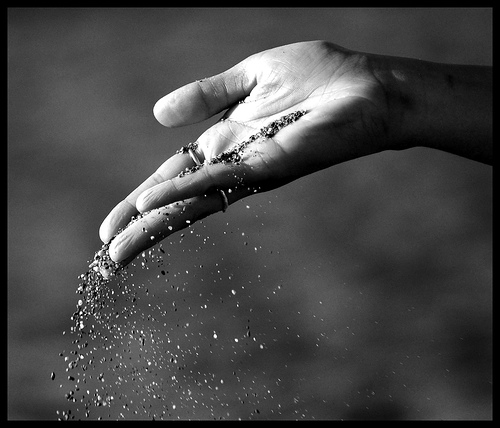
 When your mind is reeling in confusion, breathe deeply into the centre of your chest.
Connecting to ther core of your being this way extends loving kindness to yourself , even when there is none in sight.
Ezra Bayda
When your mind is reeling in confusion, breathe deeply into the centre of your chest.
Connecting to ther core of your being this way extends loving kindness to yourself , even when there is none in sight.
Ezra Bayda
One thing mi ndfulness practice encourages us to make space for what is going on in our life, notice it, and express it clearly and concretely. It is a good practice in working with what is going on inside us, as well as what is going on between us and others. Simply naming can be a first step in dealing with difficult situations, as was shown in two UCLA studies which looked at the practice of labeling emotion states .
Using functional magnetic resonance imaging (fMRI) to record brain activity, researcher Matthew Lieberman Ph.D, found that assigning names to negative emotions reduces the intensity of activity in the amygdala — the part of the brain that acts as an alarm system and sets off stress-related reactions. By simply putting a name on the distress, Lieberman says, you can wield more power over your amygdala’s activity. For example, when you attach the word ‘angry,’” he explains, “you see a decreased response in the amygdala”.
We are shown how to do this simple, gentle naming of experience in this poem by American writer David Budbill:
Say rather: Its a nice day. Pass the mashed potatoes please Look, there’s a chickadee. Your voice makes me swoon. Let’s plant the beans. I miss my dead mother so much today I want to touch your face. Clean up the mess! What’s better than a cool glass of water? I feel so sad, all I want to do is cry. What time is it? I want to touch you everywhere. Let’s go for a walk. Will you have tea with me? Let’s play some music. I dont want to die. Come visit again soon.David Budhill, Don’t Speak in the Abstract
 November is traditionally the month for remembering those who have passed away. It is a practice in harmony with this time of year, as the days shorten and the cold of winter approaches. There seems to be a broad antropological basis for this awareness, as it can be found in the Celtic calendar around this time also. Keeping an awareness of the impermanence of all things is one of the basic practices in most of the wisdom traditions. One of the reasons that we struggle is that we give things more solidity than we should, including the problems and worries which pass through the mind as thoughts or emotions. I think the most important lesson learned in sitting meditation is that nothing stays the same for long, including the activity of the mind. Learning the truth of that in a real, felt way, leads to equanimity. Trying to hold onto things that are changing, even good things, pinning our happiness onto things being exactly as they were, leads us to be less present with how things actually are. However, I do not find this practice easy or something I realize in a once-off manner. I would love if enlightenment came that way. However, for me it is a slow-learned knowledge, that I am working with day-to-day. Looking out on the mountains around my house this morning gently teaches me. The trees let go of their leaves, the mountain allows the mist to descend and rise. I too try to let go, not trying to make this or that moment last forever.
In the deepest forms of insight we see that things change so quickly that we can’t hold onto anything, and eventually the mind lets go of clinging.
Letting go brings equanimity. The greater the letting go, the deeper the equanimity. In practice we work to expand the range of life experiences in which we are free.
U Pandita
 I think Carl Rogers said it best. He said the great paradox was that it was not until I accepted myself just as I was that I was free to change. In other words – acceptance, pausing and being with our life just as it is, is the the precondition to all transformation. For us to be free, we need to stop believing the thoughts that something is wrong. We need to stop running away from the very vulnerability that needs a profound type of self-compassion. Whatever we cannot embrace with love or with acceptance imprisons us. It keeps us in the trance of a bad self. So the path of emotional healing is really the path of stopping the war, of pausing, of not believing the judgments, of not continuing to punish ourself. Instead of running away and trying to escape the rawness that is here, really meeting it with a deep, deep compassion.
Tara Brach, Meditations for Emotional Healing
 A similar post with a halloween theme, on how to work with the fears which our mind creates. It suggests that the best way to work with our fears involves turning towards and holding them in non-judgmental awareness, rather than fighting or running away:
Normally we empower our demons by believing that they are real and strong in themselves and have the power to destroy us…. [But]…demons are ultimately part of the mind and, as such, have no independent existence.
Nonetheless we engage with them as though they were real, and we believe in their existence – ask anyone who has fought post-traumatic stress, or addiction, or anxiety. The mind perceives demons as real, so we get up caught up in battling with them. Usually this habit of fighting against our perceived problems gives demons strength, rather than weakening them. In the end all demons are rooted in our tendency to create polarization. By understanding how to work with this tendency – to try and dominate the perceived enemy and to see things as either/or – we free ourselves from demons by eliminating them at their very source.
Tsultrim Allione, Feeding your Demons: Ancient Wisdon for Resolving Inner Conflict
 Perhaps all the dragons of our lives are princesses who are only waiting to see us once beautiful and brave.
Rilke
 Mindfulbalance