Enjoying living

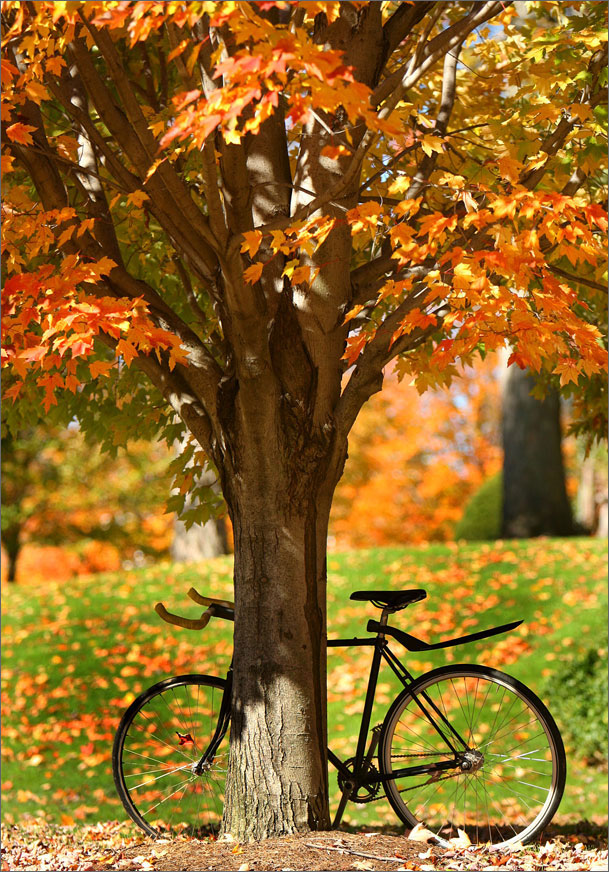
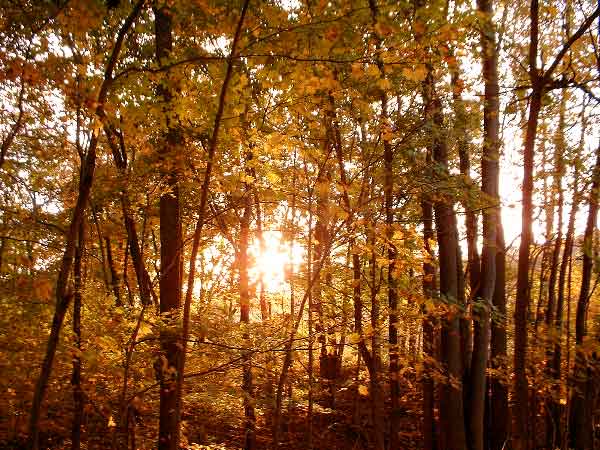
Autumn is a season of maturity, of patience and integration. As I have said before, it reminds us to look at the seasons and growth in our own life, our path towards maturity and greater individualization. This is demanded of us at every stage in our life but comes to the fore more clearly in “mid-life”, when we are asked to let go of some of the typical first half of life thinking patterns and move into a second half thinking style. It is a challenge that everyone faces, although not everyone takes it up. If we do, as Levinson remarks here, we can let go of some of the pressured, achievement-focus drive which is characteristic of the first half of life (and of the modern age) and have the space to notice and enjoy the process of living itself.

Some reduction in illusions is now appropriate and beneficial……According to Jaques, the central issue at mid-life is coming to terms with one’s own mortality: a man must learn now, more deeply than was possible before, that his own death is inevitable and that he and others are capable of great destructiveness…..Bernice Neugarten identifies the basic mid-life change as a growing “interiority” : turning inward to the self, decreasing emphasis on assertiveness and mastery of the environment, enjoying the process of living more than the attainment of specific goals.

Levinson, The Seasons of a Man’s Life.
Why having no story can be good…

Everything is meant to be let go of.

Meister Eckhard

Listening to people this week I was struck by how frequently we tend to define ourselves in terms of solid, unchanging qualities. However, when we talk about ourselves in terms that are fixed, such as  “I’m no good at ……”, or “I am a timid person” … we freeze our whole selves into just one  limited part. Or if we attach our identity to some things that are fixed –  like a job,  a relationship as it is now, where we live or something that we have –  we are sooner or later going to run into difficulty because everything changes.  It is a good practice to keep defining ourselves in fluid terms, as always changing – continually constructing ourselves in way that is able to deal with the ongoing changes in life. We know that if we try to prevent change and freeze things as they are,  we are attempting something impossible.  So let us work on really understanding the inevitability of the change we see all around us by applying this to how we narrate our life story, even our story of just this week. In this way we  can more easily see our true underlying openness of mind,  which can be aware of all the words which we attach to ourselves.  This leaves us open to all possibilities in our future,  not limiting ourselves  or having just one fixed  identity or  goal.

Just as a snake sheds its skin, so we should shed our past, over and over again

The Buddha

Always judging our lives

We tend to run our whole life trying to avoid all that hurts or displeases us, noticing the objects, people, or situations that we think will give us pain or pleasure, avoiding one and pursuing the other. Without exception, we all do this. We remain separate from our life, looking at it, analyzing it, judging it, seeking to answer the questions, ‘What am I going to get out of it? Is it going to give me pleasure or comfort or should I run away from it?” We do this from morning until night.

Charlotte Joko Beck

Not all growth is visible

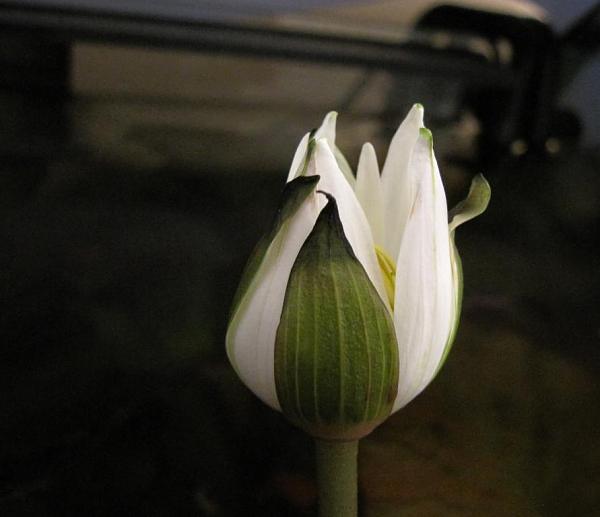
If we can possibly learn to trust darkness, to understand that life is a pattern of starts and stops, of celebrating the past,  of coming to terms with the present and of believing the future to be kind, then we can come to understand that the dark parts are only those closing-down moments, like flowers at night, till the sun shines again……Darkness deserves gratitude. It is the alleluia point at which we learn to understand that not all growth takes place in the sunlight. Then we come to understand that God is at work in our lives even when we believe that nothing whatsoever is going on.

Joan Chittister, For all that Has Been, Thanks

Not letting anxiety become fear

The truth is that you will never be absolutely safe. All things change constantly, even what is most precious. You know that you and those you love will die, but not when or how. This is the angst of life, the price of being a conscious human being. It is not a flaw, although many people cannot let loose of seeing it in such a manner. It is just the way life is constructed. When your awareness of this vulnerability is triggered, you can be swept into panic, collapse into depression, or desperately try to distract yourself. One of the values of  practice is that you are able to come to terms with this anxiety in a conscious manner. Your life becomes more integrated because you are no longer trying to deny or avoid what is true.

For instance, you simply forget a meeting, yet you are traumatized, certain that you are losing your ability to focus. Or someone disappoints you and you collapse into complete self-hatred, fearing that you have no worth to the other. With mindfulness practice, you learn to see how the untrained mind is agitated by the human condition and how not to allow this general anxiety to fuel your fear in a specific situation. You also gain tolerance for the unpleasantness of uncertainty and also the naturalness of your own imperfection. You have confidence that “life is like this.” You cannot and are not supposed to miraculously fix it; rather, you gain the insight that happiness and peace come from relating to life just as it is.

Phiilipp Moffit, Freedom from Fear

A time of silent growth

Yesterday’s equinox saw a shift in the balance of light and darkness in each day. We too can find light and darkness, strength and weakness, within us. We like strength, but weakness often frightens us and our instinct is to run away. What if we could stop struggling with those parts of our lives and look at them, without seeing them as the enemy? To grow emotionally and psychologically, we first need to acknowledge our personal vulnerability.

I gratefully acknowledge how darkness has become less of an enemy for me and more of a place of silent nurturance, where the slow, steady gestation needed for my soul’s growth can occur. Not only is light a welcomed part of my life, but I am also developing a greater understanding of how much I need to befriend my inner darkness.

Joyce Rupp, Little pieces of light