Finding our own depths

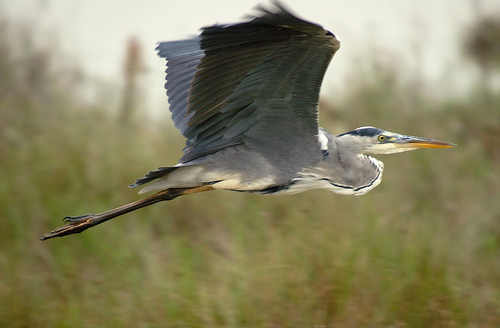
Last week, walking, I was startled by a  heron taking off. This beautiful large bird rose up with very graceful slow beats of its wings, its long neck folded into a “s” shape, and flew away,  letting out a loud squawk as it got further away. I looked after this bird as it vanished into the distance, leaving silence behind. Normally herons do not draw much attention to themselves, as they stand, solitary and still, for hours in fields or water, waiting to catch a frog or fish.

Because of this, for the ancient Celts  the heron symbolized independence, patience and intelligence. They saw them as special creatures, who dwelt between the different realms of land, water and sky. Maybe because of its solitary nature, the heron was also seen as a messenger from the gods. And moments when we come accross the beauty of nature close up often feel like blessed moments, especially as we stand in the silence looking after them.

I admire the heron’s  capacity to stand still, to stay focused, to draw on inner resources. It reminds me to trust myself, to nurture my own roots, ones that nothing and nobody can take away. I do not need to “produce” something in order to be happy. Looking at it standing there prompts me to see that I have a responsibility to befriend myself first of all, to be be comfortable my own solitude before any interactions with others and with the world. I see that I need to deconnect more,  to quieten the noise, to simplify this increasingly complicated life, and resist the truth advanced today that being always connected means being more fruitful.

It is only from this place of solitude, from having our own wells, that we can really listen to others and relate to their deepest needs.  As Mary Oliver reflected when she saw a heron rise up, new life rises up from the depths of the dark pools in which we stand. We have to descend before we can arise.

So heavy is the long-necked, long-bodied heron,
always it is a surprise
when her smoke-colored wings 

open
and she turns from the thick water,
from the black sticks

of the summer pond,
and slowly rises into the air
and is gone.

Then, not for the first or the last time,
I take the deep breath
of happiness, and I think how unlikely it is

that death is a hole in the ground,
how improbable
that ascension is not possible,
though everything seems so inert, so nailed

back into itself–
the muskrat and his lumpy lodge,
the turtle, the fallen gate.

And especially it is wonderful
that the summers are long
and the ponds so dark and so many,
and therefore it isn’t a miracle

but the common thing,
this decision,
this trailing of the long legs in the water,
this opening up of the heavy body

into a new life: see how the sudden
gray-blue sheets of her wings
strive toward the wind; see how the clasp of nothing
takes her in.

Mary Oliver, Heron rises from the Dark Summer Pond
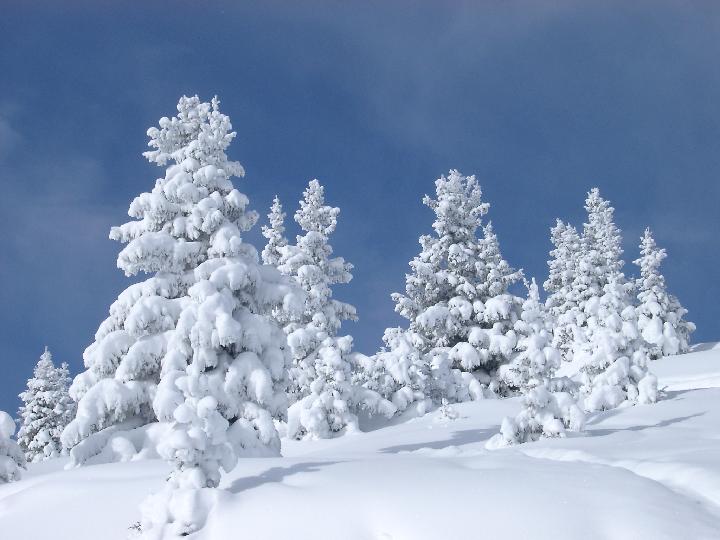
The first snow

Last night the first snow of this winter fell, and this morning awoke cold and grey. Just ten days ago we were having unusually warm and sunny autumn. The change feels sudden and even though it was clear that winter was on its way, it can leave us feeling surprised. Frequently things that happen outside of us have an impact on how we view life and the weather is no exception. In this way it becomes an interesting teacher and metaphor for us. We can learn about our mind seeing how it responds to something new. The most important thing is not the weather but to see that the change is mostly inside us and not in the world around us. Things, like the weather, are a given; happiness – or unhappiness – comes from our response to that given.

One thing that strikes me is that sudden change is not unusual and is frequent in nature. However, we tend to see it as an interruption and try and hold on to things remaining the same. We seem to instinctively be always plotting  to make some moments last forever.  The weather teaches us that no matter how much we wish or try to control things, tomorrow may not look the same as today. Some things will change or end. People move away; relationships end; airports are closed. We can work with these events when they happen. But for the moment all we have is today. We try and make  living well, each moment,  our focus.

The second thing that strikes me is that our moods can change as suddenly as the weather does. Sometimes our days can seem dark and bleak and cold. And that can seem very bad to us. However, maybe some low moods can be just natural changes or periods of calm. Maybe our psyche or soul has need of some rest, for its own good reasons. It may not always be a problem that needs to be fixed but rather a period of growth that has its own lessons. Just as the seeds are growing under the snow-covered soil this morning, things are coming to birth whether we notice it or not. Our instinct and modern society tells us to move away from low periods and that life is equated with movement. Nature reminds us that life is not always obvious growth, and does not always have to be bright. There is a time to be patient as we wait for new life to blossom forth.

Simply saying things clearly

One thing mindfulness practice encourages us to make space for what is going on in our life, notice it,  and express it clearly and concretely. It is a good practice in working with what is going on inside us, as well as what is going on between us and others. Simply naming can be a first step in dealing with difficult situations, as was shown in two UCLA studies which looked at the practice of labeling emotion states .

Using functional magnetic resonance imaging (fMRI) to record brain activity, researcher Matthew Lieberman Ph.D,  found that assigning names to negative emotions reduces the intensity of activity in the amygdala — the part of the brain that acts as an alarm system and sets off stress-related reactions. By simply putting a name on the distress, Lieberman says, you can wield more power over your amygdala’s activity. For example, when you attach the word ‘angry,’” he explains, “you see a decreased response in the amygdala”.

We are shown how to do this simple, gentle naming of experience  in this poem by American writer David Budbill:

Say rather:
Its a nice day.
Pass the mashed potatoes please
Look, there’s a chickadee.
Your voice makes me swoon.
Let’s plant the beans.
I miss my dead mother so much today
I want to touch your face.
Clean up the mess!
What’s better than a cool glass of water?
I feel so sad, all I want to do is cry.
What time is it?
I want to touch you everywhere.
Let’s go for a walk.
Will you have tea with me?
Let’s play some music.
I dont want to die.
Come visit again soon.

David Budhill, Don’t Speak in the Abstract

Sunday Quote: On Transitions

The real art of conducting consists in transitions

Gustav Mahler

Into the unknown

You ask me why I dwell in the green mountains

I smile and make no reply, for my heart is free of care

As the peach blossom flows downstream and is gone into the unknown

I have a world apart that is not among men

Li Po

Just as we are

What this means is that we can find our own happiness and peace of mind
just as we are in this very moment, because it is within us.  We don’t have to change our thoughts or change ourselves into someone else.

We don’t need to think that who we are, this “me,” is not good enough,
smart enough,  or lucky enough to be happy.

Dzogchen Ponlop Rinpoche, Resting the Busy Mind