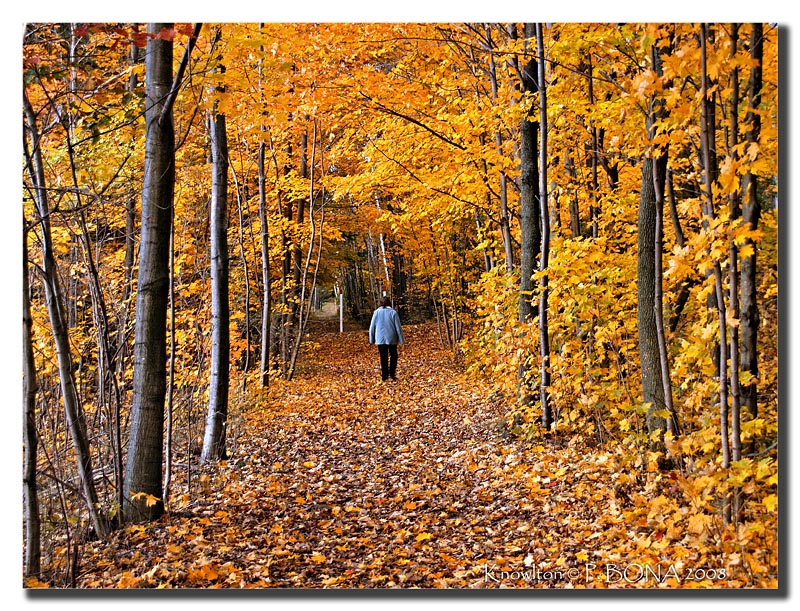
 It’s a transformative experience to simply pause instead of immediately filling up the space.
By waiting, we begin to connect with fundamental restlessness as well as fundamental spaciousness.
Pema Chödrön
It’s a transformative experience to simply pause instead of immediately filling up the space.
By waiting, we begin to connect with fundamental restlessness as well as fundamental spaciousness.
Pema Chödrön
 In order for a secure sense of self to develop, caregivers need to be attuned to the child’s desires. They need to be able to set aside their own needs in order to have the space to respond to the child’s emotional and physical needs. On the one hand, this means that they address the child’s needs promptly, so that the child feels secure. Using modern means of communication as an analogy, at times they need to respond to the child as if they have received an Instant Message and not wait for an email.
However, as well as being able to respond to certain needs swiftly, they also have to be able to leave the child alone, without insisting that it be there for their needs. They have to provide a non-demanding presence during times of rest so the child can simply be and develop its sense of being, before any need to do anything or earn the parents’ attention. In this way the child learns to simply enjoy each moment, without any intrusive aims or fears.
Winnicott calls this state “going-on-being” and writes about the importance of this capacity to allow the child simply exist: The mother’s non-demanding presence makes the experience of formlessness and comfortable solitude possible, and this capacity becomes a central feature in the development of a stable and personal self. This makes it possible for the infant to experience …a state of going on being…out of which…spontaneous gestures emerge.
We can see here the importance of being before doing. If the parent is excessively working through its own needs then it can happen that he or she impinges on the child’s quiet time, and continually draws the child’s attention. One consequence is that the child has to attune too early to the needs of others, rather than having time just for itself. In later life as an adult he or she can repeat this dynamic in a number of ways. One is by repeating the parents’ pattern and continually create interruptions and dramas. So, for example, when a relationship is in danger of being reliable the person repeats the drama of the parents – because that is more familiar – thus preventing the other person getting too close. The parents’ dynamic means that only unhealthy relationships are maintained; sadly, ones that have the potential to grow are rejected. Or the adult compulsively neglects his or her own needs, looking after others in an excessive way. In both cases we can see that, in a sense, the child has never managed to leave home.
This is where meditation practice can help. As Jon Kabat Zinn stated again in a talk which I was present at recently, we are essentially human beings before we are human doings. Sitting practice recreates a period when we can just simply be, without having to acheive anything. We simply watch the mind and body without holding on to anything or pushing anything away. This has the capacity to recreate and heal our early life experiences. As Gil Fronsdal has said, mindfulness practice can act as an antidote to the hurt caused by parents who did not have the space to truly see their children. He says that by being mindful, by quietening the mind, by being simply present with our experience, we are loving and healing ourselves. We learn to sit with ourselves and our lives as they are, without having to be afraid of them and try continually to fix them.
 We don’t think our way into a new way of living,
We live our way into a new way of thinking.
Richard Rohr
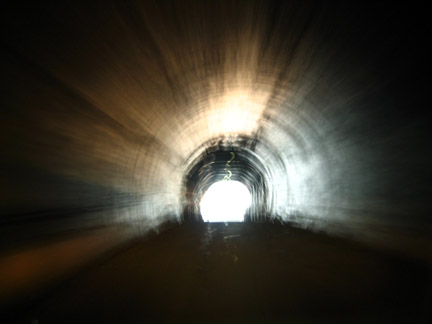 I watched the first of the Chilean miners being brought out alive from the depths of the earth where they had been trapped for nearly 70 days. It brought to mind the biblical tale of Jonah who was trapped in the whale for three days and all those stories and myths about people descending to the underworld to remerge later. These rich themes seem to speak deeply to aspects of our experience. Today I am just interested in the aspect of waiting, which some call of being in a state of limbo.
We can sometimes be in a phase of our life when we feel like we are waiting or we are stuck, and that can make us uneasy. It seems like we are going nowhere. There may be an acompanying sense of unease or low mood. However, what we may not know is that these periods can be ones of important growth. We may go through a dark period, but that doesn’t mean that we are depressed. We sometimes have to have the courage to wait until a new direction becomes clear. Our culture today prizes achievement and fast forward movement. To stand still is seen as the same as going backwards. Staying quiet and waiting is not valued as a process.
In this understanding, we can see that these periods, when we may feel stuck, even buried or in darkness. can be periods of rebirth. We are leaving behind some elements of the past only to emerge into a new light. As in the story of Jonah, we can be moving in a direction even if we seem to be trapped. The darkness is taking us where we need to go. Sometimes this becomes apparent only afterwards. Not all growth takes place in bright sunshine; as Thomas Moore reminds us, darkness is also part of life’s processes.
You may be so influenced by the modern demand to make progress at all costs that you may not appreciate the value in backsliding. Yet, to regress in a certain way is to return to origins, to step back from the battle line of existence, to remember the gods and spirits and elements of nature, including your own pristine nature, the person you were at the beginning. You return to the womb of imagination so that your pregnancy can recycle. You are always being born, always dying to the day to find the restorative waters of night.
The whale’s belly is, of course, a kind of womb. In your withdrawal from life and your uncertainty you are like an infant not yet born. The darkness is natural, one of the life processes. There may be some promise, the mere suggestion that life is going forward, even though you have no sense of where you are headed. It’s a time of waiting and trusting. My attitude as a therapist in these situations is not to be anxious for a conclusion or even understanding. You have to sit with these things and in due time let them be revealed for what they are.
In your dark night you may have a sensation you could call “oceanic” – being in the sea, at sea, or immersed in the waters of the womb. The sea is the vast potential of life, but it is also your dark night, which may force you to surrender some knowledge you have achieved. It helps to regularly undo the hard-won ego development, to unravel the self and culture you have woven over the years. The night sea journey takes you back to your primordial self, not the heroic self that burns out and falls to judgment, but to your original self, yourself as a sea of possibility, your greater and deeper being.
Thomas Moore, Dark Night of the Soul
 Stories about ourselves and how we are doing arise non-stop in our minds and influence our beliefs about reality and about what happens in each day. These mental impressions – thoughts and feelings – often revolve around some sense that we are not in the right place, that something is wrong with us. This feeling that our life is out of sync or that from time to time we do not know where we are going is not new. The Buddha’s fundamental insight, more than 2500 years ago, was that there is an unsatisfactory quality to our lives and that we are frequently aware of being out of balance. It is just the nature of life. We often have to deal with uncertainty and difficulties.
As told in the story of the farmer meeting the Buddha, we will always have our “eighty-three problems” – anxieties about our career or finances, difficulties in relationships, fears about sickness and health, getting the balance right in living with others, and so on. It is the “eighty-fourth problem” – that we think all of these should not be in our lives from time to time – that adds to our difficulty and makes our day full of distress. When we fall into this eight fourth problem we go on to make ourselves more miserable over the fact that we have problems. We judge our situation harshly because we are lacking a feeling of ease. We feel we have to “get rid of” something. We so quickly make the move from “something” is going wrong at the moment, to “I” am wrong, and read events as some sort of sign of an interior or psychological malaise. One thing which meditation does is allow us sit more easily with the gaps in our experience without panicking or needing to fix them.
Suffering becomes a block in our sense of being when any position is taken as an identity – when how you are becomes who you are. When we wake up to how human life on this planet actually is, and stop running away or building walls in our heart, then we develop a wiser motivation in our lives.
 One reason we need to create periods of rest is to counteract some of the effects of modern society on the brain, and nurture habits of stability and patience.
Nicholas Carr is the author of the book, The Shallows: What the Internet is Doing to our Brains. In it he outlines some of the ways that modern technologies are not only affecting our ability to pay attention but are also changing our brains. These technologies tend to fragment our attention, speeding up our need to know and plan, thus reducing our capacity to just rest in ourselves and our own space. This can increase the sense that our day to day is running from here to there, with no time for ourselves, just a succession of things to get done.
In an interview with CNN he said, “I became aware of changes in my own thinking a couple of years ago….… I came to realize [that] I was losing my ability to pay deep attention to one thing over a long period of time. When I’d sit down to read a book, for instance, I was only able to sustain my concentration for a page or two. My mind would begin to crave stimulation and distraction — it wanted to click on links, jump from page to page, check email, do some Googling….The habits of mind the net encouraged had become my dominant habits of mind.
It is no surprise that when we have an activity that demands patience and perseverence, we find it difficult to concentrate, missing the inner quiet needed for sustained activities. We become what we practice: If we are continually practicing distraction and small, bite-sized bursts of information, the brain can get used to distraction. If we practice resting and calm, the brain can become more calm. As Carr continues: Other people – and I’m one of them – believe that while it’s important to be able to skim and scan and multitask, our deepest and most valuable thinking requires a calm and attentive mind. If you exist in a perpetual state of distractedness, you’ll never tap into the deepest sources of human insight and creativity.
Once again, we can learn from nature in these days. Real growth takes time and is patient. As the proverb reminds us “Mighty oaks from tiny acorns grow”, not immediately, but slowly, over time. Let us create gentle periods of less “productive”, more reflective activities – walking, reading, reflecting, meditating – and thus nurture other habits of mind.
 Mindfulbalance