Standing in the face of disappointment

File:Flickr - Nicholas T - Light 'n' Dark.jpg

Stay with the feeling in the body. Don’t advance into proliferating a story. Don’t retreat into denying the sense of hurt.

Not advancing, not retreating,

Not real, not empty.

There is an ocean of bright clouds.

There is an ocean of dark clouds.

Dogen, 1200 –  1253

photo Nicolas A. Tonelli

Saturday: Finding ourselves again

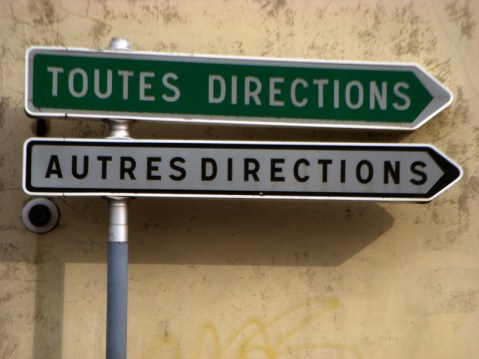
directions

One of the nice things about a Saturday after an intense week is that we can come back to ourselves, and find within us a centre that is always there, even when we lose sight of it:

I lost my way, I forgot to call on your name. The raw heart beat against the world, and the tears were for my lost victory. But you are here. You have always been here. The world is all forgetting, and the heart is a rage of directions, but your name unifies the heart, and the world is lifted into its place.

Blessed is the one who waits in the traveller’s heart for his turning

Leonard Cohen, Poem#50 from The Book of Mercy

Facing the chaos within

File:Slow down sign, Reed College, Portland, Oregon (2013).JPG

Even if a person does not observe Lent, the themes are universal and necessary :

Sometimes the etymology of a word can be helpful. Linguistically, lent is derived from an old English word meaning springtime. In Latin, lente means slowly. Etymologically, then, lent points to the coming of spring and it invites us to slow down our lives so as to be able to take stock of ourselves.

Lent has always been understood as a time to metaphorically spend forty days in the desert unprotected by normal nourishment so as to have to face “Satan” and the “wild animals” and see whether the “angels” will indeed come and look after us when we reach that point where we can no longer look after ourselves. For us, “Satan” and “wild animals” refer particularly to the chaos inside of us that normally we either deny or simply refuse to face – our paranoia, our anger, our jealousies, our distance from others, our fantasies, our grandiosity, our addictions, our unresolved hurts…. The normal food that we eat –  distracted ordinary life – works to shield us from the deeper chaos that lurks beneath the surface of our lives.

Lent invites us to stop eating whatever protects us from having to face the desert that is inside of us. It invites us to feel our smallness, to feel our vulnerability, to feel our fears, and to open ourselves up the chaos of the desert so that we can finally give the angels a chance to feed us. That’s the ideal of lent, to face one’s chaos.

Ron Rolheiser, Entering Lent

photo: Another believer

What makes life beautiful?

File:Nyota, Kenya 03.jpg

Some reflections from Brother Roger of Taize who I once met when I spent a silent retreat there. He was a good and kindly man, and outlines here an approach which can shape our whole attitude to this day and to life:

Are there realities which make life beautiful

and of which it can be said that they bring a kind of fulfillment, an inner joy?

Yes, there are. And one of these realities bears the name of trust.

Do we realize that what is best in each of us is built up through a simple trusting?

This is something even a child can do.

Br Roger of Taize

photo nicor

A guide for all of life: Don’t try to control the sunset

File:Florida sunset.jpg

One of the most growth-promoting experiences for another person  comes from my appreciating this individual in the same way that I appreciate a sunset. People are just wonderful as sunsets if I can let them be. In fact, perhaps the reason we can truly appreciate a sunset is that we cannot control it. When I look at a sunset as I did the other evening, I don’t find myself saying, “Soften the orange a little on the right hand corner, and put a bit more purple along the base, and use a little more pink in the cloud color.” I don’t do that. I don’t try to control a sunset. I watch with awe as it unfolds.

Carl Rogers

photo Mmcbeth

When things are dark in our lives

File:Candle burning.jpg

In Buddhism, a definition of faith is the ability to keep our hearts open in the darkness of the unknown. The root of the word patience is a Latin verb for “suffer,” which in the ancient sense meant to hold, not to grasp but to bear, to tolerate without pushing away. Being patient doesn’t mean being passive. It means being attentive, willing to be available to what is happening, going on seeing, noticing how things change. When we aren’t wishing for something to be over, or when we aren’t freezing around an idea about what it is we are seeing, we see and hear more. We notice that nature has cycles, that each day is not the same length and quality, and that darkness passes. The meaning of life, the real purpose of our presence here, is being attentive, being willing to go on seeing and keeping our hearts open — not just for our sake but for the sake of others. We make ourselves available to life, opening our hearts to the passing flow of it, knowing we will blunder and get it wrong but sometimes right.

Tracy Cochran (with thanks to make believe boutique) 

photo NCCo