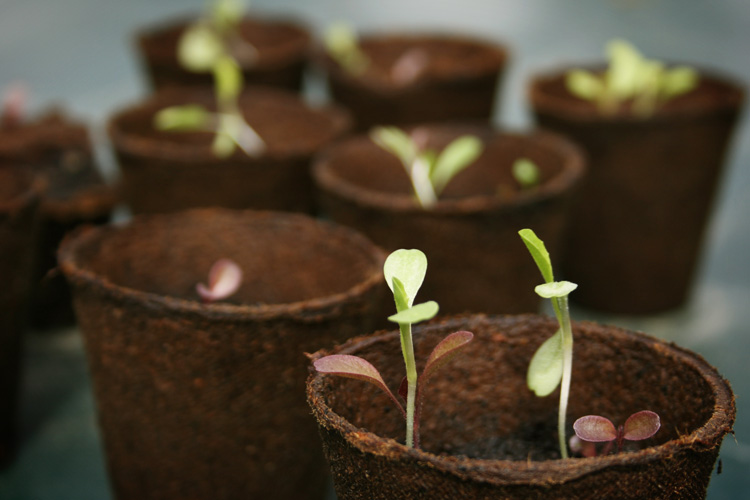
What shape waits in the seed of you
to grow and spread its branches
against a future sky?
David Whyte
What shape waits in the seed of you
to grow and spread its branches
against a future sky?
David Whyte

Once, the sage Tulsidas saw a scorpion that was struggling to escape from a river. The scorpion was about to drown, when Tulsidas reached over and saved it. The scorpion immediately stung Tulsidas. In shock, Tulsidas dropped the scorpion back into the waters, where it began struggling again to keep from drowning. Tulsidas again reached over and picked up the scorpion to save it from drowning. The scorpion stung Tulsidas once again. This happened three more times, before Tulsidas was finally able to toss the scorpion to safety in the wooded land around the river.
A man who had been watching this whole incident walked over to Tulsidas, and asked him, “Are you crazy?”
Tulsidas replied, “It is the scorpion’s nature to sting, and it is my nature to be helpful to all beings. If the scorpion keeps its nature even in the face of death, why should I give up my compassionate nature in the face of his sting?”
Photo: Per-Anders Olsson
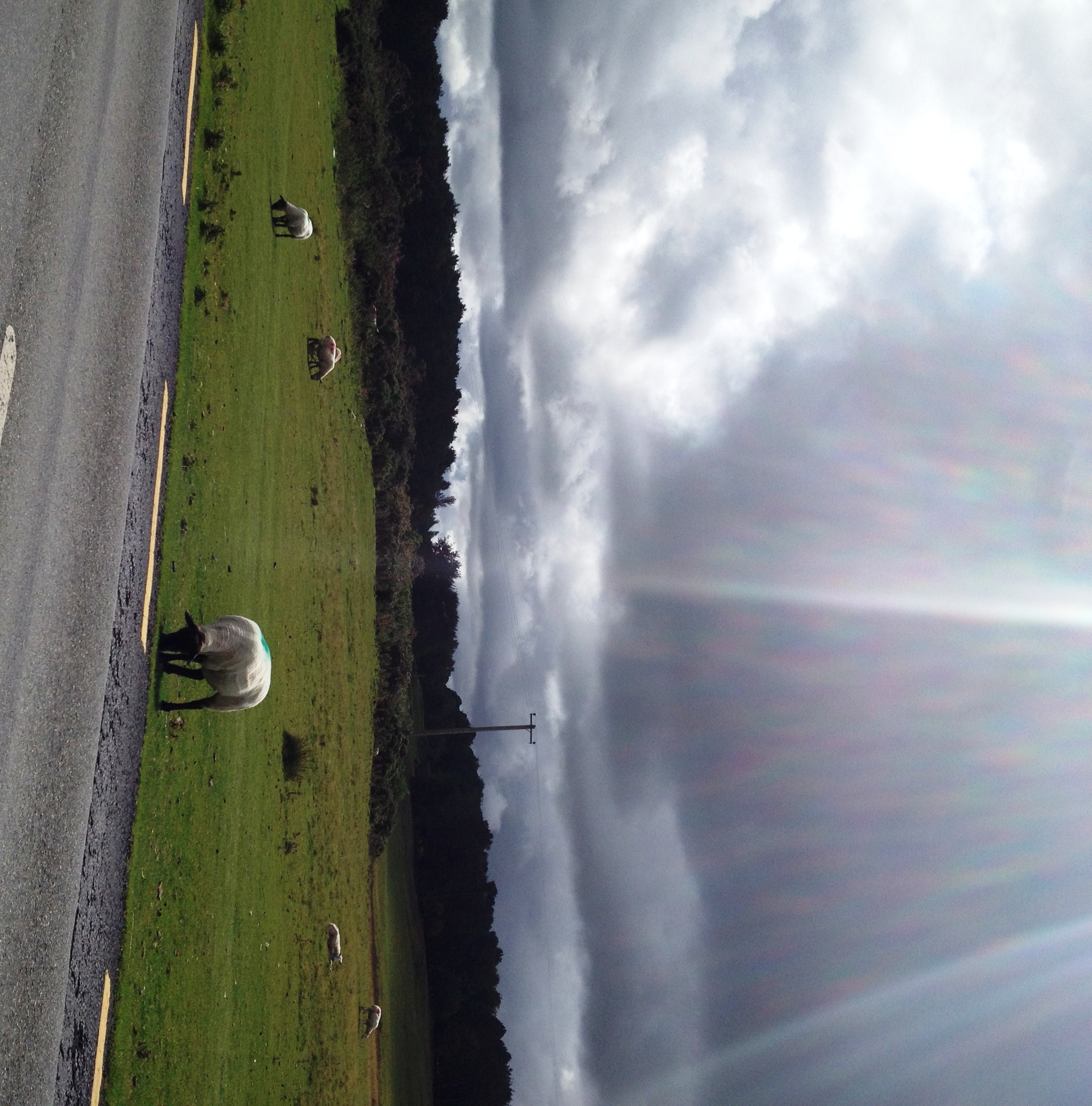
I drove back from some meetings yesterday across the Curragh, which is unique in Ireland as a flat open plain of land which has existed for thousands of years as uncultivated land, nowadays used for grazing. It is without fences, so the sheep roam freely, and sit at the side of the road, or, as was the case yesterday, simply wander out in front of the car without any regard for safety or “rules”. It was interesting to see them behaving without fear because of their familiarity with traffic and because they have become used to the freedom of the area, having grown up in flocks where this “courage” was normal. Most of our fearful behaviour is learnt, often due to frightening responses or lack of encouragement when we were young, or simply by being in proximity with people whose dominant narrative was fearful. Knowing where they originate is less important than recognizing their presence in us as adults, where they frequently operate as thoughts, feelings and bodily sensations that we may not be aware of or simply think are inevitable.
We are more addicted to fear than to fearlessness. Notice how much of the day you hold tightly to your fears, especially the fear of the loss of control. All of our “what if” thinking falls into this category: “What if I don’t do it right?” “What if it’s painful?” “What if I look bad?“ These thoughts are based on wanting to control some imagined future more than on what’s happening now. It’s crucial to see and to label them with the question: “What is my most believed thought right now?”
After seeing the mental constructs, we just sit, experiencing what’s happening right now, aware of the intense physical sensations of anxiety — the tightness, the queasiness, the narrowing down. We might ask the practice question, “What is this moment?” What happens when we do this? Finding the answer is what practice is really about.
Again, the simplicity and clarity of practice amounts to this: first, we must see through the mental process, dropping the story line of “me.” What is the story line of “me”? It’s the addiction to comfort and thoughts, to our self-judgments and emotions, to our identities and our fears.
Ezra Bayda

Just as a snake sheds its skin,so we should shed our past, over and over again. The Buddha
For many ancient people, the snake was a symbol of life, shedding its skin again and again to be born anew. This was frequently represented in the image of the snake as a circle eating its own tail. Jung believed that this symbol had an archetypal meaning for humans, with snakes having the enviable quality of being able to let go of what was no longer needed for growth and start again, seeing the world from a fresh new perspective. For example, the Dunsun tribe in Northern Borneo have a myth about the origins of humankind, which really reveals their way of grappling with some of the ongoing realities of human existence. In their Creation Myth, humans are contrasted with snakes, who are seen to continually renew themselves by shedding their skin. In this way it was believed that they did not die. Growth for us sometimes means letting go and moving on from the past, shedding dead skin in order to live fully.
…The way to stay closest to the pulse of life, the way to stay in the presence of that divine reality which informs everything is to be willing to change. Still, change what? To change whatever has ceased to function within us. To shed whatever we are carrying that is no longer alive. To cast off our dead skin because dead skin can’t feel. Dead eyes can’t see. Dead ears can’t hear. And without feeling, there is no chance of wholeness, and wholeness remains our best chance to survive the pain of breaking.
Mark Nepo, The Book of Awakening
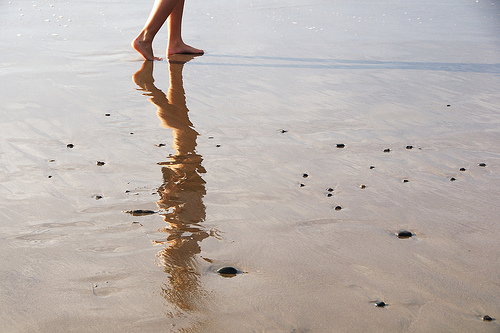
There is an internal landscape, a geography of the soul; we search for its outlines all our lives. Some find it in the place of their birth; others may leave a seaside town, parched, and find themselves refreshed in the desert. There are those born in rolling countryside who are really only at ease in the intense and busy loneliness of the city. For some, the search is for the imprint of another; a child or a mother, a grandfather or a brother, a lover, a husband, a wife, or a foe. We may go through our lives happy or unhappy, successful or unfulfilled, loved or unloved, without ever standing cold with the shock of recognition, without ever feeling the agony as the twisted iron in our soul unlocks itself and we slip at last into place.
Josephine Hart
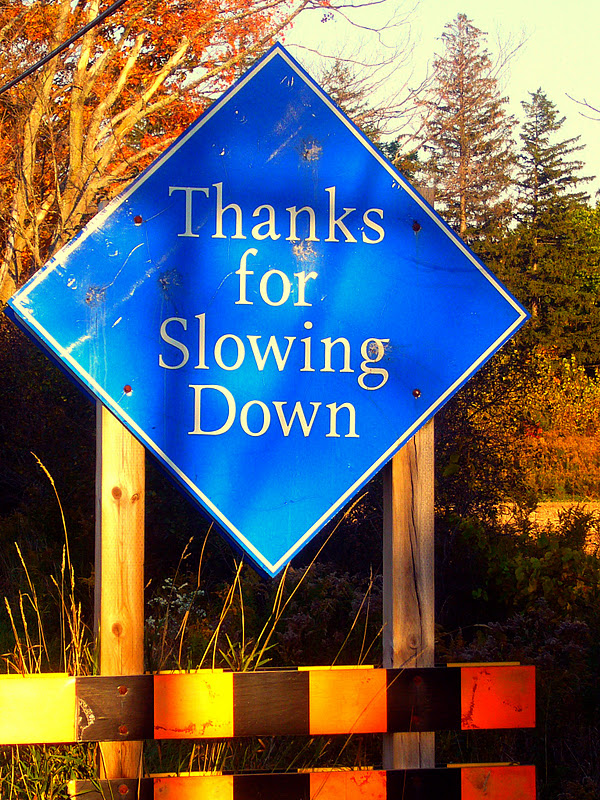
Life is so short,
we should all move slowly
Thich Nhat Hanh

