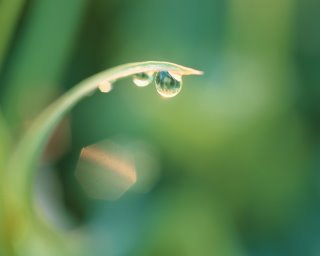
We can make our minds so like still water that beings gather about us that they may see, it may be, their own images, and so live for a moment with a clearer, perhaps even with a fiercer life because of our quiet.
W.B. Yeats, The Celtic Twilight
Since noise is increasing in all directions, the psychology of silence has taken on a special meaning. We are already so adapted to an abundance of screeching sound that we are surprised when stillness suddenly envelops us. Not that this happens very often. We begin to see that the whole question of our relation to the world, both positive and negative, centers in something like silence. So our service to the world might be simply to keep a place where there is no noise, where people can be silent together.
If we think of suffering as something unnatural, something that we shouldn’t be experiencing, then it’s not much of a leap to begin to look for someone to blame for our suffering. If I’m unhappy, then I must be the victim of someone or something – an idea that’s all too common in the West. The victimizer may be the government, the educational system, abusive parents, a ‘dysfunctional family,’ the other gender or our uncaring mate. Or, we may turn the blame inward: there’s something wrong with me, I’m the victim of disease, of defective genes perhaps. But the risk of continuing to focus on assigning blame, and maintaining a victim stance, is the perpetuation of our suffering – with persistent feelings of anger, frustration, and resentment.
Dalai Lama
As I have written before, Jacques Lusseyran was a French writer who took part in the Resistance against the German Occupation, and he continued to organize groups against the Nazis even after he was sent to Buchenwald concentration camp. His work was all the more striking because he was totally blind from the age of 8, following an accident at school. His experiences give him a certain authority when it comes to reflections on what makes for contentment or unhappiness:
Unhappiness, I saw then, comes to each of us because we think ourselves at the center of the world, because we have the miserable conviction that we alone suffer to the point of unbearable intensity. Unhappiness is always to feel oneself imprisoned in one’s own skin, in one’s own brain.
Jacques Lusseyran.
Joy seems to be part of an unconditional wish to live, not holding back because life may not meet our preferences or expectations. Joy seems to be a function of the willingness to accept the whole and to show up and meet with whatever is there. It has a kind of invincibility that attachment to any particular outcome would deny us. This willingness to win or lose moves us out of an adversarial relationship to life and into a powerful kind of openness. From such a position we can make a greater commitment to life. Not only pleasant life or comfortable life, or our idea of life, but all life. Joy seems more closely related to aliveness than to happiness.
Rachel Naomi Remen, Kitchen Table Wisdom