Don’t carry away a conclusion unless it has been arrived at through your direct experience.
Rather, if there hasn’t been direct experience, carry away the question.
Toni Parker, The Silent Question
Don’t carry away a conclusion unless it has been arrived at through your direct experience.
Rather, if there hasn’t been direct experience, carry away the question.
Toni Parker, The Silent Question
Only knowledge gained through experience, the fruit of living and suffering, fills the heart with the wisdom of love, instead of crushing it with the disappointment of boredom and final oblivion. It is not the results of our own speculation, but the golden harvest of what we have lived through and suffered through, that has the power to enrich the heart and nourish the spirit. And all the knowledge we have acquired through study can do no more than give us some little help in meeting the problems of life with an alert and ready mind.
Karl Rahner
Most of us have learned to live, or have been encouraged to live, in a manner where we get love.
We want to be loved, and we think that being loved is the highest point.
But actually, loving is the highest point.
Stephen Levine
 Jung writing here – beautifully – on the slow, lifelong process of individuation and how it means a deep befriending of all the parts of ourself and our life story. It is what we are learning as we “stay” in meditation, becoming more and more at ease with the divisions within ourselves. It reminds us that we move towards the full potential of our own maturity through the struggles of life and that we can get “lost” many times along the way. To become fully ourselves means that we pass through these numerous “psychic transformations” and finally come to see that the happiness we were seeking for all along is based on what is already present within us and a reconciliation with what has made us who we are.
It is the state of someone who, in his wanderings among … his psychic transformations, comes upon a secret happiness which reconciles him to his apparent loneliness. In communing with himself he finds not deadly boredom and melancholy but an inner partner; more than that, a relationship that seems like the happiness of a secret love, or like a hidden springtime, when the green seed sprouts from the barren earth, holding out the promise of future harvest.
Jung, Mysterium coniunctionis
Keep walking, though there is no place to get to.
Don’t try to see through the distance.
That’s not for human beings.
Move within
but don’t move the way fear makes you move
Rumi
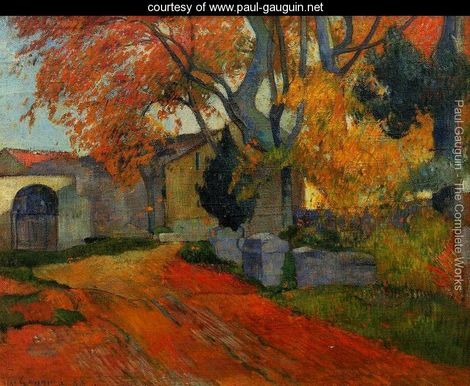
I shut my eyes in order to see.
Paul Gauguin, French artist

