
Know that joy is rarer, more difficult, and more beautiful than sadness.
Once you make this all-important discovery,
you must embrace joy as a moral obligation.
André Gide
Know that joy is rarer, more difficult, and more beautiful than sadness.
Once you make this all-important discovery,
you must embrace joy as a moral obligation.
André Gide

We are all meant to be mothers of God,
for God is always needing to be born.
Meister Eckhart

Even in the dark of winter we get reminders of colour and light
Three times my life has opened.
Once, into darkness and rain.
Once, into what the body carries at all times within it and
starts to remember each time it enters the act of love.
Once, to the fire that holds all.
These three were not different.
You will recognize what I am saying or you will not.
But outside my window all day a maple has stepped
from her leaves like a woman in love with winter, dropping
the colored silks.
Neither are we different in what we know.
There is a door. It opens. Then it is closed. But a slip of
light stays, like a scrap of unreadable paper left on the floor,
or the one red leaf the snow releases in March.
Jane Hirshfield, The Lives of the Heart: Poems
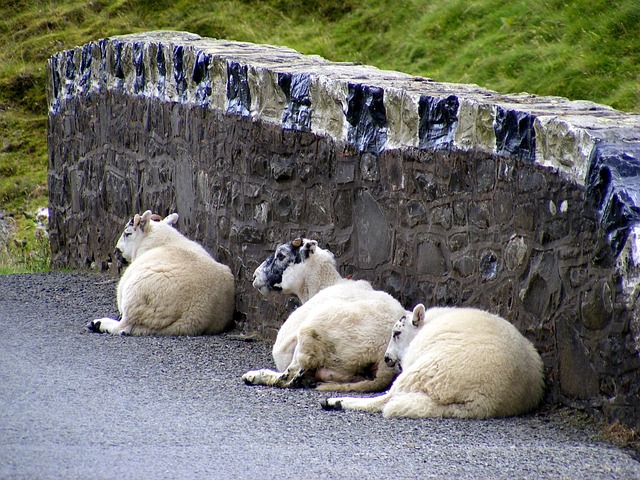
Very cold weather here this past week.
This is the time to be slow,
Lie low to the wall
Until the bitter weather passes.
Try, as best you can, not to let
The wire brush of doubt
Scrape from your heart
All sense of yourself
And your hesitant light.
If you remain generous,
Time will come good;
And you will find your feet
Again on fresh pastures of promise,
Where the air will be kind
And blushed with beginning.
John O’Donohue, from Beannacht, Book of Blessings

There is only one thing that all twelve stages [of the Four Noble Truths] have in common — they all present a highly subjective experience without mention of self. They are all expressed as: “There is; it is to be; it has been.”
The unenlightened perspective surely is: “I am; I should; I have…” If I was a mathematician, I could probably draw up an equation based upon these data which concludes: “I am” = “unenlightenment.”
The description of the practice of the Four Noble Truths does not suggest a process of becoming enlightened. It seems that a particular viewpoint is sustained, and understanding arises through it. The viewpoint is a focus upon dukkha [suffering/ stress] in an objective, dispassionate way. …This leads to a most powerful insight because it reveals that dukkha is structured, created and not absolute, and therefore possible to be dismantled or not created.
Ajahn Sucitto, The Dawn of the Dhamma

Colder weather, higher fuel and food costs and the presence of a cruel war…
Times of scarcity need to be met with generosity,
times of fear with comfort,
times of uncertainty with presence.
Thomas Hübl
 Mindfulbalance