Walking through this world

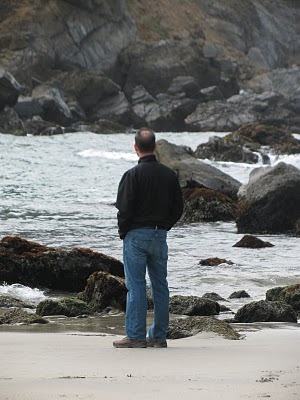
A final post this week with connection to Saint Francis of Assisi, this time a poem about an imagined walk through the world. We walk quickly, to get to our destination. We keep our eyes on ourselves and our own concerns. Our fears keep us turned in on ourselves, comparing our life to what we think it should be.  What if we walked slowly this weekend, noticing, paying attention.…..

I think God might be a little prejudiced.
For once He asked me to join Him on a walk through this world,
and we gazed into every heart on this earth,
and I noticed He lingered a bit longer
before any face that was weeping,
and before any eyes that were laughing.
And sometimes when we passed a soul in worship
God too would kneel down.
I have come to learn: God adores His creation.

Taken from Mala of the Heart: 108 Sacred Poems

Keeping our heart limitless

There are days when we have experiences which make us feel that it is better to close our hearts. However, all the great wisdom traditions encourage us towards a softening of the heart, toward a warm opening to others, even when that seems to be dangerous. As humans, a huge portion of our energy each day is spent dealing with anxiety and the fear of losing safety. These can arise suddenly and take all our attention, encouraging us to close, to become cool, to harden around ourselves. In Buddhism, one antidote to this is to cultivate an opening toward others in “Metta” or Loving-kindness practice. Metta has the connotations of “spreading” or “expanding”. It is radiant. It reaches out. It is an active friendliness  in interpersonal relationships which we cultivate. It works against the fears which  make our lives narrow and dark, and the tendency to dualistically split our lives into “me” and “them”

As a mother at the  risk of her own life protect her child, her only child, even so should one cultivate a limitless heart with regard to all beings. So with a heart of boundless friendliness  should one cherish all living beings; radiating kindness over the entire world.

The Buddha, Sutta Nipata I, 8 b – The Metta Sutta.

Sometimes wisdom comes through sadness

Even in our sleep
Pain which cannot forget
Falls drop by drop upon the heart
Until, in our own despair,
Against our will,
Comes wisdom
Through the awful grace of God.

Aeschylus

Who others really are

To relate to others compassionately is a challenge. Really communicating to the heart and being there for someone else…means  not shutting down on that person, which means, first of all, not shutting down on ourselves. This means allowing ourselves to feel what we feel and not pushing it away. It means accepting every aspect of ourselves, even the parts we dont like. Only in an open, non-judgmental space can we acknowledge what we are feeling. Only in an open space, where we’re not all caught up in our own version of reality, can we see and hear and feel who others really are, which allows us to be with them and communicate with them properly.

Pema Chodron, When Things Fall Apart

Comfort for the soul

Like Saint Francis yesterday, Mary Oliver finds comfort in the singing of a bird. For us too, nature is a great place to find comfort in our moments of difficulty. Sometimes we get glimpses of a deeper reality, when our heart opens wide and time seems to stand still:


….. finally I heard him among the first leaves—
then I saw him clutching the limb

in an island of shade, with his red-brown feathers, all trim and neat for the new year.

First, I stood still

and thought of nothing.
Then I began to listen.
Then I was filled with gladness—
and that’s when it happened,

when I seemed to float, to be, myself, a wing or a tree—
and I began to understand what the bird was saying,

and the sands in the glass
stopped
for a pure white moment

while gravity sprinkled upward

like rain, rising, and in fact
it became difficult to tell just what it was that was singing—
it was the thrush for sure, but it seemed

not a single thrush, but himself, and all his brothers,
and also the trees around them,
as well as the gliding, long-tailed clouds
in the perfectly blue sky— all, all of them

were singing.
And, of course, yes, so it seemed,
so was I.
Such soft and solemn and perfect music doesn’t last

for more than a few moments.
It’s one of those magical places wise people
like to talk about.
One of the things they say about it, that is true,

is that, once you’ve been there,
you’re there forever.
Listen, everyone has a chance.
Is it spring, is it morning?

Are there trees near you,
and does your own soul need comforting?
Quick, then— open the door and fly on your heavy feet; the song
may already be drifting away.

Mary Oliver, Such Singing in the Wild Branches (2003)
Richard Davidson’s new project

We have already written about the work of Richard Davidson and his work at the Laboratory for Affective Neuroscience in the University of Wisconsin, Madison. He was featured in an interesting article last week in the New York Times where the Dalai Lama contributed 50,000 dollars to his recently established Centre for Investigating Healthy Minds. The short article is worth reading and charts the increasing scientific interest into the effects of meditation on the brain.

The center  is now working on an exciting new project, teaching meditation skills to school children in Madison. Based on earlier research,  they wish to see what the effects of teaching compassion and loving-kindness meditation has on the children. The children are led in meditation  focusing on kindness thoughts toward loved ones, strangers, even enemies. Previous research by Barbara Friedrickson would indicate that this will boost positive emotions and a general sense of well-being in life. The research which Davidson has commenced is longitudinal,  and so the children will be followed into middle school to see how their behaviour compares with a control group of non-meditators.

For the fully article check out www.nytimes.com/2010/09/27/us/27happy.html?_r=3&th&emc=th

Photo taken from the New York Times