
The one who knows that enough is enough
will always have enough.
Lao Tzu, Tao Te Ching, 46
The one who knows that enough is enough
will always have enough.
Lao Tzu, Tao Te Ching, 46
And did you get what
you wanted from this life, even so?
I did.
And what did you want?
To call myself beloved,
to feel myself
beloved on the earth.
Raymond Carver, written during his last, terminal, illness

We frequently identify with the mental creations that have come together during our childhood to form our “personality”, but often these are fear-based and limiting.
The Buddha called the deepest dimension of the self, and the deepest dimension of reality, the “unborn” or the “uncreated.” In the Khuddaka Nikaya, the Buddha declared: “There is an unborn, unoriginated, uncreated, unformed…. Since there is an unborn, unoriginated, uncreated, and unformed, therefore there is an escape from the world of the born, originated, created and formed”.
Modern spiritual masters call that depth dimension the “ground of being.” In that ground, there is neither time nor space. Because there’s no time or space, there is no history. Because there is no history, there is only freedom….The Buddha was right. There is an escape from alienation, separation, and fear, and that escape is the awakening to the deepest dimension of our own self.
Andrew Cohen, The Only Place in the Universe
People often discover at the time of their death that they’re much more than the small, separate self they’ve taken themselves to be. What’s amazing to me is that we take all that we are and shrink it down to such a small story. And then live into that story as if it were true. At the end of their life, people realize they were living in too small a story.
We have this term that we use “later”. Its very comfortable, this term “later”. It’s always gonna be later: “I’ll get to that later” or “Death will come later”. I think it gives us a comfortable distance from this experience that’s rather mysterious to us. Death is not just happening to us at the end of a long road. Its always with us. It’s in the marrow of every passing moment. I call it “the secret teacher that’s hiding in plain sight” that helps us to discover really what matters.
Frank Ostaseski, What the living can learn from the dying
The start of November has traditionally been a time to reflect on themes of letting go and impermanence and for remembering those who have passed on on before us.
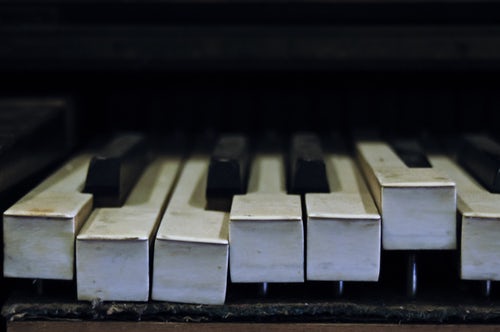
In life, nothing dwells. The wind blows and then stops. The blossoms burst forth and then fall. Things come and go. The melody drifts back onto an aching E flat and then back to E again. The song of your life is played on white and black keys. Sadness is … an essential truth of human life. But let’s not dwell there. Not while the song is still playing.
Karen Maizen Miller, Be Sad

On the Feast of All Saints
Strangely, all of life’s problems, dilemmas, and difficulties are not resolved not by negativity, attack, criticism, force, or logical resolution, but always by falling into a larger “brightness” – by falling into the good, the true, and the beautiful – by falling into God.
Richard Rohr, Falling Upward: A Spirituality for the Two Halves of Life
 Mindfulbalance