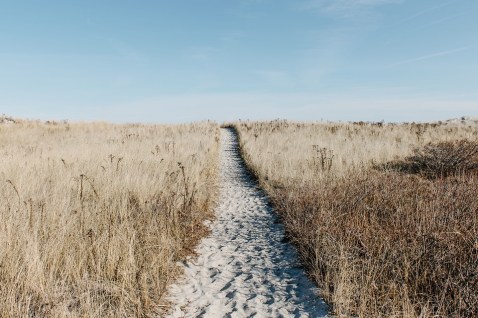
Saturday: Getting a break from the thinking mind

Don’t you wish they would stop,
all the thoughts swirling around in your head,
bees in a hive, dancers tapping their way across the stage.
I should rake the leaves in the carport, buy Christmas lights.
Was there really life on Mars? What will I cook for dinner?
I walk up the driveway, put out the garbage bins.
I should stop using plastic bags, visit my friend
whose husband just left her for the Swedish nanny.
I wish I hadn’t said Patrick’s painting looked “ominous.”
Maybe that’s why he hasn’t called.
Does the car need oil, again? There’s a hole in the ozone
the size of Texas, and everything seems to be speeding up.

Come, let’s stand by the window and look out
at the light on the field. Let’s watch how
the clouds cover the sun, and almost nothing
stirs in the grass.

Danusha Lameris,  1971 – American Poet, from The Moons of August
Making Space

The life that we have in our mind, the life that is a reflection of our planning, the life that has been constructed out of bits and pieces in our environment — external conditioning, things we have observed in other people, things that influential people have told us — is actually not who we are. Life emerges out of the silence of our inner being. When I was in graduate school I worked with a Jungian analyst, June Singer. She used to say, “Work expands to fill all of the available space.” The problem is not the amount of things you have in your life, it’s the attitude. It’s your fear of space.

Reginald Ray, Busyness is laziness

Declutter

The art of cleaning is a simple spiritual activity that is often overlooked. The image of the monk sweeping the courtyard has a deep significance, because without the practice of cleaning there can be no empty space, no space for a deep communion with the sacred. Outer and inner cleaning belong to the foundation of spiritual practice, and as the monk’s broom touches the ground, it has a particular relationship to the Earth. We need to create a sacred space in order to live in relationship to the sacred within ourselves and within creation.

Our present culture teaches us to accumulate, but not how to make empty. But for real spiritual work in the inner and outer worlds, in order to give space to the divine, in order to return to the sacred, we need to practice a certain purification in our daily lives. We learn to eat consciously, to be attentive to our outer environment, to sweep our courtyard. We also need to learn how to clean our house, both physically and inwardly. Just as we need to learn to empty our mind in meditation, to clear away the clutter of unnecessary thoughts, so do we need to consciously clean our living space.  

Llewellyn Vaughan-Lee, The Art of Cleaning

A hunger for eternity

Certainly there is within each of us a self that is neither a child, nor a servant of the hours. It is a third self, occasional in some of us, tyrant in others. This self is out of love with the ordinary; it is out of love with time. It has a hunger for eternity.

Mary Oliver, Upstream

Turning up for your life

You will never be able to experience everything.

So please, do poetical justice to your soul and simply experience yourself.

Camus

Small forgotten miracles

“It is believed that the onion originally came from India. 
In Egypt it was an object of worship — why I haven’t been able to find out. From Egypt the onion entered Greece and on to Italy, thence into all of Europe.” 
Better Living Cookbook 
 

When I think how far the onion has traveled
just to enter my stew today, I could kneel and praise
all small forgotten miracles,
crackly paper peeling on the drainboard,
pearly layers in smooth agreement,
the way the knife enters onion
and onion falls apart on the chopping block,
a history revealed.
And I would never scold the onion
for causing tears.
It is right that tears fall
for something small and forgotten.
How at meal, we sit to eat,
commenting on texture of meat or herbal aroma
but never on the translucence of onion,
now limp, now divided,
or its traditionally honorable career:
For the sake of others,
disappear.

Naomi Shihab Nye