Not being afraid

As Chögyam Trungpa Rinpoche summarizes: “Ultimately, that is the definition of bravery: not being afraid of yourself.” Believing the seemingly non-stop, discursive commentary that courses through our heads simply interferes with letting ourselves be the brave beings we actually are. Such hyper-vigilance stems from fear, of course: “If I don’t check myself constantly, won’t I make a mistake?”

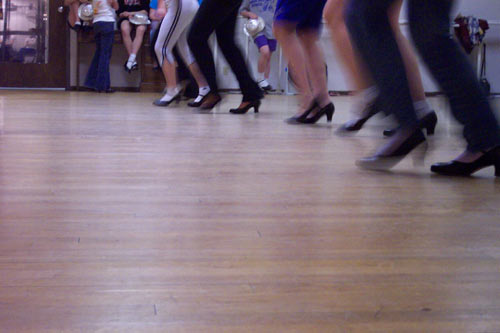
Letting go of incessantly measuring and comparing ourselves to others leads to spontaneous acts of courage and compassion. It’s like learning a dance step well enough that we no longer need to keep looking down at our feet.

Gaylon Ferguson, Natural Bravery

Overcoming our fears

The mind creates the abyss,

the heart crosses it.


Nisargadatta Maharaj, 1897 – 1981, Indian non-dualist teacher

90 seconds

We have a choice. We can spend our whole life suffering because we can’t relax with how things really are, or we can relax and embrace the open-endedness of the human situation, which is fresh, unfixated, unbiased.

So the challenge is to notice the emotional tug of shenpa when it arises and to stay with it for one and a half minutes without the storyline. Can you do this once a day, or many times throughout the day, as the feeling arises? This is the challenge. This is the process of unmasking, letting go, opening the mind and heart.


Pema Chödrön, Living Beautifully: with Uncertainty and Change

Allow all to pass

Just do your best. This is the whole of practice, the whole of our life. All sorts of chatter comes up in the midst of the circumstances of our life. Something breaks, we clean it up or fix it up. Or we can start chattering about, “Why does this happen to me? Oh, I always do this. What am I going to do? What does this mean?” We all know the consequences of that. After speaking with someone, do we continue holding on to the discussion with “internal” chatter, like, “Why did they say that to me? It’s not fair.” If that chatter — habits of reactions, habits of thoughts and emotions—arises, then right there in the noticed chatter is our practice. Just be chatter in the midst of doing, and allow chatter to pass. 

Elihu Genmyo Smith , Zen Buddhist teacher, Do Your Best

Reset your compass

When you’re overwhelmed by illness or loss, by the conflicts around you, when you feel you are lost in the darkness, sometimes all you can do is to breathe consciously and gently with your pain and anguish and know that with this simple gesture you are resetting the compass of your heart, no matter your circumstances.

By taking that one simple, mindful breath, you will return again to compassion and realize that you are more than your fears and confusions.

Jack Kornfield

The language of descent

On this Good Friday in these pandemic times….

We seldom go freely into the belly of the beast. Unless we face a major disaster like the death of a friend or spouse or loss of a marriage or job, we usually will not go there. As a culture, we have to be taught the language of descent. That is the great language of religion. It teaches us to enter willingly, trustingly into the dark periods of life. These dark periods are good teachers. Religious energy is in the dark questions, seldom in the answers. Answers are the way out, but that is not what we are here for. But when we look at the questions, we look for the opening to transformation. Fixing something doesn’t usually transform us. We try to change events in order to avoid changing ourselves. We must learn to stay with the pain of life, without answers, without conclusions, and some days without meaning. 

Richard Rohr