A letting go practice

November is the month of letting go of what is no longer needed or has fulfilled its purpose, just as trees now release the last season’s leaves. In China, an old proverb speaks to this: “Give away, throw away or move 27 items for nine days and your life will change.” The practice of letting go teaches us about non-attachment. The process of releasing or emptying provides room for new possibilities, opportunities, and blessings to enter our lives. In November we can readily see how much we have to be thankful for compared to our troubles and dissatisfactions. As we extend gratitude for the bounty and goodness that are present in our lives, any pockets of ingratitude that once seemed large in our imaginations become dwarfed- nearly nonexistent. 

Angeles Arrien 1940 – 2014, Cultural anthropologist.

The driving force


Today, November 2nd, is traditionally the day that we remember those close to us who have died and gone before us

All men should strive to learn before they die,

what they are running from,

and to, and why.

James Thurber

We rush through the day, we miss so much

Another Autumn Saturday, two more poets.

Very foggy all day yesterday, a good metaphor for how we live our lives sometimes. 

Sometimes the mountain
is hidden from me in veils
of cloud, sometimes
I am hidden from the mountain
in veils of inattention, apathy, fatigue,
when I forget or refuse to go
down to the shore or a few yards
up the road, on a clear day,
to reconfirm
that witnessing presence.

Denise Levertov, Witness. 

Instructions for living a life: Pay attention. Be astonished.

Mary Oliver, Sometimes      

Where are you going?

We frequently get caught up in work, and identify with the pressing demands there, which pull us along and create a sense of great importance.

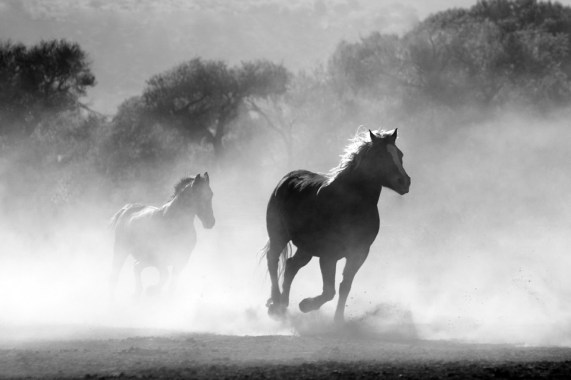
There is a story in Zen circles about a man and a horse. The horse is galloping quickly, and it appears that the man on the horse is going somewhere important. Another man standing alongside the road, shouts, “Where are you going?” and the first man replies, “I don’t know! Ask the horse!” This is also our story. We are riding a horse, we don’t know where we are going, and we can’t stop. The horse is our habit energy pulling us along, and we are powerless. We struggle all the time, even during our sleep. We are at war within ourselves…We have to learn the art of stopping – stopping our thinking, our habit energies, our forgetfulness, the strong emotions that rule us. 

 Thích Nhât Hanh, The Heart of the Buddhas Teaching

The place from which all other parts are named


It is always a trauma for the human psyche when those elements it has over-invested itself in at the periphery of life are withdrawn, and the spring-like world of growth and opportunity seems to close down, as if the old currencies have become worthless while we as yet do not know how to value or harvest the following season. But this form of trauma has also been seen by many of our great religious, contemplative and artistic traditions as an invitation back to another kind of valuation, a return to a more internal focus, an opportunity to revive an old friendship with the place from which all the peripheries are recognized, priced and named. This internal, alchemical, almost catalytic core of identity-making and decision-making has long been associated with the soul of an individual; the part of us attempting to belong to the world in the biggest way it can; the part that witnesses our outer actions, stirs our conscience and quite often seems to be at odds with those other parts of us trying to game the system at the periphery.

David Whyte

One world at a time

Satisfaction is very close and simple: the strange happiness of completely joining with whatever we are doing in that moment… When the writer Thoreau was on his deathbed, a visitor asked him – “from where you lie, so close to the brink of the dark river, can you say how the opposite shore looks to you?”

It is said that he replied gently, “One world at a time”

Susan Murphy, Upside Down Zen: Finding the Marvelous in the ordinary