The difference between effort and struggle

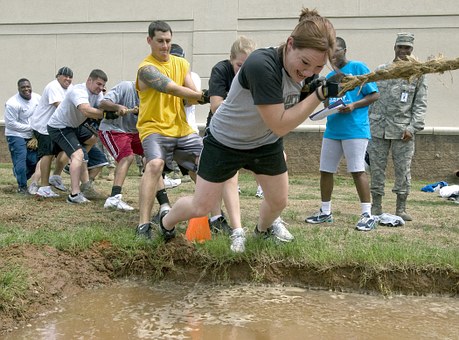
Struggle happens for all of us, so it must have  a place in the scheme of things, but I for one have spent way too much time struggling for what struggle can never accomplish. For struggle is not the same as effort — what is sometimes called “right effort.” We all need to make an effort in every area of our life …Life doesn’t just provide us with food and shelter as a natural right. Effort is a natural exertion of the personal will toward a specified end. 

But struggle is an added push that is born of fear. Ultimately, it is born of the fear of not surviving, of dissolving and disappearing, not just as a physical form but as a psychological self… Struggle will never get us the things we want most – love, meaning, freedom from anxiety, contentment with ourselves exactly as we are, imperfections and all. For these we need another way. That way begins and ends in surrender, in letting go of our resistance to life as it presents itself.

Roger Housden, Dropping the Struggle: Seven Ways to Love the Life you Have
Sunday quote: Learning from our mistakes

Growth begins when we start to accept our own weakness

Jean Vanier

Metaphors to live by

Spring is a metaphor for transitions. It moves from lifelessness to life and we move from lifelessness to life in each cycle of breathing. If we know change is going to occur we are in a better place to accept it. If we expect things to stay constant we are vulnerable to frustration, disappointment, and resistance.

Spring is also a metaphor for forgiveness. Whatever happened in the last season, life begins anew with no carryover resentment from the past. Spring reminds us, as Pema Chodron says, to start where we are.

Spring shows us the cycle of living and dying on a bigger scale do. Everything comes into being and goes out of being — changing its form.  Spring invites us not to become attached to things, even the most precious things in our life. The invitation is to love things wholeheartedly with the awareness that they will not be with us forever. And, indeed, we, ourselves, will not be here forever. The invitation is to not be afraid to grieve when that grief becomes necessary. Grief is, at times, the admission price to the present moment.

So welcome spring and your multifaceted metaphors for mindful living!

Arnie Kozak, on Beliefnet

Being joyful in an uncertain world

The last sentence in this quote has become quite famous as a way of navigating the inevitable ups and downs of this life:

All life is sorrowful; there is however an escape from sorrow; the escape is nirvana – which is a state of mind or consciousness, not a place somewhere, like heaven. It is right here, in the midst of the turmoil of life. It is the state you find when you are no longer driven to live by compelling desires, fears, and social commitments, when you have found your center of freedom and can act by choice out of that. Voluntary action out of this center is the action of the bodhisattvas – joyful participation in the sorrows of the world. 

Joseph Campbell, The Power of Myth

…and make us stronger

File:Croagh patrick path.jpg

See how the flesh grows back
across a wound, with a great vehemence,
more strong
than the simple, untested surface before.

Jane Hirshfield,  For What Binds Us 

photo Kanchelskis

Surviving or celebrating?

File:Ghana women dance (7250869584).jpg

Harley Swift Deer, a Native American teacher, says that each of us has a survival dance and a sacred dance, but the survival dance must come first. Our survival dance, a foundational component of self-reliance, is what we do for a living — our way of supporting ourselves physically and economically. For most people, this means a paid job. Everybody has to have a survival dance. Finding and creating one is our first task upon leaving our parents’ or guardians’ home.

Once you have your survival dance established, you can wander, inwardly and outwardly, searching for clues to your sacred dance, the work you were born to do. This work may have no relation to your job. Your sacred dance sparks your greatest fulfillment and extends your truest service to others. You know you’ve found it when there’s little else you’d rather be doing. Getting paid for it is superfluous. You would gladly pay others, if necessary, for the opportunity. Hence, the importance of self-reliance, not merely the economic kind implied by a survival dance but also of the social, psychological, and spiritual kind. To find your sacred dance, after all, you will need to take significant risks. You might need to move against the grain of your family and friends.  Swift Deer says that once you discover your sacred dance and learn effective ways of embodying it, the world will support you in doing just that.

Bill Plotkin, SoulCraft