On being amazing and perfect

tree

When entering a supermarket store on Saturday I was greeted with a banner telling me that shopping there would make this Christmas “the most perfect ever”.  This desire for perfect conditions  is necessary when we are young, in order to allow the development of a stable self. As the English psychoanalyst Winnicott said,  “the mind has a root in the need of the individual, at the core of the self, for a perfect environment”. However, as the child grows,  its capacity to live with a less than perfect environment develops and the mother just has to be “good enough” in an ongoing committed relationship rather than being perfect in every instance. And it is the same for us as adults.

Our lives are always a work in progress, with moments  of failing followed by repairing, integration mixed with disintegration.  Despite what we sometimes think and express from time to time,  we don’t really need perfection. We push ourselves hard enough due to that false belief. That things go wrong – despite our best efforts – is just part of the human condition. What we really want is to be seen as we are – not completely sorted out –  and for that to be good enough. 

It’s odd in a way, this business of Perfect Christmasses. The story of the first Christmas is the story of a series of completely unplanned, messy events – a surprise pregnancy, an unexpected journey that’s got to be made, a complete muddle over the hotel accommodation when you get there… Not exactly a perfect holiday.

But it tells us something really vital. We try to plan all this stuff and stay in charge, and too often (especially with advertisers singing in our ears the whole time) we think that unless we can cook the perfect dinner, organise the perfect Christmas, we somehow don’t really count or we can’t hold our heads up. But in the complete mess of the first Christmas, God says, ‘Don’t worry – I’m not going to wait until you’ve got everything sorted out perfectly before I get involved with you. I’m already there for you in the middle of it all, and if you just let yourself lean on me a bit instead of trying to make yourself and everything around you perfect by your own efforts, everyone will feel a little more of my love flowing’.

Archbishop of Canterbury, Pause for Thought, BBC Radio 2.

Sunday Quote: The mind of winter

winter-trees

I love the feel of winter, when things are stripped back, and we can see the bare outlines of trees and branches. Wallace Stevens reminds us “One must have the mind of winter”.  As we look around at the rush and the celebrations, we can ask “what is really worth celebrating”? We end up being busy, running after experiences but somehow losing our ability to play. 

Where is the Life 
we have lost in living? 
Where is the wisdom 
we have lost in knowledge? 
Where is the knowledge we have lost 
in information?

T.S. Eliot, Choruses from the Rock

Passing through

frost

It’s pointless to try to find peace through nullifying or erasing the sense world.

Peace only comes through not giving that world more substantiality or more reality than it actually possesses.

Ajahn Amaro

A way of holding

File:Noah's hand.jpg

More on butterflies and lightness in dealing with the daily events, or more precisely, the thoughts they give rise to :

For years and years I struggled
just to love my life. And then
the butterfly
rose, weightless, in the wind.
“don’t love your life
too much,” it said,
and vanished into the world.

Mary Oliver, One or Two Things

photo andre engels

Not visible

harvest

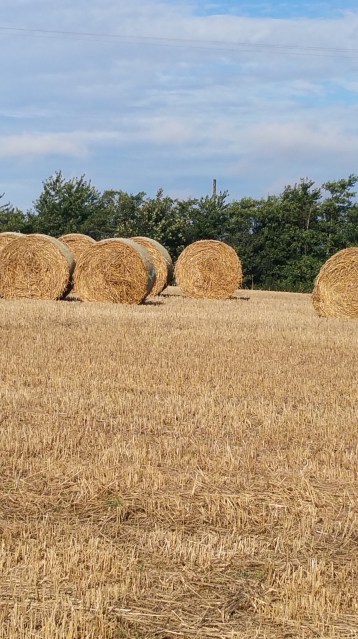
Some days or weeks we work with limited vision. The true meaning is hidden. We rely on inner values and on the commitment we have made.

Bringing in a full harvest from human effort has always been difficult, because what is worth bringing in is almost always hidden from us: think of the hard, protected kernel of the wheat amidst a waving sea of gold, or the the walnut nestled in its dense, unyielding skin of green and white, think of how common a much-wanted, simple understanding is needed, hidden by our complex thoughts; or the attempt to fully forgive when even forgiving a little seems to be the last thing we want to do; and lastly, the wish to love and to be loved, when loving is what we are most afraid to do.  

David Whyte, Letters from the House

In the wrong place

File:Cat washing mashing.jpg

We spend all our energy and waste our lives trying to re-create zones of safety, which are always falling apart. That’s the essence of samsara – the cycle of suffering that comes from continuing to seek happiness in all the wrong places.

Pema Chodron, Comfortable with Uncertainty: 108 Ways Teachings on Cultivating Fearlessness and Compassion