Fixed views

File:Changing the places.JPG

Problems arise depending on how fixed our ideas are, or how “attached ” we are to a particular vision of what a “good life” means. Is it a certain lifestyle or income, and is our role to provide that for our family? If so, then if something gets in the way of our earning enough o achieve this lifestyle, we will suffer. If ones identity is attached or stuck to a particular role…then disappointment, depression, anger and shame will arise if we can’t live up to it. Remember, everything in life is changing, impermanent.

Karuna Cayton, The Misleading Mind

photo Artur Andrzej

A special calling…to be ourselves

File:GalwayCorrib gobeirne.jpg

In the Ireland of my youth the word “vocation” was quite frequently heard, something which is not so common today. It could refer to jobs which required self-sacrifice and dedication, such as nursing or relief work abroad. However, it most frequently meant that you felt called to serve God in ministry in the Church.  As such it had a special, mysterious quality, almost as if taking you by surprise, from without. While the understanding of life in the context of a deeper purpose and meaning is quite beneficial psychologically, there was a danger of seeing vocation as something reserved for special people. In this quote, Parker Palmer, reminds us that becoming fully who we are, wherever we are at this moment, and not running away from it through regret or living in our thoughts, is the real way of finding purpose in life. It is not by looking elsewhere, but by accepting and inhabiting who and where we are.

What a long time it can take to become the person one has always been. How often in the process we mask ourselves in faces that are not our own. How much dissolving and shaking of ego we must endure before we discover our deep identity — the true self within every human being that is the seed of authentic vocation.

I first learned about vocation growing up in the church. But the idea of vocation I picked up in those circles created distortion until I grew strong enough to discard it. I mean the idea that vocation, or calling, comes from a voice external to ourselves, a voice of moral demand that asks us to become someone we are not yet — someone different, someone better, someone just beyond our reach.

Today I understand vocation quite differently — not as a goal to be achieved but as a gift to be received. Discovering vocation does not mean scrambling toward some prize just beyond my reach but accepting the treasure of true self I already possess. Vocation does not come from a voice ‘out there’ calling me to become something I am not. It comes from a voice ‘in here’ calling me to be the person I was born to be, to fulfill the original selfhood given me at birth by God.

Parker Palmer, “Now I Become Myself,”

photo Old man, Ballyknow Quay,  Galway, Ireland, by Greg O’Beirne

Shedding dead skin

Just as a snake sheds its skin,so we should shed our past, over and over again.  The Buddha

For  many ancient people,   the snake was a symbol of life, shedding its skin again and again to be born anew.  This was frequently represented in the  image of the snake as a circle eating its own tail.  Jung  believed that this symbol had an archetypal meaning for humans, with snakes having the enviable quality of being able to let go of what was no longer needed for growth and start again, seeing the world from a fresh new perspective. For example, the Dunsun tribe in Northern Borneo have a myth about the origins of humankind, which really  reveals their way of grappling with some of the ongoing realities of human existence.  In their Creation Myth, humans are contrasted with snakes, who are seen to continually renew themselves by shedding their skin. In this way it was believed that they did not die.  Growth for us sometimes means letting go and moving on from the past, shedding dead skin in order to live fully.

The way to stay closest to the pulse of life, the way to stay in the presence of that divine reality which informs everything is to be willing to change. Still, change what? To change whatever has ceased to function within us. To shed whatever we are carrying that is no longer alive. To cast off our dead skin because dead skin can’t feel. Dead eyes can’t see. Dead ears can’t hear. And without feeling, there is no chance of wholeness, and wholeness remains our best chance to survive the pain of breaking.

Mark Nepo, The Book of Awakening

Searching for a home

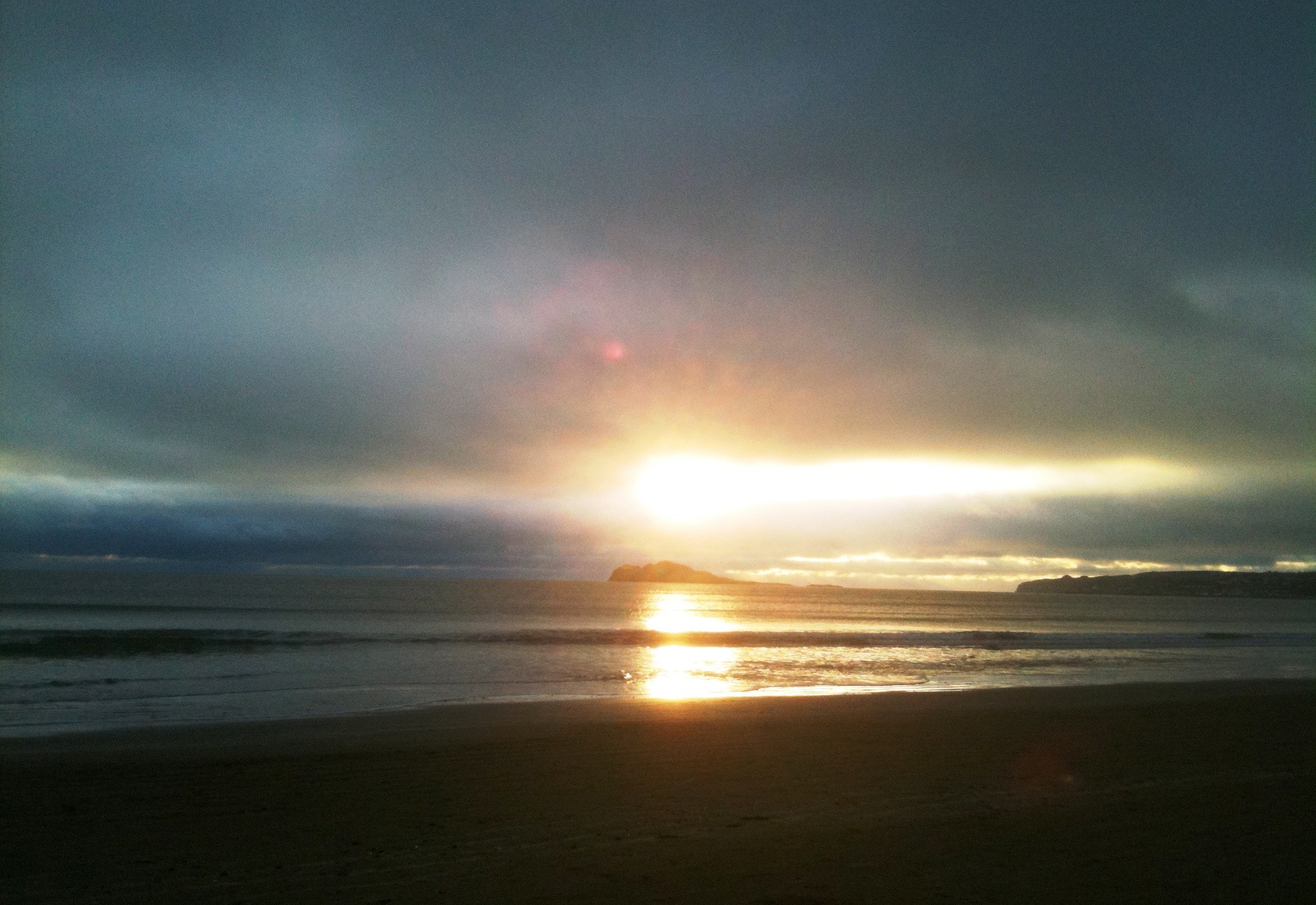
beach 44

There is an internal landscape, a geography of the soul; we search for  its outlines all our lives.   Some  find it in the place of their birth; others may leave a seaside town,  parched, and find themselves refreshed in the desert.  There are those  born in rolling countryside who are really only at ease in the intense  and busy loneliness of the city.  For some, the search is for the  imprint of another; a child or a mother, a grandfather or a brother, a  lover, a husband, a wife, or a foe.  We may go through our lives happy  or unhappy, successful or unfulfilled, loved or unloved, without ever  standing cold with the shock of recognition, without ever feeling the  agony as the twisted iron in our soul unlocks itself and we slip at last  into place.

Josephine Hart

Stories of who we are

portmarnock sun

The arrogant mind never stops looking for identity and  this identity always defines itself through attributes: “the beautiful  one”, “the smart one”, “the creative one”,  “the successful one”… We are always searching for something to be.

Dzigar Kongtrul Light Comes Through

Any time you visit a new country – or move to one, as is my case – your senses are heightened and a lot of impressions are made, simply because things are often done differently or in new ways. And sometimes we draw comparisons, or make judgments, such as “it was done better there” or “this is not so good”. It seems that the mind is always trying to fit our current experience into some kind of story, and likes to use comparisons to guide itself in that. It prefers a coherent narrative. We are always thinking about things such as where we are going, where we’ve come from, what we’re going to do. So when, the other day, I got a mail from a friend asking “What is it like to be back in Ireland”, I noticed that the mind immediately moved to present a response, even though it was too early to say anything. We like our identities to be defined, and so a story about our life is always there in the background. What I notice is that these stories can frequently put us under pressure and reflect expectation which we, or others, place on ourselves.

However, what is clear to me these days is that our practice in life is about dropping the habit of identifying with our limited and limiting stories which are often rooted in fear and instead about sticking closer to the confidence of our true nature and what the present moment brings. So a huge part of our meditation practice is relating to our experience in a fluid, non-fixed sense. Intellectually this is easy to see – we are, at all levels, constantly evolving and growing. On a physical level, we are always in process, changing every time new food is taken in,  with each breath we take, and as the body changes with growth and age. What we see, if we look closely, is a constant state of flux. Knowing this in an experiential sense is harder – we have to practice applying this to our experience and to whatever passes through the mind in the form of thoughts or emotions. This helps us to see life as  a series of moments of consciousness arising in succession, one at a time and then falling away.

So in this succession of experiences in every moment, and every day,  does it help us to try to establish a solid identity or attach categories to our experience? On one level I have found that is not and we are  actually not wishing for one. At any moment we have a working story of who we are, and maybe even have more than one. If we bring awareness to these stories we notice how they frequently create separation and suffering, as we often rush to defend the “self” created by them. We place a lot of energy into keeping solid this image – this concept –   of ourselves, and less energy into directly relating to our experience, moment by moment. If we do not  hook into,  or identify with,  many of the passing moods and thoughts which arise and fall away, a lot of our experience become easier, and  we are in a better position to welcome whatever happens. We find it easier to not define ourselves by our roles, our status, our relationships and our possessions, and consequently are not as threatened when these things change. Letting go of the story means that it is easier to give up on the expectations that we bring to each event and harder to see our “identity” as threatened,  or our life path not working out as “intended” , since we have given up on having that predetermined end. It means that we recognize and work better with the continually changing nature of experience and fight with it less. Holding this aspect of our self more loosely ironically means that our deepest self is more content.

A change in climate

rain-puddle

Let me say this before rain becomes a utility that they can plan and distribute for money. By “they” I mean the people who cannot understand that rain is a festival, who do not appreciate its gratuity, who think that what has no price has no value, that what cannot be sold is not real, so that the only way to make something actual is to place it on the market. The time will come when they will sell you even your rain. At the moment it is still free, and I am in it. I celebrate its gratuity and its meaninglessness.

Nobody started it, nobody is going to stop it. It will talk as long as it wants, this rain.

As long as it talks I am going to listen.

Thomas Merton, Rain and the Rhinoceros