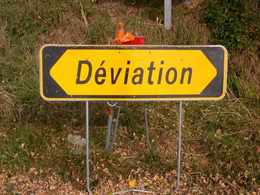
 Today is Bloomsday, the day that James Joyce set for his novel Ulysses, a story of a journey across the city of Dublin, based on the wanderings of Ulysses sailing home after the Battle of Troy. It reflects the ancient theme of life as a journey, of wisdom gained as we go along, of being blown off course and reaching a destination through paths not expected. It is the same for us: every day of our lives, winds blow and shift our direction. Some take us along with joy. Others throw us off-balance for a while, and there are winds that can blow hard and long, forcing us to keep our heads low under the gale. We all prefer to travel in sunny weather. However, what these ancient (and modern) stories tell us is that wisdom is an unexpected gift, and it frequently comes when we leave behind what we think we know or when we go through what seems like detours or thorough getting lost. The realities of life challenge us with much that is not on our simplistic maps, and we have to let go and sometimes wander in the dark, trusting that the outcome will be revealed in time.
Put away the book, the description, the tradition, the authority, and take the journey of self-discovery. Love, and don’t be caught in opinions and ideas about what love is or should be. When you love, everything will come right. Love has its own action. Love, and you will know the blessings of it. Keep away from the authority who tells you what love is and what it is not. No authority knows and he who knows cannot tell. Love, and there is understanding.
Krisnamurti


 It is the imperative in the mind that this moment somehow be different, that causes suffering. Peace is possible, here and now, in the middle of the world, in the middle of a life, in the middle of a body, in the middle of however you are and however the world is. Change may or may not happen in a way that we like. But the mind has a capability of saying “It’s like this, and I can manage it”, without creating extra difficulty. There is a path to peace. The path is a doable, cultivable skill of awareness in the mind.
 Mindfulbalance