Bare attention is difficult

As this morning’s quote reminds us, in meditation we practice giving bare attention to the breath, just noticing,  without adding anything. We try to extend this to life, slowing down the continual pre-judgments or commentary in our heads. However, it is not easy just to let things be, without the immediate adding of a word or evaluation. The mind quickly adds words, positive ones like, “This is good, I like it here”, or more likely spontaneous negative ones, such as ” This is not for me, This is boring” or “She always says the same things”. Fixed ideas mean that we lose curiosity about what is unfolding each day. So our practice includes getting the balance between knowing and not-knowing, trying to know fully what is actually happening and losing some of our stories about people or about how our life is going. 

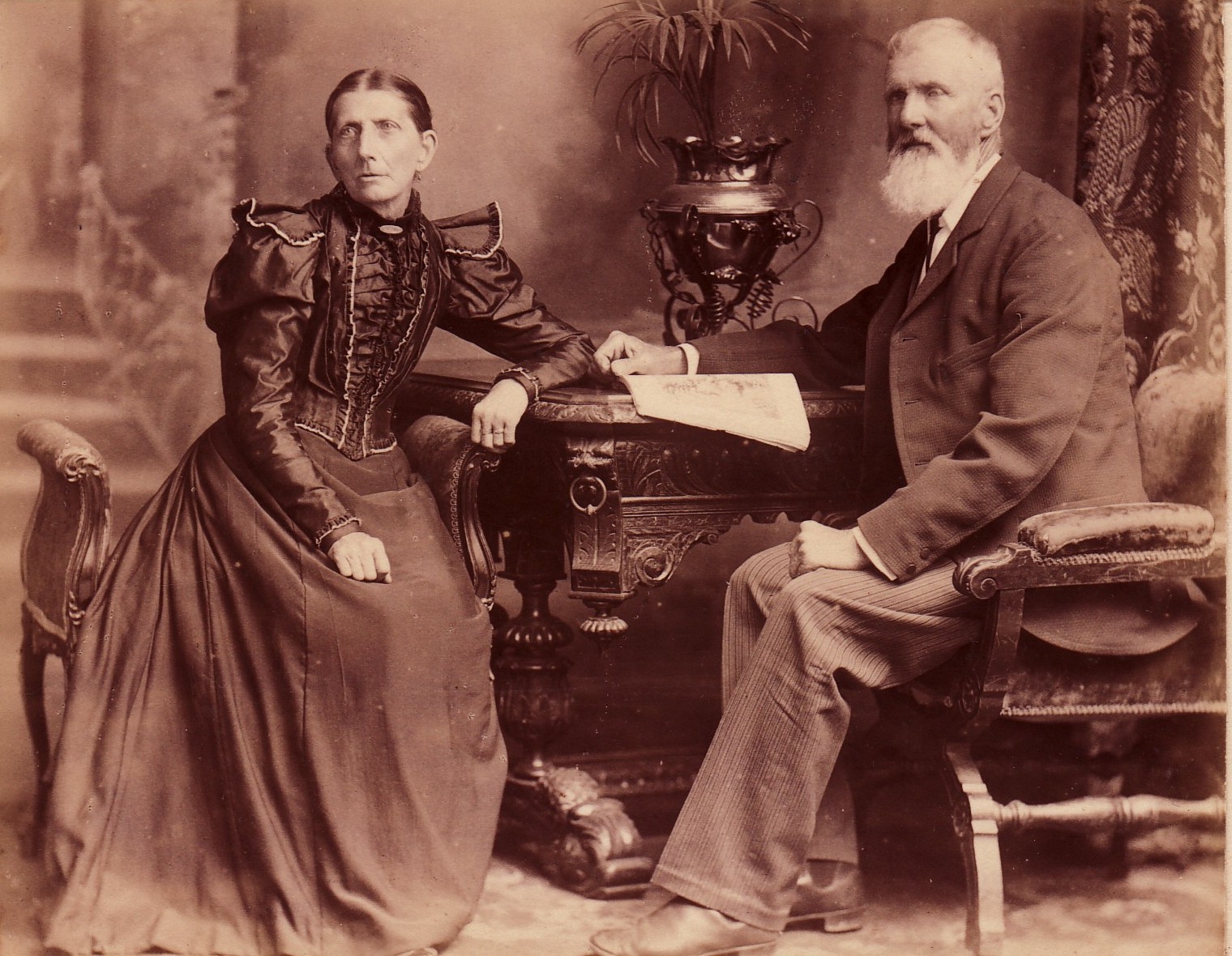
[In the beginning,] … the photographer was thought to be an acute but non-interfering observer — a scribe, not a poet. But as people quickly discovered that nobody takes the same picture of the same things, the supposition that cameras furnish an impersonal, objective image yielded to the fact that photographs are evidence not only of what’s there but of what an individual sees, not just a record but an evaluation of the world.

Susan Sontag, On Photography
….. or following our dreams

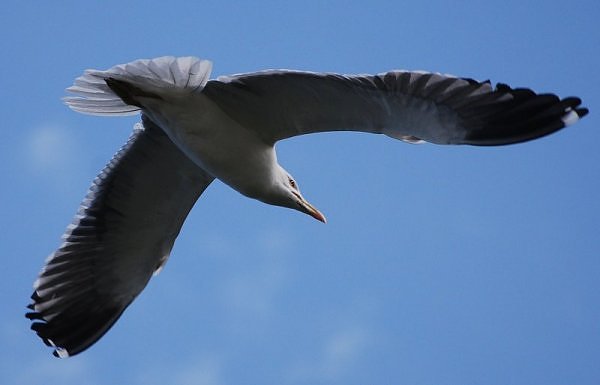
Birds make great sky-circles of their freedom. How do they learn it?

They fall, and falling, they’re given wings.

Rumi

When we stop clinging to the known and allow our dreams to become instruments of change, we learn to practice meditation in action at the deepest level. In these moments, we must risk taking a joyful leap with no guarantee of being caught as we fall.  In Zen practice, we call it stepping off of the hundred-foot pole — living fully without clinging to anything. Students often speak to me of the great fear that arises even contemplating taking a leap into not-knowing from the cliff top of their old life.  All we can rely on, after the joyful leap, is the reassuring discovery of what truly sustains us. I am still in freefall but sometimes I feel the comforting arms of “just this.”

Melissa Myozen Blacker, The Joyful Leap

Everything today is coming or going

Empty-handed I entered the world
Barefoot I leave it.
My coming, my going  –
Two simple happenings
That got entangled.

Kozan Ichikyo,  Zen monk, 14th century

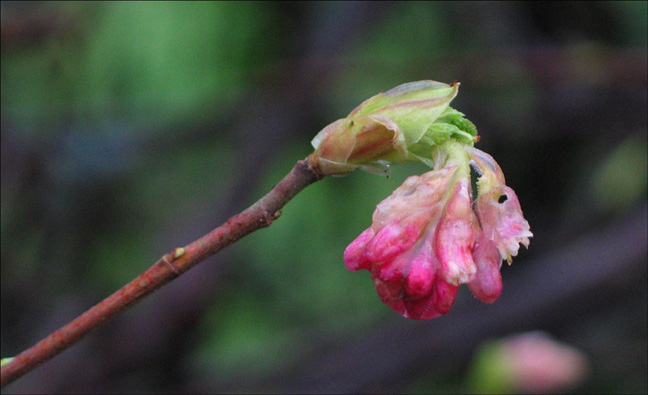
Naming what is dormant

Fall is when nature plants her seeds. And yet, the seeds of possibility planted with such hopefulness in the fall must eventually endure winter, a season when the potentials planted at our birth appear to be dead and gone. As we look out upon the winter landscape of our lives, it seems clear that whatever was planted is now frozen over, winter-killed, buried deep in the snow. Far too many teachers, physicians, and other professionals find the winter metaphor an all-too-apt description of the inner landscape of their lives.

But as we come to understand winter in the natural world, we learn that what we see out there is not death so much as dormancy. Some things have died, of course, but much that is alive goes underground in winter to await a season of renewal and rebirth. So winter gives us a chance to name, metaphorically, whatever may feel dead in us, to wonder whether it might be not dead but dormant — and to ask what we can do to help it, and ourselves, to “winter through” until spring. As adults, we like to think of ourselves as fulfilled, not partially dormant. When we drop that pretense and acknowledge how much remains unfulfilled in us, good things can happen, and not for us alone.

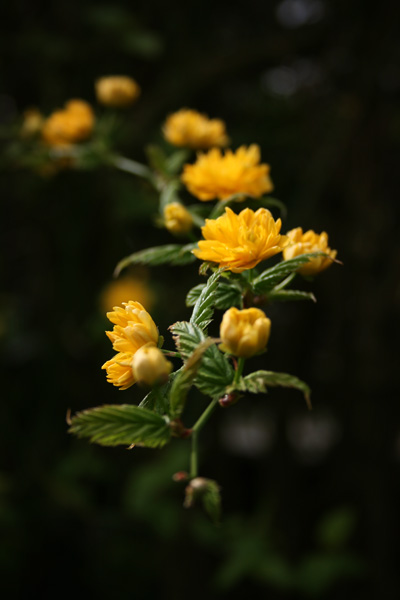
Spring is the season of surprise. Now we realize that, despite our winter doubts, darkness yields to light, and death makes way for new life. So one metaphor for this season is “the flowering of paradox”. As winter’s darkness and death give rise to their apparent opposites, spring invites us to contemplate the many both-ands we must hold to live life fully and well: the deeper our faith, the more doubt we must endure; the deeper our hope, the more prone we are to despair; the deeper our love, the more grief we are likely to know. Spring reminds us that, as creatures of the natural world, we know how to embrace paradox as instinctively as we know how to breathe both in and out. Our challenge is to stop using our minds to divide everything into forced choices, into either-ors. 

Parker Palmer, Teaching with Heart and Soul

Seeing that things arise and pass away

Let not a person revive the past
Or on the future build his hopes
For the past has been left behind
and the future has not been reached.
Instead with insight let him see
Each presently arisen state,
Let him know that and be sure of it,
Invincibly and unshakeably.

 
Today the effort must be made;
Tomorrow Death may come, who knows?
No bargain with Mortality
Can keep him and his hordes away

 
But one who dwells thus ardently,
Relentlessly, by day and night –
It is he, the Peaceful Sage has said,
Who has had a single excellent night.

The Buddha

Every moment is a new opportunity

In Zen, we have a saying that if you haven’t seen somebody for two minutes, don’t assume he or she is the same person. Maybe that person has changed, or maybe conditions have changed. The important thing is to see what I can do now. If you and I are not bound by our past conditioning, we can see things afresh. Then every moment contains a new opportunity.

Bernie Glassman, Instructions to the Cook