What happiness is not

We tend to equate happiness with two things, pleasure and lack of tension. Hence we fantasize that for us to be happy we would need to be in a situation within which we would be free of all the tensions that normally flood into our lives from: pressure, tiredness, interpersonal friction, physical pain, financial worry, disappointment in our jobs, frustration with our churches, frustration with our favorite sports teams, and every other headache and heartache that can appear. Happiness, as it is superficially conceived of, means perfect health, perfectly fulfilled relationships, a perfect job, no anxiety or tension in life, no disappointments, and the time and money to enjoy the good life.

But that isn’t what constitutes happiness. Meaning is what constitutes happiness and meaning isn’t contingent upon pain and tension being absent from our lives. C.S. Lewis taught that happiness and unhappiness color backwards: If our lives end up happy, we realize that we have always been happy even through the trying times, just as if our lives end up unhappy we realize that we have always been unhappy, even during the pleasurable periods of our lives. Where we end up ultimately in terms of meaning will determine whether our lives have been happy or unhappy. Happiness has a lot more to do with meaning than with pleasure.

Ron Rolheiser, Meaning and Happiness.
Dealing with difficulties as arising and falling away.

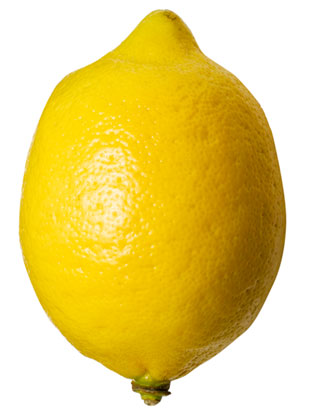
Some people say that suffering is a fixed part of the mind, that it has been there forever. I try to explain that suffering is not intrinsic to the mind. It arises in the present moment. You have a mood of aversion in the mind and you experience suffering now. Think about a lemon. If you leave it alone is it sour? Where is the sourness then? It’s when the lemon contacts the tongue that sourness occurs. If you aren’t experiencing it, it’s as if it isn’t there. When there is contact with the tongue it arises at that moment. And from there arise dislike and afflictions. These afflictions are not intrinsic to the mind, but are momentary arisings.

Ajahn Chah, Being Dharma

Letting go of objectives

Now if the practice [of meditation] is so good for us, why is it so difficult to maintain a steady practice? It may be that the notion that practice is “good for us” is the very impediment – we all know we can resist what is good for us at the table, at the gym, and on the internet. This mechanical notion of practice – “if I practice then I will be (fill in the blank)” – leads to discouragement because it is not true that practice inevitably leads to happiness, or anything we can imagine. Our lives, like the ocean, constantly change,and we will naturally face great storms and dreary lulls. How then do we put our mind in a space where practice is always there, whether tumultuous or in the doldrums? It requires a completely radical view of practice: practice is not something we do, it is something we are. Seeing our practice as our life, we just let go and do it.

Roshi Pat Enkyo O’Hara, Like a Dragon in Water

Always putting labels

All my life right and wrong, false and real,  tangled.

Playing with the moon, ridiculing wind, listening to birds….

Many years wasted seeing the mountain covered with snow.

This winter I suddenly realize snow makes a mountain.

Dogen

On change and constancy

There has been very changeable, even cold, weather these past few weeks, and, as the photo shows, this morning stayed faithful to that, dawning grey and stormy on the Jura. As I have written before, looking at the weather is good practice, especially when it turns unpredictable, as it has been this Summer. Firstly, it helps us remember that there are many things which  happen in our lives – the weather, the behaviour of others, or  illness, for example—that we cannot  control. Thus we place our focus on the things which are within our control –  in the areas where we can train stability and constancy –  and do not waste energy on what we cannot influence. Setting aside some time in the day and in the week when we can rest and deepen our capacity to be focused is one way of doing that. The second lesson we can learn on a morning like this is somewhat the opposite – how to keep ourselves fluid in the areas that we do not want to make solid. Thus, whenever we notice that we are making certain emotions or judgments fixed and unchanging, we let go of them. Especially when we notice firm negative thoughts about ourselves – which normally flag themselves by beginning with words such as  “I always…” or “I am never able to”… – we can go back to the impermanence of the weather and remind ourselves that all things change. Then we can be kind to ourselves by realizing that this applies to us as well. We can let such thoughts pass through, just being aware of them, or hold fearful emotions more lightly, knowing they do not define us or how we are doing in our life.

Seeing thoughts as less substantial…

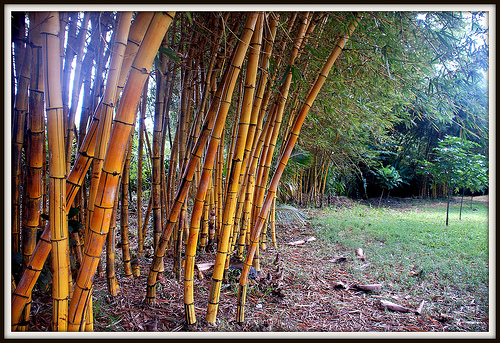
The wind whistles in the bamboo and the bamboo dances.

When the wind stops, the bamboo grows still.

A silver bird flies over the autumn lake.

When it has passed,

the lake’s surface does not try to hold on to the image of the bird.

Huong Hai