
You do not need to have any special experiences to be free.
You just need to relate 100 percent fully with whatever you’re experiencing – the good the bad and the ugly
Andrew Holecek
You do not need to have any special experiences to be free.
You just need to relate 100 percent fully with whatever you’re experiencing – the good the bad and the ugly
Andrew Holecek
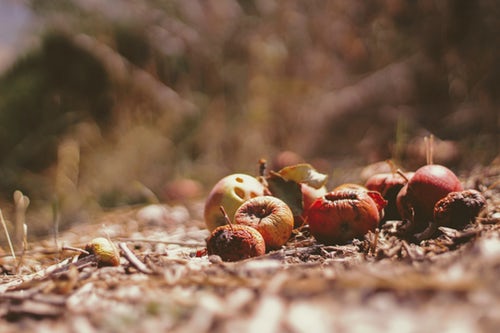
Ripeness is
what falls away with ease.
Not only the heavy apple,
the pear,
but also the dried brown strands
of autumn iris from their core.
To let your body
love this world
that gave itself to your care
in all of its ripeness,
with ease,
and will take itself from you
in equal ripeness and ease,
is also harvest.
And however sharply
you are tested –
this sorrow, that great love –
it too will leave on that clean knife.
Jane Hirshfield, Ripeness

What is right today is wrong tomorrow
Ryokan, 1758 – 1831, Japanese Zen monk and poet
Next time is next time.
Now is now
The words of Hirayama in the beautiful, meditative, film Perfect Days, to his niece who wants to know when they will go to see the ocean.
It sums up his whole philosophy of life

Therefore, tell me:
what will engage you?
What will open the dark fields of your mind,
like a lover
at first touching?
Mary Oliver, Flare
One way of dealing with the inner critic, found in many different traditions, East and West:
So the holy elders,” I added, “claim that the best strategy to cope with troublesome logismoi [thoughts] is simply to ignore them.” “Precisely. Our first defense against destructive logismoi is complete indifference. This is the healthiest and most productive method to head them off right at their inception. Ignore them completely. Never open up a dialogue with these intruders. Do not interact with them either out of curiosity or out of overconfidence.”
Kyriacos C. Markides, The Mountain of Silence: a search for Orthodox Spirituality
We reduce, concretize, or substantialize experiences or feelings, which are, in their very nature, fleeting or evanescent. In so doing, we define ourselves by our moods and by our thoughts. We do not just let ourselves be happy or sad, for instance; we must become a happy person or a sad one. This is the chronic tendency of the ignorant or deluded mind, to make “things” out of that which is no thing.
Mark Epstein, Thoughts Without a Thinker

