
What we have to do is really feel the motivation that arises, not from trying to change ourselves but from trying to be ourselves as fully as we can.
Barry Magid, Ending the Pursuit of Happiness
What we have to do is really feel the motivation that arises, not from trying to change ourselves but from trying to be ourselves as fully as we can.

I was recently reminded that this was my favourite phrase for many years. It comes from the 14th Century Christian Anchoress Julian of Norwich. It reflects the same wisdom in the face of impermanence as the previous Taoist quote and Sylvia Boorstein’s words yesterday. It helps us to look deeper even when the mind gets confused and life seems difficult.
All shall be well, and all shall be well,
and all manner of things shall be well
Julian of Norwich
 The “10, 000 things” is a shorthand way of talking about all the experiences – good and bad – which arise and pass away in our lifetime. It stands for all of reality, which contains the right mix of experiences for our growth, and with its ebbs and flows is continually rearranging itself.
Western laziness consists of cramming our lives with compulsive activity,
so that there is no time at all to confront the real issues.
Sogyal Rinpoche
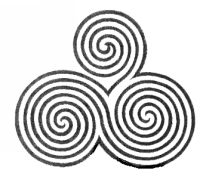 Two Jungians writing about the fact that we often see people repeating the same story in their lives, over and over again. Sometimes these repetitions are of a neurotic nature: returning again and again to what Jung called “the practice and repetition of the original experience” which was laid down in childhood, even though that experience is not necessarily healthy. We see people drawn back to repeat relationships which echo the one they had with wounded parents who could not meet their needs for consistency and care. They create self-sabotaging patterns and repeat these as they are familiar, sometimes, ironically, believing that they are the opposite of what was happening when they were little.
However, gradually, if awareness is brought to these repetitions, a second process can take place. A deeper natural energy within us begins to challenge these choices and allows for a healing to take place. God enters through the wound, Jung said, and so if we start to make conscious these patterns, we start to grow. If left outside of awareness they will continue to haunt our lives. Thus often we are learning the same story in our life, being brought back again and again to the place where we most need to grow, where we need to find our deepest meaning. As Jung further said, a neurosis is the suffering of a soul which has not discovered its meaning, and thus repetitions are an expression of our desire for healing, and the process by which our real Self comes into being.
The individuation process – the way of development and maturation of the psyche – does not follow a straight line, nor does it always lead onwards and upwards. The course it follows is rather stadial, consisting of progress and regress, flux and stagnation in alternating sequence. Only when we glance back over a long stretch of the way can we notice the development. If we wish to mark out the way somehow or other, it can equally well be considered a “spiral”, the same problems and motifs occurring again and again on different levels.
Jolande Jacobi
The coming of consciousness is not a discovery of some new thing; it is return to that which has always been
Helen Luke
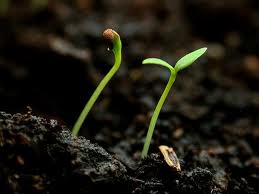
The heart is like a garden.
It can grow compassion or fear, resentment or love.
What seeds will you plant there?
Buddha

