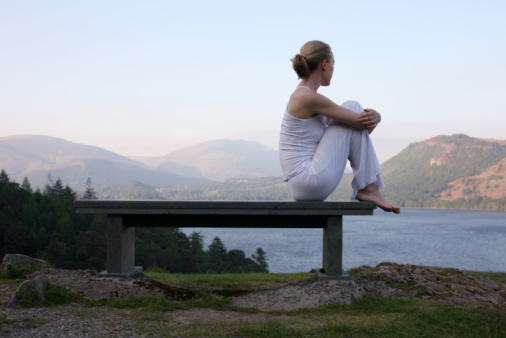
The first of these posts talked about placement – we consciously place our awareness on  the breath, intentionally moving away from whatever activity we were doing before. At the same time, just as we sit down to practice, we simultaneously form our intention. One Zen teacher once gave a conference speech in which he summed up the whole of meditation in two words – “intention” and “attention”. S o the first stage in meditation involves forming an intention, right at the start, the moment one sits. Our intention should be something like, I will use this period to consciously observe the mind and get to know it better. In a sense, we set a gentle model for our activity over the next twenty or thirty minutes.
Why is this so important? Because if we rush into sitting without consciously being aware of changing our activity and forming our intention we can find the mind wandering very quickly. After a minute or two we find ourselves in the same daydreaming we were involved in for much of the day or continuing the activity we have just finished. We may very quickly fall into the activity of checking how we are doing in this meditation and comparing it to yesterday’s or to a model of meditation which we have in our heads.
So the first stage in meditation is focused on how we sit. It seems obvious but is of vital importance. If we start well there is a greater chance that our whole sitting will go well. In the next post we will look at stage two, how to work with thoughts.