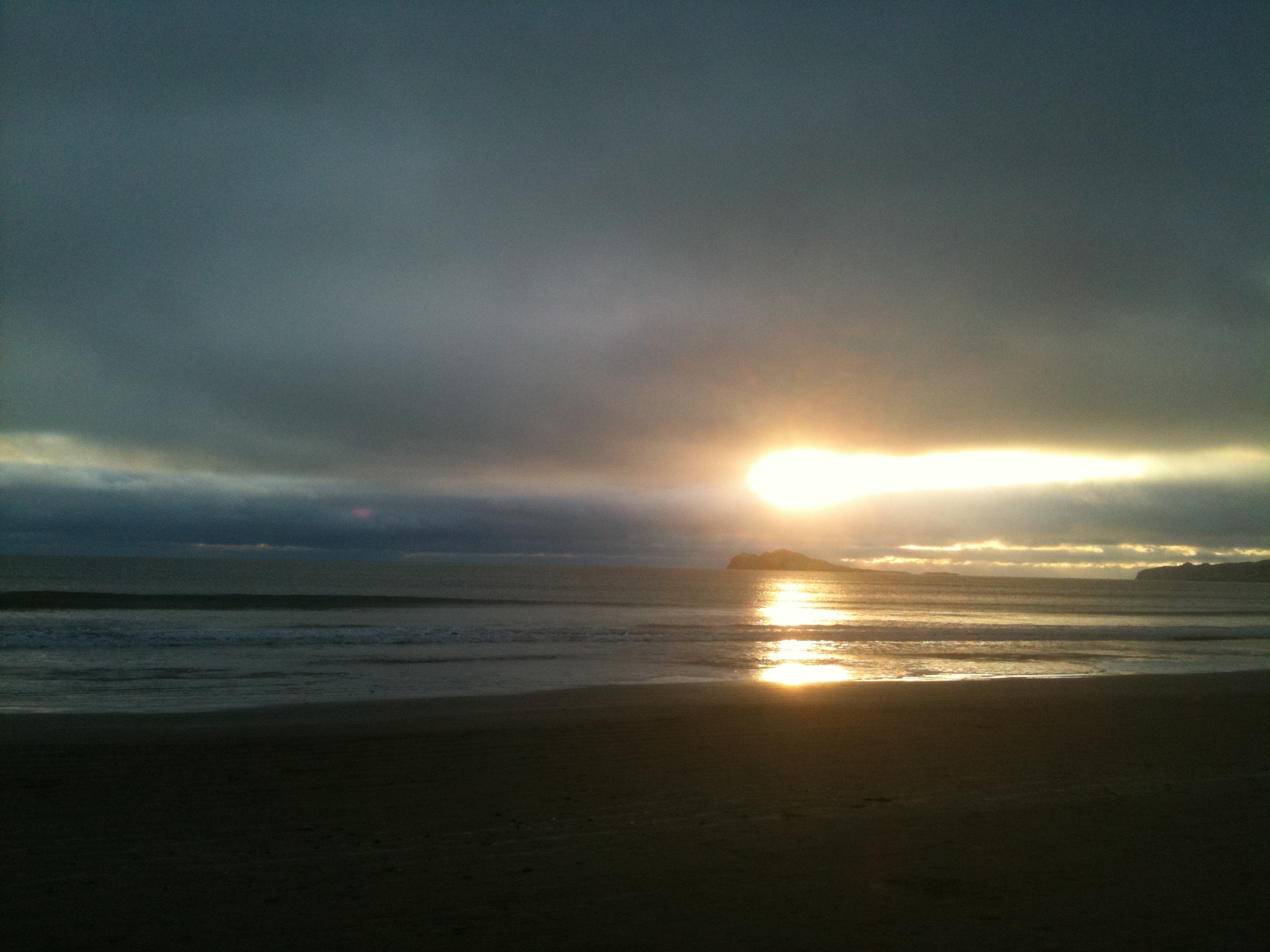
What we do not see

File:Sheep Gate sunrise large print.jpg

We seldom notice how each day is a holy place
Where the eucharist of the ordinary happens,
Transforming our broken fragments
Into an eternal continuity that keeps us.

Somewhere in us a dignity presides
That is more gracious than the smallness
That fuels us with fear and force,
A dignity that trusts the form a day takes.

So at the end of this day, we give thanks
For being betrothed to the unknown
And for the secret work
Through which the mind of the day
And wisdom of the soul become one

John O’Donohue, The Inner History of a Day

photo of Trim, Co Meath, by Denis O’Donovan

Two different viewpoints

File:Inside a christmas shop.jpg

This restless feeling can be made worse  as people can come under pressure through the demands of advertising and as the need to celebrate “something” is being bombarded from every direction. One of the most common messages transmitted today is a drive for   excellence, a need to have a “wow” factor. It can give rise to a sense of being pulled by external forces, which internally can translate into an agitated ‘I’ve got to do something, be something, get something’. Our basic programming to be somehow special or distinctive can be triggered.   Frequently this can lead to a sense of not good enough, which turns into an emotional sense which captures and convinces us, leading to the desire to move on and change and get better, or, at least, to be other than what life is at the moment. A dynamic of becoming takes over.

An alternative message can be seen in a Cistercian monastery which is not far from where I live, as some of the small group of monks who live there have stayed in the one place, with the same routine, for the 50 years since the monastery was opened. They have risen at the same time –  4 o’clock in the middle of the night every day for all those years –  and share the same reflections each evening as they give thanks for another day lived. They take a vow of stability, meaning that they commit themselves to the one place and the same people and work against the temptation to restlessly move from place to place. Their example of  being in the same place reminds me to relate to experience as it is,  instead of my usual reacting to it in either a desire to get more or get rid of it.

Two different visions of human happiness. Theirs is rooted in ordinariness, on an unobserved life, on not continually seeking –  on being,  rather than on constant becoming. The one we observe in advertising, which finds an easy root in us, is on the need to be seen and  get something special – or more – in order to be whole. Our daily prqactice of meditation is something about staying with the body that we have now, the mind that we have now, the life that we have now, and resisting the different ways we get caught in our ideas about how things should be. It is a fundamental shift to being curious and interested in the now, not a more exicting future.  We stay with the breath, and the body,  because of their ordinary and unobtrusive nature, resisting the temptation to live in our more attractive fantasy life.

The monks have recently revamped their website and it would be great if you gave their efforts a little encouragement by clicking on the link:  http://www.boltonabbey.ie/  While there you can read  about their life and some reflections which Michael, the abbot,  has shared in the last week or so.

By making a vow of stability the monk renounces the vain hope of wandering off to find a ‘perfect monastery’.  This implies a deep act of faith: the recognition that it does not much matter where we are or whom we live with.…Stability becomes difficult for a man whose monastic ideal contains some note, some element of the extraordinary. All monastaries are more or less ordinary.… Its ordinariness is one of its greatest blessings

Thomas Merton

One of the monks asked a renowned Forest Ajahn: ‘What’s it like to see things as they really are?’ There was an understandable air of expectation in the room: to ‘see things as they really are’  is the vision of the Awakened Mind. What mystical insight was about to be revealed?   It’s ordinary’, said the Ajahn in his customary succinct and matter-of-fact way.

Ajahn Sucitto, Awakening: Nameless and Stopped

Openness

File:Wicklow Mountains 2004.jpg

To feel open-minded and open-hearted is beautiful;

to be free from the burden of anxiety, mistrust and planning the future; to be simply present.

In that willingness to be here with no preoccupations, defence or alternatives,

we can rest in a world which suddenly, surprisingly, feels like home.

Ajahn Sucitto, Original Openness

photo of the Wicklow mountains by kain

Other places

IMG_0720

I will always have fears,

but I need not be my fears—

for I have other places in  my inner landscape

from which I can speak and act

Parker Palmer

photo of morning sun at Portmarnock, Co. Dublin

On the threshold

autumn88

Even though we are having very mild weather this year, there is still a sense that these early November  days hold a sense of change, an understanding  that we’re moving from one way of being to another. As Terri Lynn Simpson at the Washington National Cathedral Centre for Prayer and Pilgrimage wrote, they “are like open doorways that invite us to a particular kind of mindfulness where we are aware that we’re moving from one way of being to another. One foot is in the past and one foot is in the future, and in the midst of the two is the present. We can put our weight on one foot or another, superficially living in the past or the future, but true balance comes only when we live deeply in the moment”

In the deep Fall
don’t you imagine the leaves think how
comfortable it will be to touch
the earth instead of the
nothingness of air and the endless
freshets of wind? And don’t you think
the trees themselves, especially those with mossy,
warm caves, begin to think
of the birds that will come — six, a dozen — to sleep
inside their bodies? And don’t you hear
the goldenrod whispering goodbye,
the everlasting being crowned with the first
tuffets of snow? The pond
vanishes, and the white field over which
the fox runs so quickly brings out
its blue shadows. And the wind pumps its
bellows. And at evening especially,
the piled firewood shifts a little,
longing to be on its way.

Mary Oliver, Song for Autumn

Trust in darkness


File:Acorns of Quercus robur, Eichel der Stieleiche 17.JPG

No seed ever sees the flower.

Zen saying

As I said yesterday, November marks the beginning of the “darker half” of the year in the Celtic Calendar, as the balance between light and darkness in the day continues to shift. The earth becomes colder and nature more dormant,  with a different rhythm from one of growth and maturity. Parallel process can occur in our lives. For example, difficulties occur which can seem dark or unclear and without hope, or we can have parts of our lives that seem dormant.  However, darkness in nature, and in our lives, does not mean that nothing is happening.  Things that are now hidden or buried will eventually become seen. That what is now unconscious will become conscious in time. At times,  all we can do is wait and trust.

photo by friedrich bohringer