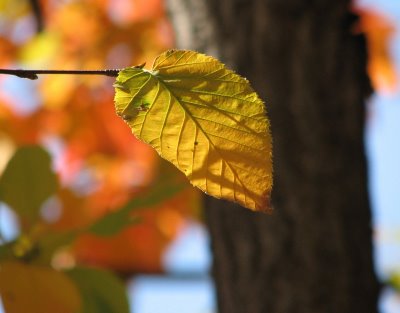
Walk around feeling like a leaf
know you could tumble at any second.
Then decide what to do with your time.
Naomi Shibab Nye, The Art of Disappearing
Walk around feeling like a leaf
know you could tumble at any second.
Then decide what to do with your time.
Naomi Shibab Nye, The Art of Disappearing
 Another way of talking about a refuge, as a place from where we feel welcomed, and can draw comfort. This reflection nicely conveys the sense of care and home: a safe refuge within which supports us at every moment. It goes well with the weather that was there early this morning, as the incredibly mild autumn finally begins to get cold and the first frost appears. Our refuge is within: we can drop in at any time, and find what we truly value. It is nice to have a warm place to go to.
Let me describe my grateful center to you. I was seven years old, and my parents were trying to move to the West Coast. Our relative poverty, however, caught up with us, and we were forced to winter in the cabin of an uncle in the Rocky Mountains. The time was difficult for my parents, I am sure, but for me it was glory . . . my most vivid memory is of the fireplace. (I had never been around a fireplace before, all of our heat heretofore having come from the coal furnace in our Nebraska home.) Every night I would pull out the bed that hid in the couch by day and climb under the heavy quilts, my head less than ten feet away from the crackling warmth. Night after night I would fall asleep, watching this strange yellow blaze that warmed us all. I was in my grateful center.
Richard J. Foster, Prayer: Finding the Heart’s True Home
 Western laziness is quite different. It consists of cramming our lives with compulsive activity, so that there is no time left to confront the real issues. If we look into our lives, we will see clearly how many unimportant tasks, so-called “responsibilities” accumulate to fill them up. One master compares them to “housekeeping in a dream.” We tell ourselves we want to spend time on the important things of life, but there never is any time. Helpless, we watch our days fill up with telephone calls and petty projects, with so many responsibilities – or should we call them “irresponsibility’s”?
Sogyal Rinpoche

The Navajo teach their children that every morning when the sun comes up, it’s a brand new sun. It’s born each morning, it lives for the duration of one day and in the evening it passes on, never to return again. As soon as the children are old enough to understand, the adults take them out at dawn and they say “The sun has only one day. You must live this day in a good way, so that the sun won’t have wasted precious time” Acknowledging the preciousness of each day is a good way to live, a good way to reconnect with our basic joy.
Pema Chodron, The Wisdom of no Escape.
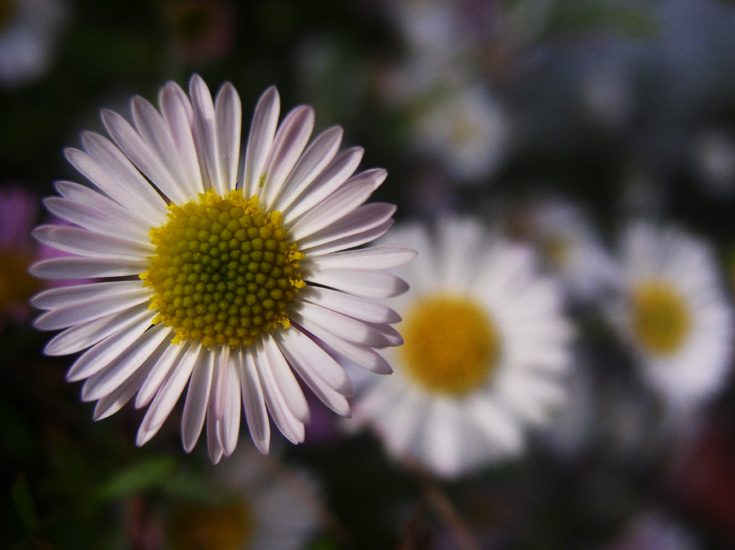 A child kicks its legs rhythmically through excess, not absence, of life. Because children have abounding vitality, because they are in spirit fierce and free, therefore they want things repeated and unchanged. They always say, Do it again; and the grown-up person does it again until he is nearly dead. For grown-up people are not strong enough to exult in monotony. But God is strong enough… It is possible that God says every morning, Do it again, to the sun; and every evening, Do it again, to the moon. It may not be automatic necessity that makes all daisies alike: it may be that God makes every daisy separately, but has never got tired of making them. It may be that He has the eternal appetite of infancy; for we have sinned and grown old, and our Father is younger than we.
G.K. Chesterson
 In essence, mindfulness is about wakefulness.
Our minds are such that we are often more asleep than awake
to the unique beauty and possibilities of each present moment as it unfolds.
Jon Kabat Zinn

