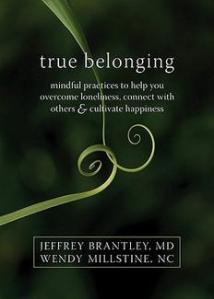
 Jeffrey Brantley is the director of the Mindfulness-based Stress Reduction program at the Duke Center for Integrative Medicine. I find that he is one of the clearest and best writers about mindfulness meditation practice, giving straightforward and unfussy instructions. His latest book, written in conjunction with Wendy Millstine, is a lovely small-sized work entitled, True Belonging: Mindful Practices to Help You Overcome Loneliness, Connect with Others, and Cultivate Happiness.
The book essentially looks at how mindfulness practice can help us nurture connections and relationships, thus reducing the sense of separateness and loneliness which is increasingly common in today’s world. It is divided into four sections. The first section, called “Foundation” introduces mindfulness and leads in a core mindfulness of breath practice. The Next three sections are entitled “Connecting with yourself”, “Connecting with others” and Taking mindful and compassionate action in the world”, and consist of reflections followed by guided exercises to help the reader enter into the theme covered in each chapter.
There is a lot of lovely material contained in these short pages, which would reward any reader who takes each chapter and allows the insights and practices sink gently into the heart. For example, sections such as “The Gift of Forgiveness”. “Nourishing your hunger for Connection” or “Dissolve the Boundary” introduces readers into reflections on what separates them from others or what historical baggage may be holding them back. The subsequent exercises then, in a simple, direct way, leads the reader into mediations focused on these areas.
This book, although it does have a section introducing mindfulness, is a perfect one for deepening meditation practice and allowing it soak into the deeper aspects of our being and our lives. Its format makes it seem like a guidebook and it seems to me to be something to be taken up at different times during the summer months. It touches into, and potentially can heal, the disconnectedness arising from the mistaken beliefs we have built up about ourselves and others.
Our deep hope and intention in writing this book is that as you read the narratives here, and most importantly, you try and directly experience at least some of the practices, you will gain increased understanding, a deeper sense of connection and greater peace and happiness. And we hope and intend that you will be guided and inspired by that experience in some mysterious way so that, just possibly, our world and others in it may benefit more than ever by the beauty of your life (p. 13).