
One does not need buildings, money, power, or status to practice the Art of Peace.
Heaven is right where you are standing
and that is the place to train.
Morihei Ueshiba, 1883 – 1969, founder of the Martial Art of aikido.
One does not need buildings, money, power, or status to practice the Art of Peace.
Heaven is right where you are standing
and that is the place to train.
Morihei Ueshiba, 1883 – 1969, founder of the Martial Art of aikido.
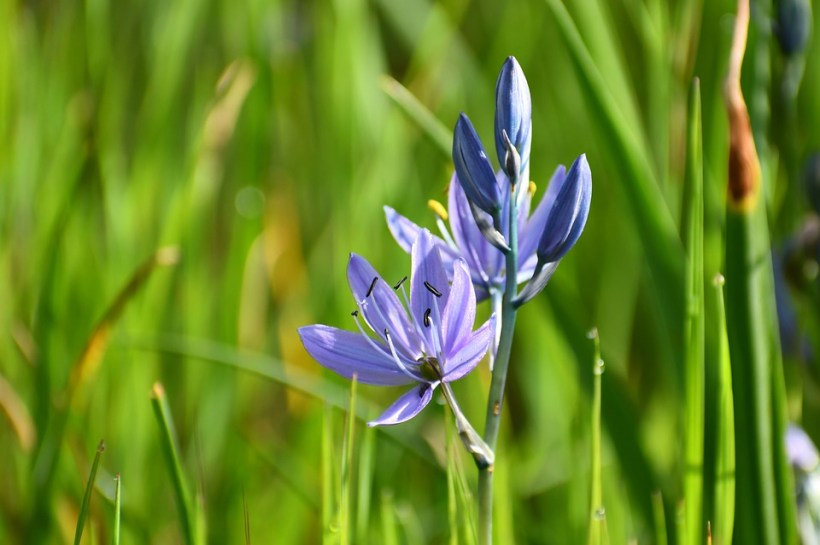
Not being tied to our urgent to-do lists:
Consider the lilies of the field…
And you — what of your rushed and
useful life? Imagine setting it all down —
papers, plans, appointments, everything,
leaving only a note: “Gone to the fields
to be lovely. Be back when I’m through
with blooming.
Lynn Ungar, Camas Lilies

By teaching “Do not judge”, the great teachers are saying that you cannot start seeing or understanding anything if you start with “no.” You have to start with a “yes” of basic acceptance, which means not too quickly labeling, analyzing, or categorizing things as in or out, good or bad, up or down. You have to leave the field open, a field in which God and grace can move.
Ego leads with “no” whereas soul leads with “yes.” The ego seems to strengthen itself by constriction, by being against things; and it feels loss or fear when it opens up. “No” always comes easier than “yes,” and a deep, conscious “yes” is the work of freedom and grace. The soul lives by expansion instead of constriction. Spiritual teachers want you to live by positive action, an open field, and studied understanding, and not by resistance, knee-jerk reactions, or defensiveness, and so they always say something like “Do not judge,” as judging is merely a control mechanism.
Richard Rohr, The Naked Now: Learning to See as the Mystics

Same message, different traditions, same time period
If people seek peace in outward things, whether in places or in methods or in people or in deeds … however great or of whatever kind all this may be, this is all in vain and brings them no peace. Those who seek thus seek wrongly; the further they go the less they find what they are seeking. They are like one who has taken a wrong turning: the further he goes, the more he goes astray. But what should he do? In truth, if one gave up a kingdom or the whole world and did not give up self, he or she would have given up nothing. But if one gives up oneself, then whatever one keeps, wealth, honour or whatever it may be, still they have given up everything.
Meister Eckhart, German theologian, philosopher and mystic, 1260 – 1328
To study the self is to forget the self.
To forget the self is to be enlightened by the ten thousand things
Dogen, Buddhist monk and philosopher, founder of the Soto school of Zen, 1200 – 1253,

Happiness is permanent. It is always there.
What comes and goes is unhappiness.
If you identify with what comes and goes, you will be unhappy.
If you identify with what is permanent and always there, you are happiness itself.
Poonjaji, 1910 – 1997, Indian non-dualist teacher

Another Saturday, another piece from Mary Oliver
The dog, the donkey, surely they know they are alive. Who would argue otherwise? But now, after years of consideration, I am getting beyond that. What about the sunflowers? What about The tulips, and the pines? Listen, all you have to do is start and There?ll be no stopping. What about mountains? What about water Slipping over rocks? And speaking of stones, what about The little ones you can Hold in your hands, their heartbeats So secret, so hidden it may take years Before, finally, you hear them?
Mary Oliver, Swan: Poems and Prose Poems
All things therefore are charged with love, are charged with God and if we knew how to touch them give off sparks and take fire, yield drops and flow, ring and tell of him
Gerard Manley Hopkins, Letters

