Complete right now

File:Lacquer buddha.jpg

Enlightenment involves derailing and deconstructing the sense of lack.   It is getting rid of that piece of psychology that in every moment says, ‘There’s something else that I should be having right now. There’s something else that I should be right now. There’s somewhere else that I could go right now. There’s somebody else who’s got it better than me right now. I’m not complete right now. I need to be something right now”.

Ajahn Sucitto, Parami: Ways to Cross Life’s Floods

photo sookie

Here already if only we noticed

templeOne day you realized that what you wanted
had already happened long ago and in the dwelling place you had lived in before you began
and that every step along the way, you had carried
the heart and the mind and the promise
that first set you off and drew you on

and that you were more marvelous
in your simple wish to find a way,  than the gilded roofs of any destination you could reach: as if, all along, you had thought the end point might be a city
with golden towers, and cheering crowds,
and turning the corner at what you thought was the end of the road,
  you found just a simple reflection.

David Whyte, Santiago from Pilgrim: Poems

Sunday Quote: Learning to listen

File:Pine trees from below.JPG

Nothing has ever been said about God

that hasn’t been said better by the wind in the pine trees

Thomas Merton

The stories we tell, the metaphors we use

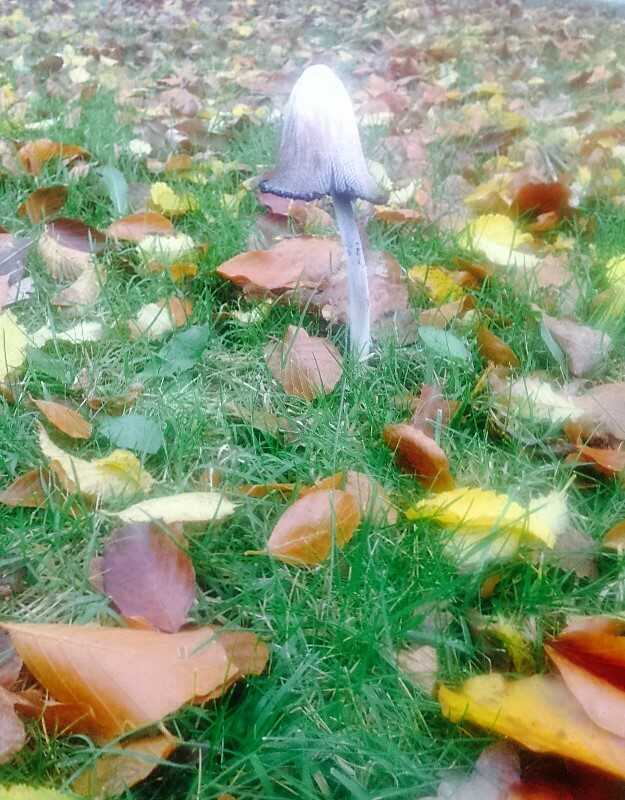
leaves and fungi 2

Most of us have a metaphor, conscious or not, that names our experience of life. Animated by the imagination, one of the most vital powers we possess, our metaphors are more than mirrors to reality — they often become reality, transmuting themselves from language into the living of our lives. We do well to choose our metaphors wisely.

“Seasons” is a wise metaphor for the movement of life, I think. It suggests that life is neither a battlefield nor a game of chance but something infinitely richer, more promising, more real. The notion that our lives are like the eternal cycle of the seasons does not deny the struggle or the joy, the loss or the gain, the darkness or the light, but encourages us to embrace it all — and to find in all of it opportunities for growth.

Parker Palmer, From Language to Life

photo SK

Thin spaces

File:Eichhörnchen Düsseldorf Hofgarten edit.jpg

As I mentioned yesterday, the old Celtic feast of Samhain, celebrated tomorrow, was seen as a liminal time, when the boundary between this world and the spiritual world was felt to be quite thin and it was easier to get glimpses of deeper meaning.

Anybody who goes through life with open mind and open heart will encounter moments of revelation, moments that are saturated with meaning, but whose meaning cannot be put into words. 

Roger Scruton, English philosopher

If we had a keen vision and feeling of all ordinary human life, it would be like hearing the grass grow and the squirrel’s heart beat, and we should die of that roar which lies on the other side of silence. As it is, the quickest of us walk about well wadded with stupidity

George Eliot, Middlemarch

photo ray eye

On stillness and the sources of life

?

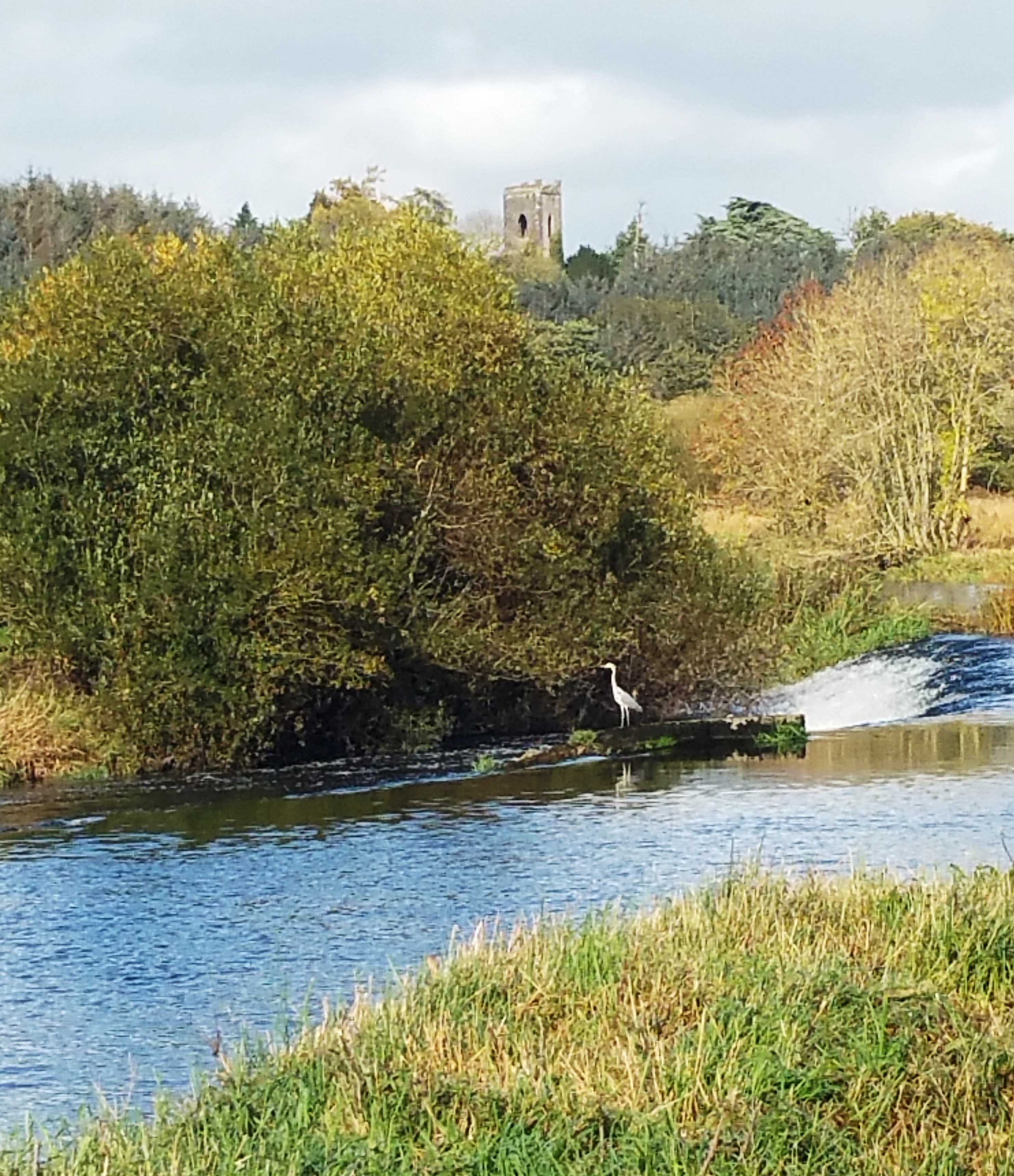
Yesterday, along the Barrow River, I saw a heron standing on a weir, solitary and still, and then rise up and fly away in a slow and dignified movement. This last week of October was a special time for the ancient Celts, and so I was glad to have this encounter, because herons were special creatures for them, dwelling between the different realms of land, water and sky. Maybe because of their solitary and independent nature,  herons were also seen as messengers from the gods.

Certainly, moments when we come across beauty in nature often feel like blessed moments, which lift the heart,  especially as we stand in the stillness looking after them.  And when Mary Oliver saw a heron rising up,  she reflected on life rising up from the depths of pools in which we stand. It is only from developing a capacity to be still,  from having our own wells, that we can really relate with wisdom to all that happens in our lives. We have to descend before we can arise.

So heavy is the long-necked, long-bodied heron,
always it is a surprise
when her smoke-colored wings

open and she turns
from the thick water, from the black sticks
of the summer pond, and slowly rises into the air
and is gone.

Then, not for the first or the last time,
I take the deep breath
of happiness, and I think
how unlikely it is

that death is a hole in the ground,
how improbable that ascension is not possible,
though everything seems so inert, so nailed

back into itself –
the muskrat and his lumpy lodge,
the turtle, the fallen gate.

And especially it is wonderful
that the summers are long
and the ponds so dark and so many,
and therefore it isn’t a miracle

but the common thing, this decision,
this trailing of the long legs in the water,
this opening up of the heavy body

into a new life: see how the sudden
gray-blue sheets of her wings
strive toward the wind; see how the clasp of nothing
takes her in.

Mary Oliver, Heron Rises from the Dark Summer Pond