The space in between

File:Glendalough, Ireland.jpg

I spent yesterday morning in the lovely retreat house at the Tearmann Spirituality Center  in Glendalough,  Co. Wicklow,  with the MBSR group I am currently working with. A quiet morning of sitting meditation and walking, and space in the wide expanses of the mountains and the forest. We tend to get consumed by the activities we do,  the words we say, the thoughts we think,  and the things we have. Our minds get drawn there, and not to the spaces before and after that hold them. What if the gaps were more important? What if we practiced  focusing more on the spaces around moments, nurturing them and making wider the gaps within and without? These are the home of the spirit. They nourish us, widening the heart and giving life.

Ezekiel excoriates false prophets as those who have “not gone up into the gaps.” The gaps are the thing. The gaps are the spirit’s one home, the altitudes and latitudes so dazzlingly spare and clean that the spirit can discover itself like a once-blind man unbound. The gaps are the clefts in the rock where you cower to see the back parts of God; they are fissures between mountains and cells the wind lances through, the icy narrowing fiords splitting the cliffs of mystery. Go up into the gaps. If you can find them; they shift and vanish too. Stalk the gaps. Squeak into a gap in the soil, turn, and unlock — more than a maple — universe.

Annie Dillard, Pilgrim at Tinker Creek

photo,  Glendalough,  pixie from he
Learning from water

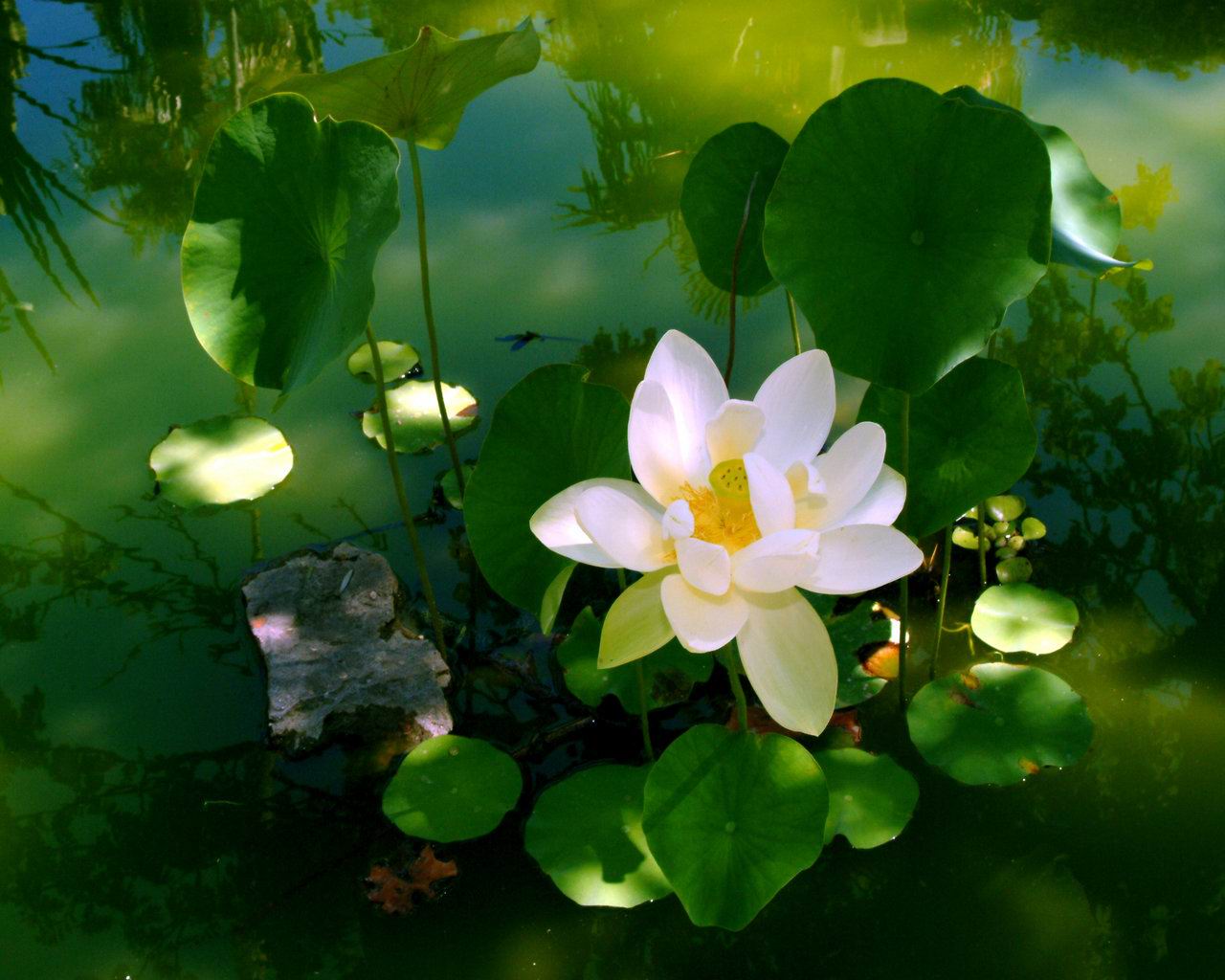
Edenpics-com_005-093-Sacred-Water-lily-also-called-Blue-Lotus-Indian-Lotus-or-Bean-of-India.75200328I want the way

the water sees without eyes,
hears without ears,
shivers without will or fear
at the gentlest touch.
 
I want the way it
accepts the cold moonlight
and lets it pass,
the way it lets
all of it pass
without judgment or comment.
 
There is a lake,
Lalla Ded sang, no larger
than one seed of mustard,
that all things return to.
O heart, if you
will not, cannot, give me the lake,
then give me the song.

from Jane Hirshfield, Lake and Maple

With our flaws

File:Twisted tree - geograph.org.uk - 1167885.jpg
We don’t have to hate ourselves for our own vulnerability. We don’t have to hate ourselves for what life has done to us.
We don’t have to hate ourselves because hurt or loss or longing has gotten to us. Our desires will always be with us in some form, keeping us firmly attached to a world that will hurt us.

We must come to love ourselves, love our life in its vulnerability, in its impermanence, not in spite of all its flaws, but because of them

Because the vulnerability, the changes, the flaws,  make us who we are.

 
Barry Magid, Ending the Pursuit of Happiness
photo: alan Murray-Rust

Our true nature

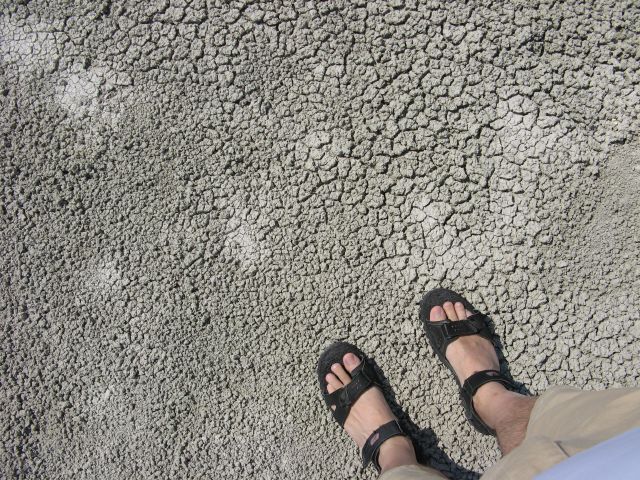
feet_on_ground_640x480

The death of the self may be full of the fear of letting go, of stepping off into the void, thinking that nothing will stop our fall, not recognizing that the void is our true nature. The void is the vastness in which we are occurring, it is the truth itself, and the whole idea of “someone” stepping off is just another bubble passing through. And we don’t any longer need to define who we are, because who we become each moment is so much more than what we ever imagined. There’s no need to limit who we really are with any definition. We are all of it. And only the contents of this vastness of mind, once identified with as a separate self, limit who we are.

Steven Levine, A Gradual Awakening

Not needing to know

hide_and_seek1

We just need to remember to practice relaxing into our life, in all its joys and sorrows, and to relinquish the need to know what’s going to happen next. The third element of patience is acceptance of the truth, meaning that we accept our experience as it is – with all its suffering – rather than how we want it to be. We recognize that because our experience is continually changing, we don’t need it to be different than it is. This acceptance of  “things as they are” requires profound wisdom and compassion, which takes a long time to evolve; we must therefore develop a long-enduring mind that will enable us to understand time from a radically new perspective.

Michele McDonald, Finding Patience

The smallest thing


File:GIRL USES A MAGNIFYING GLASS TO STUDY PLANT LIFE IN THE TUNDRA OF THE ROCKY MOUNTAINS. THE DENVER PTA SPONSORED A... - NARA - 543740.jpg

To study a single speck of dust is to study the whole universe

Dogen, 1200 –  1253

And he also showed me a little thing, the size of a hazelnut, lying in the palm of my hand. It seemed to me as round as a ball. I gazed at it and thought, ‘What can this be?’ The answer came thus, ‘It is everything that is made.’ I marveled how this could be, for it was so small it seemed it might fall suddenly into nothingness. Then I heard the answer, ‘It lasts, and ever shall last, because God loves it. All things have their being in this way.’

Julian of Norwich, 1342 – 1416,  Revelations of Divine Love

photo US National Archives and Records Administration: Records of the Environmental Protection Agency