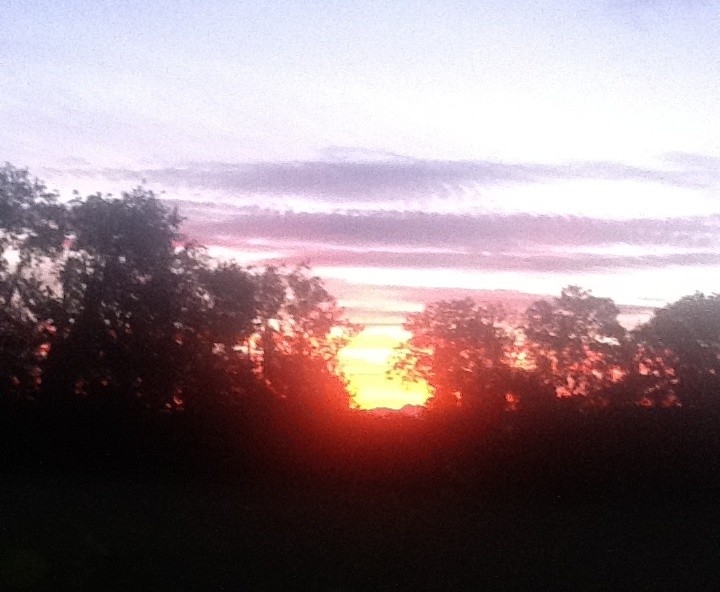
There is only one day left,
always starting over:
it is given to us at dawn
and taken away from us at dusk.
Jean-Paul Sartre
There is only one day left,
always starting over:
it is given to us at dawn
and taken away from us at dusk.
Jean-Paul Sartre

We live our long, worn days in the shadows, in what often feels like barren, cold winter, so unaware of the miracles that are being created in our spirits. It takes the sudden daylight, some unexpected surprise of life, to cause our gaze to look upon a simple, stunning growth that has happened quietly inside us. Like frost designs on a winter window, they bring us beyond life’s fragmentation and remind us that we are not nearly as lost as we thought we were, that all the time we thought we were dead inside, beautiful things were being born in us
Joyce Rupp, Praying our Goodbyes
photo pauline eccles

There is a lot of debris around after the recent storms. Trees broken and uprooted. Most faiths tell us that in its many ways life is the main teacher, and it is by being fully present to what happens in life that we grow, not by moving away from events. This is true even if they are painful. How we do this, each day, is to stay open to each moment, see what it has to say to us, training in this way the heart to stay open:
A rabbi always told his people that if they studied the Torah, it would put the Word of God in their hearts. One of them asked “Why ‘on’ our hearts and not ‘in’ them?” The Rabbi answered “Only God can put his Word within. But reading the sacred text can put it on your hearts, and then when the heart breaks open, the holy words will fall inside”
from Joan Chittister, Aspects of the Heart
photo norbert nagel


There are no wrong turns,
only unexpected paths
Mark Nepo,
 Yesterday saw huge winds hit Ireland and England, causing power cuts and fallen trees, and a lot of disruption to travel. This winter has seen a series of storm systems pass over, some more violent than others, each one disrupting routines and delusions of stability. In a similar way, despite our best efforts to stay constant, our moods can go up and down – sometimes as frequently as the weather – and certainly emotions can appear unexpectedly over which we have little control. We have successes that we work for and yet also have things happen that we did not see coming and cannot understand. Life brings its own troubles and there is no need to go looking for them. Chögyam Trungpa Rinpoche once repeated an old teaching which said that there is no cure for hot and cold. He meant that in our lives we can have periods of good things and bad, things go well but we have self-doubt, we are confident but find ourselves anxious. And in our minds we have a succession of thoughts and emotions, good intentions and petty thoughts, kindness followed by self-seeking aspirations. He reminded us that this is the human condition and also the normal nature of the human mind. As Pema Chodron says in her commentary on this phrase, There is no cure for the facts of life. If we do not struggle with this fact, relaxing into life as it is, we not only can stop the complaining that goes on in our mind, but also be pleasantly surprised by what each new day blows into our lives.
The way to dissolve our resistance to life is to meet it face to face. When we feel resentment because the room is too hot, we could meet the heat and feel its fieriness and its heaviness. When we feel resentment because the room is too cold, we could meet the cold and feel its iciness and its bite. When we want to complain about the rain, we could feel its wetness instead. When we worry because the wind is shaking our windows, we could meet the wind and hear its sound. Cutting our expectations for a cure is a gift we can give ourselves. There is no cure for hot and cold. They will go on forever.
Pema Chodron

