Open to Ambiguity

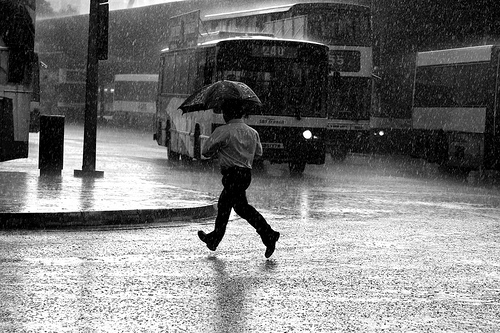
The test of a psychologically mature person, and therefore spiritually mature, will be found in his or her capacity to handle what one might call the Triple A’s: anxiety, ambiguity and ambivalence. While all of us suffer these onslaughts and react reflexively, the immature psyche especially suffers a tension and seeks to resolve it quickly by a shift right or left to a one-sided solution. The more mature psyche is able to sustain the tension of opposites and contain conflict longer, thereby allowing the development and revelatory potential of the issue to emerge. Anxiety rises in the face of uncertainty, open-endedness. Ambiguity confounds the ego’s lust for security, to fix the world in a permanently knowable place. Ambivalence – the fact that the opposites are always present, visible or not  – obliges one to deal with the capacity for dialogue with that other.

James Hollis, Creating a Life.
Storms often lead to growth

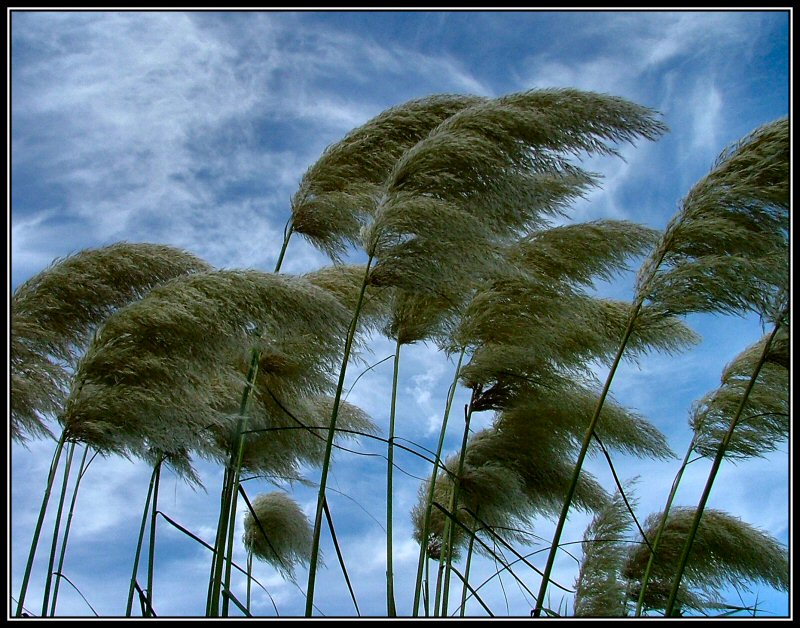
There can be bad weather and winds outside and similar storms and movement  in our inner life. It is good to see them in a similar way:  simply as stuff “passing through”. Sometimes, however, they can shake us out of our habitual patterns and bring us back to what is important.

When changewinds swirl through our lives, they often call us to undertake a new passage of the spiritual journey: that of confronting the lost and counterfeit places within us and releasing our deeper, innermost self – our true selves. They call us to come home to ourselves, to become who we really are.

Sue Monk Kidd, When the Heart Waits

How It Is

More unseasonal weather today. With visitors arriving one would prefer things to be different. But then again, one nearly always prefers things to be other than they are, and this attitude can mean that we miss the opportunities in what is actually here:

When we explore this mind-state of dukkha, we find that it is created by a deep aversion to being with How It Is right now. This silent, unconscious war with How It Is unwittingly drives much of our behaviour: We reach for the pleasant. We hate the unpleasant. We try to arrange the world so that we have only pleasant mind-states, and not unpleasant ones. We try to get rid of this pervasive state of unsatisfactoriness in whatever way we can – by changing things “out there”.  By changing the world.

Thoreau, through his quiet investigation of his own mental states in the quiet at Walden Pond discovered this very same phenomenon of underlying unsatisfactoriness. He called it “desperation” –  “The mass of men lead lives of quiet desperation….” Thoreau’s quiet desperation is precisely dukkha. He saw that ordinary mind seems chronically ill at ease with How It Is.

Stephen Cope, The Wisdom of Yoga

Let go of the small sense of self.

Meditation comes  alive through a growing capacity to release our habitual entanglement in the stories and plans, conflicts and worries that make up the small sense of self, and to rest in awareness. In meditation we do this simply by acknowledging the moment-to-moment changing conditions — the pleasure and pain, the praise and blame, the litany of ideas and expectations that arise. Without identifying with them, we can rest in the awareness itself, beyond conditions, and experience what my teacher Ajahn Chah called jai pongsai, our natural lightness of heart. Developing this capacity to rest in awareness nourishes samadhi (concentration), which stabilizes and clarifies the mind, and prajna (wisdom), that sees things as they are.

Jack Kornfield, A Mind like Sky: Wise Attention, Open Awareness.

Still the mind in order to love

The eternal moment is outside of time, is not a part of our past or our future, and yet it is lived amidst all our everyday activities. It is in the eternal moment that love is born. Love does not belong to time, and its timeless quality is well known to all lovers. The lover has to learn to still the mind in order to catch the moment and stay true to love’s unfolding. Wayfarers tread a path that leads from illusions of time to the eternal moment that belongs to the soul.

Llewellyn Vaughan-Le, Signs of God

Sunday Quote: Living well


My most inspiring thought is that this place, if I am to live well in it,

requires and deserves a lifetime of the most careful attention.

Wendell Berry