Being content to miss something

We cannot master everything, taste everything, understand everything, drain every experience to its last dregs. But if we have the courage to let almost everything else go, we will probably be able to retain the one thing necessary for us -whatever it may be. If we are too eager to have everything, we will almost certainly miss even the one thing we need. Happiness consists in finding out precisely what the ‘one thing necessary’ may be, in our lives, and in gladly relinquishing all the rest.

Thomas Merton.

We have more, but less

We have bigger houses but smaller families; more conveniences, but less time;

We have more degrees, but less sense; more knowledge, but less judgement; more experts, but more problems; more medicines, but less healthiness;

We’ve been all the way to the moon and back, but have trouble crossing the street to meet the new neighbour.

We built more computers to hold more information to produce more copies than ever, but have less communication;
We have become long on quantity, but short on quality.
These are times of fast foods but slow digestion;
Tall man but short character; Steep profits but shallow relationships.
It is time when there is much in the window, but nothing in the room.

The Dalai Lama, The Paradox of our Age

The return of Spring

I do not live happily or comfortably
with the cleverness of our times.
The talk is all about computers,
the news is all about bombs and blood.
This morning, in the fresh field,
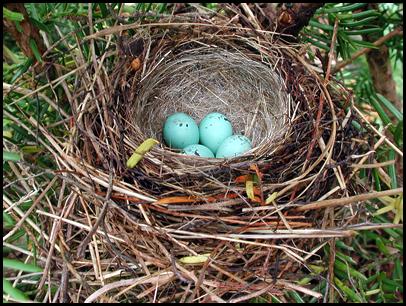
I came upon a hidden nest.
It held four warm, speckled eggs.
I touched them.
Then went away softly,
having felt something more wonderful
than all the electricity of New York City.

Mary Oliver, With thanks to the Field Sparrow, whose voice is so delicate and humble


…And seeing problems as openings

A hugely important distinction is made here, one which saves us from the deep tendency we have to find problems with who or where we are. It allows for a much more nuanced view on the setbacks we find in life and in our inner selves, seeing that growth often happens in roundabout ways. 

Another problem with the idea of self-improvement is that it implies that there is something wrong with who we are. Everyone wants to be someone else, but getting to know yourself and love yourself means accepting who you are, complete with your inadequacies and irrationalities. Only by loving he soul in its entirety can we really love ourselves. This does not mean that we cannot hope to live a fuller life or become a better person, but there is a difference between self-improvement and the unfolding of the soul.  In the latter we don’t take the attitude of perfection; rather we draw close to those things that we feel as imperfect and let them be the openings through which the potentiality of the soul enters into life.

Thomas Moore, Soul Mates

And letting go of our habitual fears

The sense of splendidness arises from feeling our wealth. We have confidence in our inherent goodness — the beating heart of each individual and all humanity… The energy of splendidness comes from being fully present in whatever we do. My father, Chögyam Trungpa,  put it this way: “You are not hiding anywhere.” Hiding means our splendidness is obscured by embedded habitual patterns. One characteristic of hiding is that we are always self-observing. Self-observing comes from not trusting our inherent goodness, and therefore keeping the reins tight on our mind. It is different from awareness or introspection because in observing ourselves this way, we are not really sensing or feeling the moment. We lack the lucidity to simply be splendid, so we tighten up and hide. We have half-thoughts and half-emotions. When we do experience something wholly and completely, it is disconcerting and disorienting.

Sakyong Mipham Rinpoche, Let it Shine!

Holding the boundary

Mindfulness holds a boundary so that we don’t get overwhelmed, shut down or react to the feelings that we have; then with full awareness, we get the whole of it, how that impression arises and what it does. We may then understand: ‘this feeling or impression is based upon this perception and thought, and it subsides when that thought or perception is removed.’ ‘This negative impression arises with that perception or that memory and it subsides when I practise loving-kindness, or even when I can just sit with it and let it subside.’ Together mindfulness and full awareness acknowledge what is going on, and where it stops. They don’t bring ‘I am,’ ‘I should be’ into it.

If we establish these skills of attention, they free the mind from acting on or reacting to the results of the past. If we attend to the present impressions, the present moods and sensations, and cut off the proliferations and projections, we’re not living in the fog of resentment, fantasy, romance, or other biases. This means that our attention, and consequently, our moods, actions and speech, are going to be clearer and brighter

Ajahn Sucitto, Bright Kamma: Support for Attention