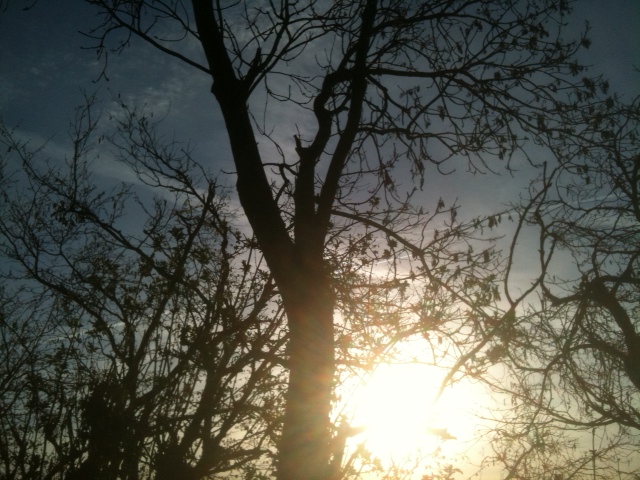
Empty branches

To have loved is everything,
I loved, once, a hummingbird who came every afternoon– the freedom-loving male–

who flew by himself to sample the sweets of the garden, to sit on a high, leafless branch with his red throat gleaming.

And then, he came no more.
And I’m still waiting for him, ten years later,

to come back, and he will, or he will not.
There is a certain commitment that each of us is given,
that has to do with another world,

if there is one.
I remember you, hummingbird.
I think of you every day even as I am still here,
soaked in color, waiting year after honey-rich year.

Mary Oliver, An Empty Branch in the Orchard

Not always struggling with our sadness

As I have written before, modern society is not very comfortable with any nuances in happiness.  It invariably prefers to portray people’s lives as always happy and show that successful people have gotten it all together. There is  no real place for  a narrative that contains moments of struggle or periods when less obvious forms of growth are nurtured. This can mean that we fall in to the trap of interpreting all sadness or mundane moments as an indication that we are doing something wrong, or that our life is on the wrong track. Frequently we fail to see that a lot of the models presented to us are not valid representations of our lives. And many images we see can easily turn into thoughts of an idealized future where we will be happier, thinner, more popular, and these thoughts may undermine the place we are actually called to be. This can be especially present in the weeks after Christmas and New Year,  moments that some people find tough and when the media is full of  strategies, advice and initiatives to improve our life and achieve greater success. A different strategy is cultivated in mindfulness practice, based on staying close to where we actually are, acknowledging that a sense of groundlessness or loneliness is normal in humans,  and that part of practice is learning to sit with this.

If we are feeling unhappy, what is called for is a willingness to simply be with that unhappiness. If we’re not careful, we say something’s wrong, though it doesn’t really help to say that. We say it either inwardly or outwardly. This projecting of blame is a consequence of having made an inner mistake of misperceiving our unhappiness, sadness or suffering as being something wrong. We don’t receive it just as it is. We don’t acknowledge it and feel it, allowing it to happen; we don’t have the ‘knowingness’ to see it as activity taking place in awareness.  Because we don’t have that perspective, we struggle to do something about our suffering, to deal with it in some way. To say that something has gone wrong and that it’s somebody’s fault is a heedless way of dealing with our unpleasant experiences. The habit of consistently doing this is a symptom of what I call the compulsive judging mind.

Ajahn Munindo

Where is the point of life to be found?

We could say that meditation doesn’t have a reason or doesn’t have a purpose. In this respect it’s unlike almost all other things we do except perhaps making music and dancing. When we make music we don’t do it in order to reach a certain point, such as the end of the composition. If that were the purpose of music then obviously the fastest players would be the best. Also, when we are dancing we are not aiming to arrive at a particular place on the floor as in a journey. When we dance, the journey itself is the point, as when we play music the playing itself is the point. And exactly the same thing is true in meditation. Meditation is the discovery that the point of life is always arrived at in the immediate moment.

Alan Watts

The Beauty in the cracks

The world breaks everyone, and afterward many are strong at the broken places. Hemingway

Most of us are trying to live an authentic life. Deep down, we want to take off our game face and be real and imperfect. There is a line from Leonard Cohen’s song “Anthem” that serves as a reminder to me when I get into that place where I’m trying to control everything and make it perfect. The line is, “There is a crack in everything. That’s how the light gets in.” So many of us run around spackling all of the cracks, trying to make everything look just right. This line helps me remember the beauty of the cracks (and the messy house and the imperfect manuscript…). It reminds me that our imperfections are not inadequacies; they are reminders that we’re all in this together. Imperfectly, but together.

Brene Brown, The Gifts of Imperfection

How to meditate: very simple instructions

When a thought arises that’s strong enough to take your attention away from the breath, simply note it as not breath. Whether it’s the most beautiful thought in the world or the most terrible, one you would never disclose to another soul, in this meditation, it’s simply not breath. You don’t have to judge yourself. You don’t have to get lost in making up a story about what triggered the thought or its possible consequences. All you have to do is recognize that it is not a thought. Some of your thoughts may be tender and caring, some may be boring and banal; all that matters is that they are not the breath. See them, recognize them, very gently let them go, and bring your attention back to the feeling of the breath.

Sharon Salzberg, Real Happiness: The Power of Meditation

The hidden work that is essential for growth

The ladder whose ascent implies spiritual progress has a long pedigree.  Hebrews, Greeks and Christians all gave special value to the heights, and Western morality tends to put all better things up high and worse things down low. By the last century growth became inexorably caught in this ascensionist fantasy. Darwin’s thesis The Descent of Man became, in our minds, the ascent of man. Each immigrant moved upward in social class as buildings moved upwards with their elevators to more expensive levels. By now the upward idea of growth has become a biographical cliché. To be an adult is to be a grown-up. Yet this is merely one way of speaking of maturity, and an heroic one at that. For even tomato plants and the  tallest trees send down roots as they rise toward the light. Yet the metaphors for our lives see mainly the upward part of the organic motion.

James Hillman, The Soul’s Code