No longer living on the surface

In personal practice we have a precise and potent way to understand the most important thing in our life, which is our mind and heart. We sit there day by day and watch something very private and intimate take place — the unfolding of our wisdom and compassion. Nobody else is watching.  We know there’s nothing more important we could do, and yet we don’t write home about it. We don’t need to boast. We can simply enjoy a quiet sense of contentment, knowing that we have set aside the time to do something incredibly kind for ourselves. Without meditation as the bedrock of our sanity, how do we avoid being overreactive, coerced by quick solutions to our problems? These quick solutions come in the form of anger and frustration that the world doesn’t act the way we want, simply because we ourselves lack patience. Our mind becomes irritated, consumed with trying to align the outside world with our desires. If we could simply develop a level of peace in ourselves, our relationship to the world would be that much more harmonious. 

As we deepen our mind through personal practice, we are able to dissolve our boundaries and rest in … the nature of how things actually abide. This personal time in which we experience the mind as fluid, unstuck, and without boundaries begins to affect our view of the world as a fixed and immovable place. We are no longer skimming life or our perceptions. We have broken through.

Sakyong Mipham Rinpoche
Genuine happiness comes from gently working with the mind

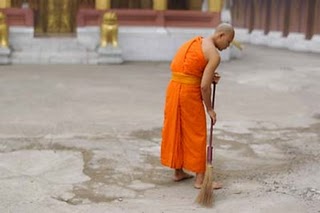
If we could put as much effort into cleaning up our minds as we do sweeping our houses, washing our clothes and doing the dishes, we would likely be at ease. But when we talk about cleaning like this, people don’t know what we are getting at…I’ve come to think it’s because people don’t seek their own dwelling place. We scrub and sweep elsewhere. We don’t make our minds clean, so there is always confusion. We are always looking outside.

…These days there is only force and hurry. Mangoes are never sweet now. They are forced. Before they are ripe they picked and artificially ripened. This is done because people want to get them in a hurry. So when you eat them you find they are sour. To get something good, you have to allow it be sour first, according to its own natural way. But we pick them early and then complain that they are sour. For the most part things are imitations. We grasp the things that are false and uncertain as real…If the mind does not see and realize, there is no path to clarity. 

Ajahn Chah, Being Dharma

Running on tracks laid down by others

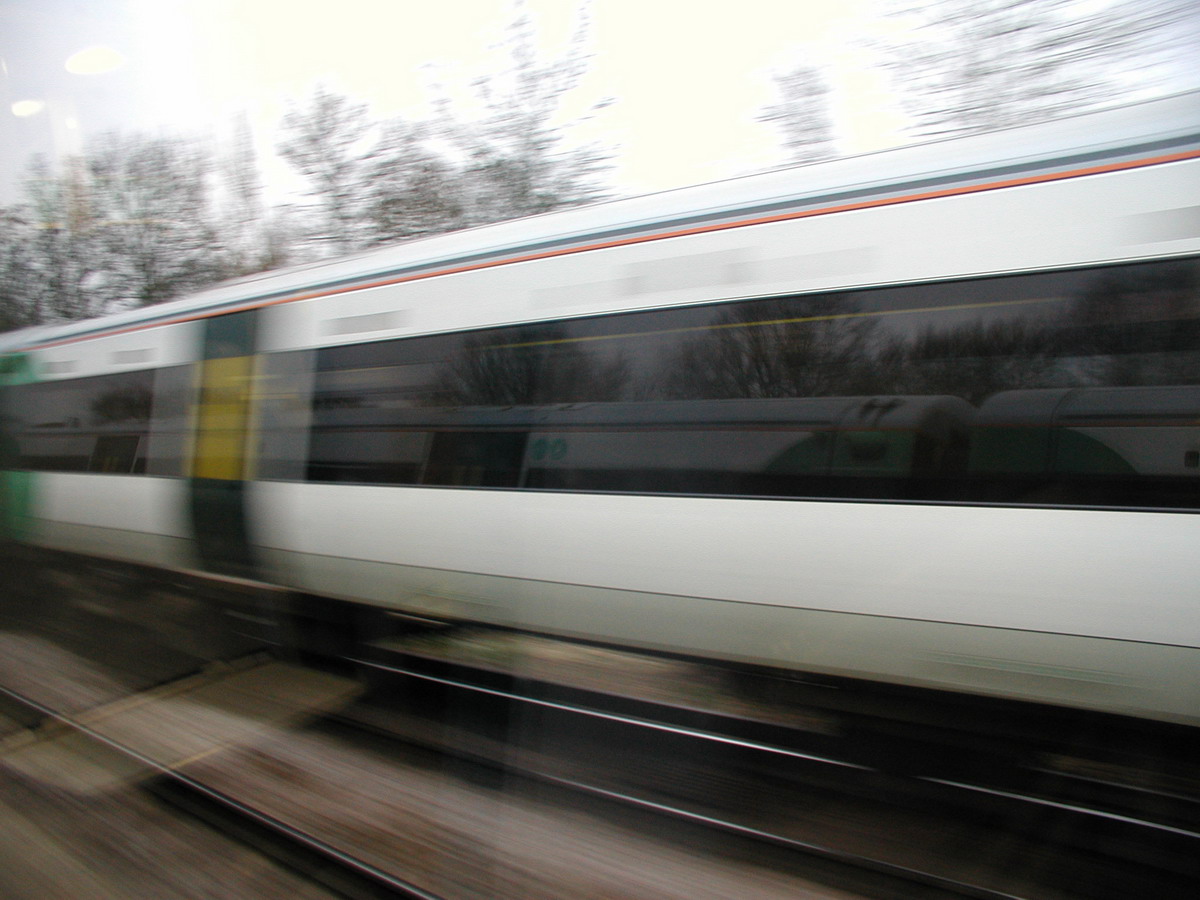
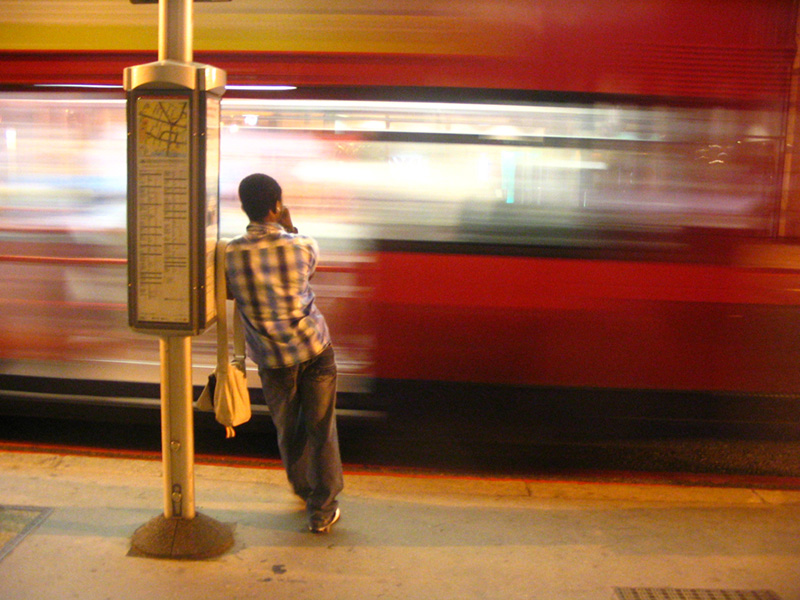
Like a lot of people I know, I struggle with taking too much on, with doing too many things, with moving too fast, with overcommitting, with overplanning. I have learnt that I  must move, quite simply, at the pace of what is real. While this pace may vary, life always seems vacant and diminished when I accelerate beyond my capacity to feel what is before me. It seems we run our lives like, trains, speeding along a track laid down by others, going so fast that what we pass blurs on by. The we say we’ve been there, done that. The truth is that blurring by something is not the same as experiencing it.

So, no matter how many wonderful experiences come my way, no matter the importance placed on these things by others who have my best interests at heart, I must somehow find a way to slow down the train that is me until what I pass by is again seeable, touchable, feel-able. Otherwise I will pass by everything – can put it all on my resume – but will have experienced and lived through nothing.

Mark Nepo, The Book of Awakening

How to get the most from the holidays: Slow down

There are four different kinds of patience: patience in action, in thought, in word, in the manner of feeling. There are two different acts of patience: the first is to stand firm against the activity of another person, the second to stand firm against one’s own activity. Not to resist the activity of another person is an act of patience of the former sort, and to control oneself when one wishes to do or say a certain thing is an act of patience of the latter sort.

The symbol of patience is the cross. The vertical line indicates activity, the horizontal line control. Patience is for the saint and the sage the first lesson and the last. The more one learns to bear the more one has to bear, such is the nature of life. Yet in reality patience is never wasted, patience always wins something great, even when to all appearance it loses….Every faculty has a tendency to act more and more quickly. Every activity starts from a rhythm that is productive, and when the activity is increased the rhythm becomes progressive, and if it is increased still more the rhythm becomes destructive. These three rhythms are called in Sanskrit satva, rajas, and tamas. It is only by control that one can keep the productive and progressive nature; lack of control allows destruction to set in.  When a person walks he wishes to walk faster, when he speaks to speak more quickly. It is the nature of activity to tend to increase its speed, and if this increase is permitted, very soon the destructive element comes about. The stronger this faculty of control becomes in a person the stronger the person becomes, and the more one loses the power of control the weaker one becomes.

Hazrat Inayat Khan, The Wisdom of Sufism: Sacred Readings from the Gathas 

How to get the most from the holidays: Holding who you are

All the Buddhas of all the ages have been telling you a very simple fact:  Be – don’t try to become.

Within these two words, be and becoming, your whole life is contained.

Being is enlightenment, becoming is ignorance.

Osho

Tenderly holding whatever you touch

Tenderness is the language of the body as a mother holds her child, as a nurse touches a patient’s wound, or as an assistant bathes someone with a disability. Recently in a buddhist monastery, I watched a sister as she served us food and tea with great delicacy; it was as if the meal itself was sacred, revealing a presence of God. And so it did, because it was treated so.

Tenderness is the language of the body speaking of respect: the body honours what it touches. It honours reality. It does not act as if reality has to be changed or possessed; reality belongs to humanity and to God. Is not this the way we should relate to all living beings, plants, animals and the earth?

Jean Vanier,  Becoming Human