A calming stillness…

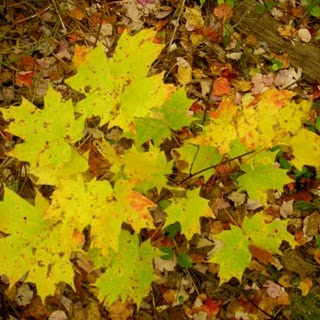
The ancient rhythms of the earth have insinuated themselves into the rhythms of the human heart. The earth is not outside us; it is within: the clay from where the tree of the body grows. When we emerge from our offices, rooms and houses, we enter our natural element. We are children of the earth: people to whom the outdoors is home. Nothing can separate us from the vigor and vibrancy of this inheritance. In contract to our frenetic, saturated lives, the earth offers a calming stillness. Movement and growth in nature takes its time. The patience of nature enjoys the ease of trust and hope. There is something in our clay nature that needs to continually experience this ancient, outer ease of the world. It helps us remember who we are and why we are here.

John O’Donohue

When we do not have to prove anything

Meditation practice is about dropping into a non-doing mode, where we do not have to be someone or achieve something. In this way it echoes the sense of rest found in close relationships – a place we can simply be ourselves, where we can be weak, without having to prove our worth or impress anyone:

Power and cleverness call forth admiration but also a certain separation, a sense of distance; we are reminded of who we are not, of what we cannot do. On the other hand, sharing weaknesses and needs calls us together into “oneness”. We welcome those who love us into our heart. In this communion, we discover the deepest part of our being: the need to be loved and to have someone who trusts and appreciates us and who cares least of all about our capacity to work or to be clever and interesting. When we discover we are loved in this way, the masks or barriers behind which we hide are dropped; new life flows. We no longer have to prove our worth; we are free to be ourselves. We find a new wholeness, a new inner unity.

Jean Vanier

The start of Autumn and letting go

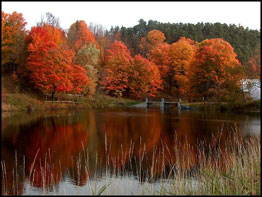
Autumn is the season of reaping what has been sown and of things coming to fruition. Traditionally, it is also the period when one begins to wind down and celebrate the abundance and goodness of the earth, before the year moves into the dark and cold time of winter. Because of the rich colours and changing light it is a very suggestive time, and leads us to reflect on changes and growth, as well as letting things go and moving on. From the Autumn Equinox onwards the days get shorter and darkness and night take center stage. These changes are natural and remind us of the balance in our lives between light and darkness, growth and rest. We often more naturally prefer light and warmth to the dark and the cold. However, in this poem,  we are reminded that some of the darkness in our lives is also a time of growth, as necessary as the bright days of Spring or Summer. The poet reflects on loss, and sees reflections of her struggle and grief outdoor in Nature. She sees the challenge, where she needs to go – to let go “as trees let go their leaves,” and “treelike, stand unmoved before the change.”

If I can let you go as trees let go
Their leaves, so casually, one by one;
If I can come to know what they do know,
That fall is the release, the consummation,
Then fear of time and the uncertain fruit
Would not distemper the great lucid skies
This strangest autumn, mellow and acute.
If I can take the dark with open eyes
And call it seasonal, not harsh or strange
(For love itself may need a time of sleep),
And, treelike, stand unmoved before the change,
Lose what I lose to keep what I can keep,
The strong root still alive under the snow,
Love will endure – if I can let you go.

May Sarton, Autumn Sonnets
Developing awareness is the key

The busy mind is who you think you are. It is easier to see, like the face of the person standing right in front of you. For example, the thought you’re thinking right now is more obvious to you than your awareness of that thought. When you get angry, you pay more attention to what you’re angry about than to the actual source of your anger, where your anger is coming from. In other words, you notice what your mind is doing, but you don’t see the mind itself. You identify yourself with the contents of this busy mind –  your thoughts, emotions, ideas – and end up thinking that all of this stuff is “me” and “how I am.” When you do that, it’s like being asleep and dreaming and believing that your dream images are true.

Dzogchen Ponlop, Rebel Buddha

…and be grateful.

As we have said before, one do not have to wait to be completely satisfied with everything before one can be content. Similarly, everything does not have to be just as you would like it in your life for you to be grateful. One just has to give up the automatic tendency to judge oneself and ones life, fixing on imperfections, and the interpretations of our life which follow that tendency. Noticing small positive things each day, and being grateful for them, is a skill that can be practiced, and it develops our capacity to be just in the present moment.  Being happy for the whole of our lives can start with us appreciating the moments of our life, now. And there are a variety of simple things each day which we can stop to notice and be grateful for – the changing colours on the leaves, a cup of coffee in the morning, a small act of kindness by a colleague, the taste of simple food. Each day presents new opportunities to just notice, no matter what our situation is.

Notice your life, today….

No one has to master living in the now. It’s impossible to live anywhere else. Just as you can never leave now, no one will ever take away your past or withhold your future. Effortlessly, your past accumulates. Instantly, your future arrives. What matters is that you notice your life while you can still call it “alive”. That’s now.

Karen Maezen Miller, Hand Wash Cold