 Perhaps all the dragons of our lives are princesses who are only waiting to see us once beautiful and brave.
Rilke
Perhaps all the dragons of our lives are princesses who are only waiting to see us once beautiful and brave.
Rilke
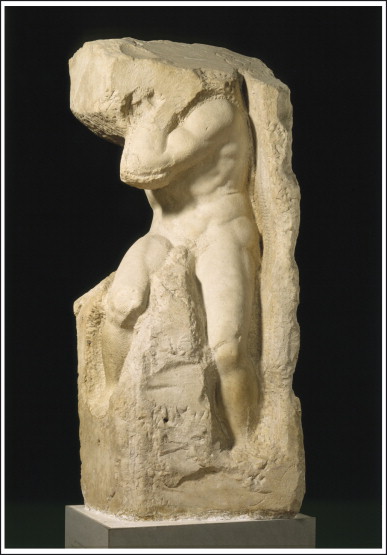 The goal of mindfulness practice is to increase the conditions which lead to our happiness and our freedom. However, the major world wisdom traditions seem to have come to an awareness that full happiness may not be possible in this world and propose different perspectives based on that. The Buddhist tradition’s fundamental teaching is that life has ultimately an unsatisfactory quality to it and that our suffering comes from not recognizing that. The Old Testament believes that we are on this world with a timeless longing deep inside us, which means that we can never fully find a complete contentment here. As the author of the Book of Ecclesiastes puts it He has also set eternity in their heart. From this perspective therefore, there will always be an restless quality to our life here, because there are (eternal) desires in our hearts which cannot be satisfied by the (finite) experiences which we have. This goes against a lot of what advertising and modern society like to tell us, as they place in front of us a succession of created needs. Although both the Buddhist and the Judeo-Christian traditions differ in the way they resolve the problem, they agree in telling us that no person or no thing can ultimately satisfy our deepest longings and that we will not be fully happy unless we realize that. There is an unfulfilled quality which can manifest itself in our relationships, in disappointments in our families, in a job which does not live up to our dreams, in the place where we live seeming poor in comparison to other places and other lives. To be unfulfilled in this way is to be human. Realizing that it has to be so is the first step to genuine peace.
In the torment of the insufficiency of everything attainable, we finally learn that here in this life all symphonies must remain unfinished.
Karl Rahner
 I can not do everything, but I can do something.
I must not fail to do the something that I can do.
Helen Keller.
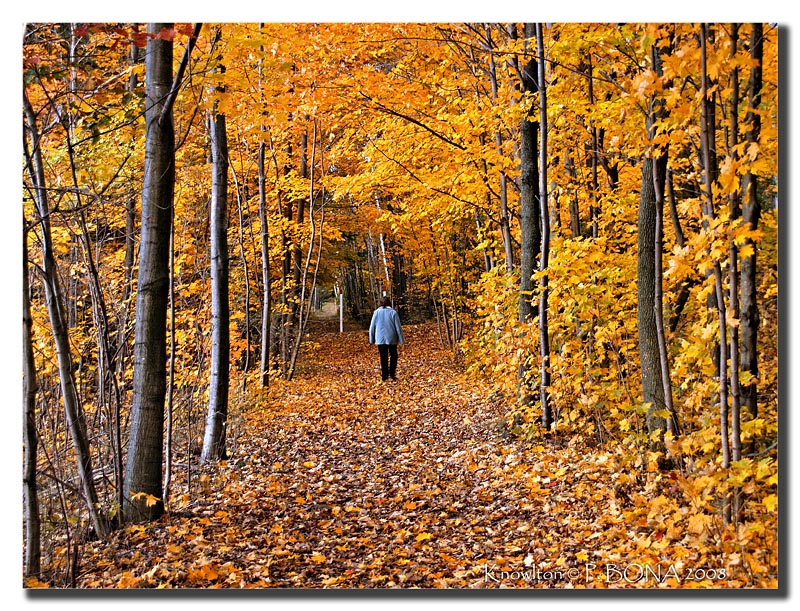 It’s a transformative experience to simply pause instead of immediately filling up the space.
By waiting, we begin to connect with fundamental restlessness as well as fundamental spaciousness.
Pema Chödrön
Someday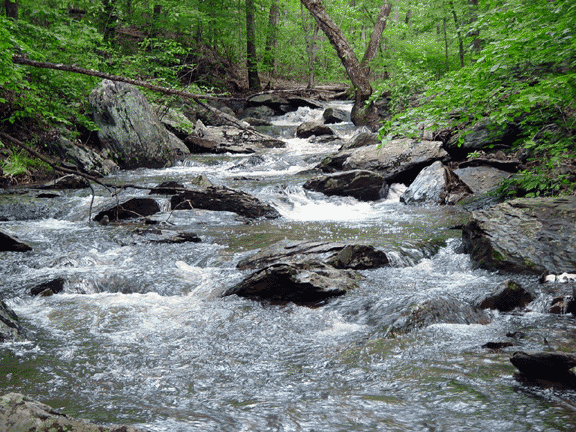 s we find ourselves with confusion in our lives. We are not clear about things or wish for more direction. When that happens I often find that I rush to impose order, in order to make me feel better. But confusion often prompts thoughts, worrying and stories about the future. Staying close to the present moment in nature can ground us and give perspective.
I awoke to the confusion of a new day,
The scraps of dreams, memories of yesterday,
And new cravings creeping onto awareness,
The sun spilling its light over all but the shadows and a cacophony of sound.
From outside and in.
What to make order of? What to let go?
And who makes the choice?
I think I will go down to the river and just watch it flow,
It’s been a long time since I have done
something really important.
David Sluyter
One of the most b eautiful in the English language. In ancient Celtic myths the swan was associated with music, faithfulness and with purity. They frequently symbolized the inner life or the soul. They were especially associated with this time of year and with the Celtic Feast of Samhain, celebrated at the end of October. In the poem they lift off dramatically, migrating and moving on, inspiring us by their beauty but always, ultimately, out of reach.
The trees are in their autumn beauty,
The woodland paths are dry,
Under the October twilight the water
Mirrors a still sky;
Upon the brimming water among the stones
Are nine-and-fifty Swans.
The nineteenth autumn has come upon me
Since I first made my count;
I saw, before I had well finished,
All suddenly mount
And scatter wheeling in great broken rings
Upon their clamorous wings.
I have looked upon those brilliant creatures,
And now my heart is sore.
All’s changed since I, hearing at twilight,
The first time on this shore,
The bell-beat of their wings above my head,
Trod with a lighter tread.
Unwearied still, lover by lover,
They paddle in the cold
Companionable streams or climb the air;
Their hearts have not grown old;
Passion or conquest, wander where they will,
Attend upon them still.
But now they drift on the still water,
Mysterious, beautiful;
Among what rushes will they build,
By what lake’s edge or pool
Delight men’s eyes when I awake some day
To find they have flown away?
 Mindfulbalance