Sometimes we find that we like our thoughts so much
that we don’t want to let them go
Pema Chodron
Sometimes we find that we like our thoughts so much
that we don’t want to let them go
 Gratitude is the sweetest of all the practices for daily life and the most easily cultivated, requiring the least sacrifice for what is gained in return. It is a very powerful form of mindfulness practice, particularly for those who have depressive or self-defeating feelings, and those with a reactive personality who habitually notice everything that’s wrong in a situation.
Practicing mindfulness of gratitude consistently leads to a direct experience of being connected to life and the realization that there is a larger context in which your personal story is unfolding. Cultivating thankfulness for being part of life blossoms into a feeling of being blessed, not in the sense of winning the lottery, but in a more refined appreciation for the interdependent nature of life. It also elicits feelings of generosity, which create further joy. Gratitude can soften a heart that has become too guarded, and it builds the capacity for forgiveness, which creates the clarity of mind that is ideal for spiritual development.
Phillip Moffitt, Selfless Gratitude
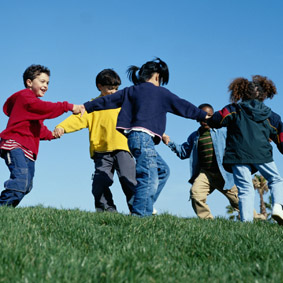
Come out of the circle of time
And into the circle of love.
Rumi
 This Thai text was recently sent to me. It is beautiful in its simplicity. It was chosen to be read at a marriage ceremony and thus can be seen as a guide for a life in friendship together.
ที่สุดของการให้คือ…การให้โดยไม่หวังผล
ที่สุดของทานคือ…อภัยทาน
ที่สุดของความรักคือ…การรักโดยไม่ครอบครอง
ที่สุดของคนคือ…การเป็นคนธรรมดาที่มีความสุข
The ultimate in giving is…to give selflessly without thought of reward,
The ultimate in charity is…to forgive oneself and others,
The ultimate in love is…to love without the will to possess,
The ultimate in being human is…to be contented and live one’s life with love and happiness.
 I was looking at some old family photographs last week. These black-and-white images from when I was a child on holidays capture little moments, frozen for all time. In them I can see myself when I was young and carefree, smiling easily, not observing myself, not wondering how I am doing. Looking at them I easily get back in touch with a time when love was given without complications, a love that was genuine and asked for little in return. Times were simple, and we were simple too. We embraced life – and each other – freely.
Life has changed everyone in this photograph, as it does all people. The naturalness of childhood, with its trust and more open spirit, makes way for the passing of time, for older, supposedly wiser years, for the onset of worries, and for a focus on ourselves and doubts about what once seemed so sure. We grow up, and as we do we become less open, more complicated. We begin to guard and armour the heart, hardening in our attitude towards others and toward life. The sad thing is, we convince ourselves that this is right.
I am sure that everyone reading this has memories like the ones I have when I look at a picture such as this. We all wonder where did all that optimism and openness go? What happened to the love that we gave to others over the years, that we invested with the best of our intentions? All those dreams, that looking forward to something good, to something that would endure for ever, and would be there in good times and bad?
It seems to me that all of us are doing our best in a life story where we are never really sure of the conclusion. A story where we try to live good lives, and be fair to others, and yet still learn that there is a lot of things that are outside our control and where we have to learn through pain and sorrow. And in some cases, the simple openness does not work; we realize that we have to let go and trust in a process that we cannot understand. Why do some things not work out, some good people get ill and die, friends move away and no longer stay in touch? And yet, even if we have been visited by sadness or have been hurt, we keep touching back into that young heart, which believes in the goodness of life and in the power of love and of friendship. We have to move on, holding on to our hopes despite the unresolved aspects of our life and our story. We are asked just to try, and try again, and then again some more. The greatest tragedy would be to let the experiences of life convince us that the optimism and smiles we had as children were completely misplaced.
 Dense and intense emotional reactions can leave us feeling lost and overwhelmed. In these darkest moments, the practice is to bring awareness to the center of the chest, breathing the painful emotions, via the inbreath, directly into the heartspace. It’s as if we were breathing the swirling physical sensation right into the heart. Then, on the outbreath, we simply exhale. We are not trying to do or change anything; we’re simply allowing our heart center to become a wider container of awareness within which to experience distress.
Ezra Bayda, Being Zen
 Mindfulbalance