 If we want liberation, we must rewrite the Sleeping Beauty myth.
No one is coming and no one else is to blame.
Elizabeth Lesser
If we want liberation, we must rewrite the Sleeping Beauty myth.
No one is coming and no one else is to blame.
Elizabeth Lesser
 The basic practice, that underlies all practice, as Pema Chodron reminds us, is learning to stay. It flies against our normal instinct which is to rush towards whatever gives us a sense of security, a sense of ground. I had a lovely talk yesterday with a friend who observed that these days even much of the spiritual path is presented like products to be consumed, something which we feel compelled to get in order to deal with the deep unease within us. We can notice this because they tend to pull us outside ourselves and end up actually increasing our sense of dissatisfaction with how we actually are.
We all follow some strategy for getting away from this deep dissatisfaction within us. Sometimes this strategy can seem quite spiritual, but it is still a seeking for some sense of ground, of stability. This shows that we have a strong fear of not being in control, and do not like not knowing what the future is. However this desire for security is deluded, because the deep truth is that we are never in control. We can never be on hundred percent sure of any thing. That’s how things are and this brings up a lot of panic and fear.
Our practice is to try and relax with this and accept that groundlessness is actually the human condition. This means that we move to accept the fear and panic that comes with it. rather than running away from it.
Do you know which strategies you use to guarantee some sense of safety and familiarity, to avoid facing the fears—of rejection, loss, unworthiness or failure—that lie beneath the surface of your thoughts and actions? For example, do you try to maintain a sense of order and control, to avoid feeling the fear of chaos, of things falling apart? Do you try to gain acceptance and approval, to avoid the fear of rejection, of not fitting in? Do you try to excel and attain success, to avoid the fear of feeling unworthy? Or do you seek busyness, to avoid the deep holes of longing and loneliness? All of these strategies have one thing in common: they keep us encased in our artificial or substitute life.
Ezra Bayda
 God changes appearances every second.
Blessed is the man who can recognize him in all his disguises. One moment he is a glass of fresh water; the next, your son bouncing on your knees, or an enchanting woman, or perhaps merely a morning walk.
Nikos Kazantzakis
 What this means is that we can find our own happiness and peace of mind, just as we are in this very moment, because it is within us.
We don’t have to change our thoughts or change ourselves into someone else.
We don’t need to think that who we are, this “me,” is not good enough, smart enough, or lucky enough to be happy.
Dzogchen Ponlop Rinpoche
 It is the acceptance of death that has finally allowed me to choose life. Elizabeth Lesser
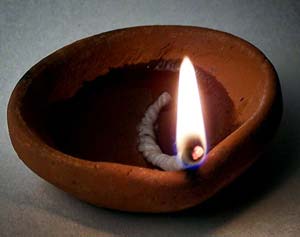
The gospel in this morning’s liturgy is a well known one, reminding us of the need to be always on the alert for the return of the Master. It advises us to “stay awake, for you do not know the day or the hour“. We are urged to “always keep the lamps lit“. Initially understood as a reference to the immanent return of Christ, it became applied to the awareness that life itself is precarious and that sickness and death can strike when we least expect.
This awareness of death can be very real when someone close to us is ill. However, it is also common in different wisdom traditions, including in Catholic and Buddhist practice, to consciously reflect on death and on what legacy we would like to leave behind. The Dalai Lama recommends this as an ongoing practice, reminding us that death is part of life itself and is not bad in itself. He states that his daily meditation includes preparation for death: “Thinking about death not only serves as a preparation for dying and prompts actions that benefit future lives, but it also dramatically affects your mental perspective”
There is another way this morning’s text can be applied to our practice, not referring to the future or to our death. It simply reminds us to be awake , at every moment, to the different ways in which life presents itself, second by second. It is only in the present moment that we can fully be alive, as recent quotes on the blog remind us. We miss so much of life’s richness by not being present, or wishing to be elsewhere. We can often prefer the jabber in our heads or dreaming about some imagined future to the real life that is before us. Our minds love to be busy, running outward toward something they see and want, and then in the the next moment, turning inward toward some thought that feels good or planning for the future. The problem with this busyness, even when we are concerned with important things, is that we are not aware. We are thinking. The wisdom in this gospel text is lost if we use it just to prepare for death. We are called to be fully alert to all the ways that we can love life in each moment by being aware of what is going on.
 We all are bruised reeds, whether our bruises are visible or not. The compassionate life is the life in which we believe that strength is hidden in weakness and that true community is a fellowship of the weak
Henri Nouwen

