Nothing spectacular….just learning to be here.

……Just being totally engaged in the  moment –  that’s arduous enough! I’ve known a number of students over the years who feel like they have to do something spectacular, something more difficult than that. It is plenty difficult, just to continuously bring yourself back to this moment.

Even while driving a car we can space out and drive for miles on the freeway and still make all the right turns. It’s amazing how tuned out we can be, and yet still seem to be functioning — not functioning full well but nevertheless we’re getting by. But we’re spinning in our own thoughts, we’re not really here. So it’s arduous enough to just bring ourselves back to this moment. That’s practice enough for anyone.

And we shouldn’t think there are some special moments for it, such as the times that we spend on a  meditation cushion. Of course there are those moments, but if we split up our life that way – “Here’s my special moment when I go off to sit in meditation” — well does that make any sense? The rest of your life now, what are you doing, just not paying attention?  There doesn’t need to be that kind of a break. And gradually with some maturity of practice some people start to catch on to that and just learn to be here.

Steve Hagan

Deepening your Practice 3: Be aware of the mind’s reactions

Mindfulness is not necessarily concentrating on an object. Being aware of confusion is also being mindful. If we have all kinds of things coming at our senses -noises, people demanding this and that- we cannot concentrate on any one of them for very long. But we can be aware of the confusion, or the excitement, or the impingement; we can be aware of the reactions in our own minds. That is what we call being mindful. We can be mindful of confusion and chaos. And we can be mindful of peace and tranquillity.

The path of mindfulness is the path of no preferences.

Ajahn Sumedho

All things come to an end

One of the more frequently quoted phrases coming from different wisdom traditions is “This too will pass” It is a reminder that we can find contentment in whatever circumstance if we glimpse the truth that all things will not last forever. Change is constant, events, people, health and sickness come and go in our lives, difficult situations will end. It allows us create space between ourselves and the situation and focus instead on why the situation has been presented to us and what we can learn from it.

It’s not always easy to stay balanced but it helps me when I look at the things happening in my life as due to many causes coming together. The wisest way I can respond to them is by working with them and  not struggling with them. This does not mean that I should not fight for the things that I can change or refuse to accept it when others treat me badly. However, at times, there are things that I cannot change. “This too will pass” helps me see that all things have an ending. And when I see that endings can lead to new beginnings, I can endure difficulties more easily and let go of good things without resentment.

Life Dances

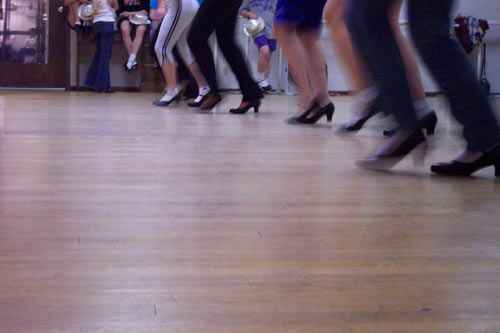
Life dances and you have to dance with it, whether it is taking you on a wonderful ride or is stepping on your toes. This is the necessary price and transcendent gift of being incarnate; alive in a body. But it is just life dancing. Life will move you in the rhythm and direction of its own nature. Each moment is a fresh moment in the dance, and if you are lost in clinging to the past or clinging to your fears of the future, you are not present for the dance.

Philip Moffitt

Within each one of us lies great potential, the potential to relate ot others and this world in a more authentic way.  However, not every potential is fulfilled. Sometimes, it is a fear of change or a fear to take a risk which blocks the development,  creating  a narrowness of attention and a loss of confidence. We can doubt whether we have the strength to do what is before us, or we sometimes can be held back by what others or convention dictates. Courage is needed to reach our full potential and allow situations emerge. Developing our future happiness can demand that we take the risk to engage with our lives.

Every day we unconsciously take refuge in something that we think will offer us security and protection. It can be fear, as it seems better not to reach out or not to try new things.  It is easier to remain in our comfort zone, preferring to avoid possible scenarios. It has been shown that whether we make positive – “approach goals” –  or  mainly negative, – “avoidance goals” –  can lead to the difference between a life that is thriving and a life that is focused on surviving. Often when a future outcome is not clear, the first instinct is to move away. As recent posts stated, we can be dominated by experiences in the past, conscious or unconscious , or the fear of the future. We can get stuck, unable to see the rich, fluid potential of now.

How can we create a space where we’re not trapped by negativity and respond more fully to the richness offered in this moment? We begin by settling the mind, settling the body, and getting in touch with the breath. When we stay in the here-and-now, we can see the stories that arise continually much more clearly. Now is now. There is not another now. If we realize that, we stop putting things off and engage in our life in a more wholehearted way.

Meditation helps our mind to not dwell on what might happen or on what we have lost. If we practice setting our minds on those things all the time, we can miss the fact that each moment is fresh, offering a new start.   In meditation we strengthen confidence in our natural mind, which is limitless. Working in this way reduces the fear of the future, allowing us create ourselves afresh.  We step out onto the floor and take the chance. We accept the other’s hand. We dance. The greatest sadness is not the possibility that we will appear foolish;  it is that we will not get up off our seat.

How you talk about others says a lot about you

We do not see the world as it is, we see the world as we are.
The Talmud

New research carried out at Wake Forest University has found that we reveal a lot about ourselves in the way we talk about others. They found that how positively we speak about others is linked to how happy and emotionally stable we are ourselves. The study, which appears in the July 2010 issue of the Journal of Personality and Social Psychology, found strong associations between how positively a person judges others and then how happy, kind-hearted,  emotionally stable and capable they are described by others.

By way of contrast, negative perceptions of others are linked to higher levels of narcissism and antisocial behavior. As Dustin Wood, Assistant Professor of Psychology at Wake Forest and lead author of the study states,  A huge suite of negative personality traits are associated with viewing others negatively. The simple tendency to see people negatively indicates a greater likelihood of depression and various personality disorders.

Thus our speech about others reveals information about our own characteristics, such as our well-being, and our mental health. Mindfulness helps us be more deliberate in the words we use, by enabling us be more aware of  all the discussions taking place in the committee of voices running our minds. By practicing right speech, this study seems to suggest that we not only help our relationships become kinder. We also change our own level of happiness.

Wood et al, “Perceiver Effects as Projective Tests: What Your Perceptions of Others Say About You”, Journal of Personality and Social Psychology,  July 2010

Stories 2: How the past defines us

More on story and myth, this time from an excellent recently-published Buddhist perspective:

The Buddha taught that,  over time, the unobserved thought settles into character. Character is more than our temperament and personality; it is the fundamental way we see life, including our suppositions, ideas and views of who we are and what life is. When we look out of our eyes we see what we have been conditioned to see, and part of that conditioning is the assumed reality of the person who is having the experience.

Character is reinforced through our narrative, the ongoing story of “me”. We confirm our current reality through the recollection of how we have always been. For instance, if we have assumed a victim mentality from our past, we may have a predisposition to overcompensate and react strongly when we are imposed upon. Our personal narrative reveals our strengths and limitations, and engenders a self-attitude. As our story moves on, each chapter predisposes “me” to behave in a certain way, and though this proliferating tendency was never specified in our early history, the ongoing story gets captured within its momentum.

Rodney Smith, Stepping out of Self-Deception