
An attitude of acceptance

P1000282In the attitude of acceptance we can allow ourselves to be receptive to life rather than try to control it, run away from, or resist it. This receptivity contrasts resistance. Culturally, we tend to be conditioned into resisting things. There is a fear of being open and receptive, as if by doing so we shall allow something to take us over. We feel we have to develop some kind of protection in order to keep ourselves from being annihilated or taken advantage of; it is a kind of paranoia of the mind.

Ajahn Sumedho, Liberating Emotions

Noticing

The important thing is not
To imagine one ought
Have something to say,
A raison d’etre, a plot for the play.
The only true teaching
Subsists in watching
Things moving or just colour
Without comment from the scholar.
To look on is enough
In the business of love.

Paddy Kavanagh, Is

Simply letting things be as they are

The word “becoming” is an innocuous little term. It doesn’t really evoke much of an image or much feeling. But the reality is that it is because of the nature of becoming that we continually experience suffering. It is why we continually experience conflict. It is why we are continually dissatisfied. Becoming is why we continually opt to be scattered, confused and stupid rather than peaceful and wise….We need to able to let go of the fear of not being something, not getting what one wants, not being what one thinks one should be or would like to be or have to be, have to get, have to become. There’s a tremendous, almost primal fear, of actually being peaceful, of really letting go, of putting stuff down, of putting identity down, of putting the compulsions down….to paraphrase Sariputta, “Freedom from suffering is the cessation of becoming.”

Ajahn Passano, On Becomng and Stopping

….in a shifting world

rope_bridgeIt’s often said that consumer society surrounds us with things and encourages us to pay too much attention to things, but in a way I think that’s also misleading. We live in a world that seems to be extremely unstable, to consist of fleeting images. A world that increasingly, thanks in part, I think, to the technology of mass communications, seems to acquire a kind of hallucinatory character. A kind of fantastic world of images, as opposed to a world of solid objects that can be expected to outlast one’s own lifetime. What has waned, perhaps, is the sense of living in a world that existed before one’s self and will outlast one’s self.

Christopher Lasch, Beating the retreat into private life

A solid base…

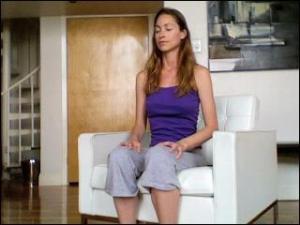
sitting2Our breathing is a stable solid ground that we can take refuge in. Regardless of our internal weather- our thoughts, emotions and perceptions- our breathing is always with us like a faithful friend. Whenever we feel carried away, or sunken in a deep emotion, or scattered in worries and projects, we return to our breathing to collect and anchor our mind. We feel the flow of air coming in and going out of our nose. We feel how light and natural, how calm and peaceful our breathing functions. At any time, we can return to this peaceful source of life.

Thich Nhat Hahn

Different worlds within

If we become addicted to the externals our interiority will haunt us. We will become hungry with a hunger no image, person or deed can still. To be wholesome, we must remain truthful to our vulnerable complexity. In order to keep our balance, we need to hold the interior and exterior, visible and invisible, known and unknown, temporal and eternal, ancient and new together. No one else can undertake this task for you. You are the one and only threshold of your inner world. This wholesomeness  is natural; to befriend the worlds that come to balance in you.

John O’Donohue, Anam Chara.