First Steps in Mindfulness Day 9: Noticing thoughts as thoughts

“This is boring” or “This is not working”, or “I can’t do this”.

These are judgments. Actually they are just thoughts.

It is important to recognize them as judgmental thinking and remind yourself that the practice involves suspending judgment and just watching whatever comes up, without pursuing them or acting in any way

Jon Kabat Zinn

Finding the gap

In our ordinary mind we perceive the stream of thoughts as continuous, but in reality this is not the case. You will discover for yourself that there is a gap between each thought. When the past thought is past, and the future thought has not yet arisen, you will find a gap in which the nature of the mind is revealed: so the work of meditation is to slow down, to make that gap become more and more apparent.

Sogyal Rinpoche,  Glimpse after Glimpse

How love makes us vulnerable

The big challenge through life is not letting our hearts get hardened. We are born into a world where we feel a danger of getting hurt if we allow ourselves be open at our deepest level. So there is a tendency to shy away from this, to armour our hearts, to hide behind our words or our achievements. Or we numb out the pain that comes from our wanting to be seen but are afraid to risk it.  It takes courage to stay open, to tell our story with our whole heart, to step out when there are no guarantees, to stay open to a relationship that may or may not work out, to keep the heart soft and vulnerable.

When I was a child, my grandmother died and was buried in the churchyard in Castlecomer,  Ireland.  The following year I went there on holiday.  One day we drove to visit relatives, I in the back seat with my grandfather.  As we pass the gravelled driveway leading up to the churchyard, my grandfather, thinking he was unobserved, pressed his face against the window of the car and with a small, hidden motion of his hand, waved. It was then I came to my first understanding of the majesty and vulnerability of love.

Herbert O Driscoll, A Doorway on Time

Its not in the future, but here today

Mindfulness encourages us to pay attention and rest in what is happening in the present moment.  However, we often prefer to be elsewhere, or that the present moment be other than what it actually is. What we learn through our practice is the key to finding contentment is to be fully present with whatever we are doing, no matter how ordinary. This realization that the fulness of our lives is right in front of us, and not to be found in the future, is an insight found in all wisdom traditions and leads to true contentment .

The everyday tedium of our lives is the desert we wander, looking for the Promised Land. Our relationships, our work, and all the little necessary tasks we don’t want to do are all the gift. We have to brush our teeth, we have to buy groceries. we have to do the laundry, we have to balance our checkbook. This tedium — this wandering in the desert — is in fact the face of God. Our struggles, the partner who drives us crazy, the report we don’t want to write — these are the Promised Land.

Charlotte Joko Beck

The Secret of health

The secret of health for both mind and body is

not to mourn for the past, worry about the future, or anticipate troubles,

but to live in the present moment wisely and earnestly.

Buddha

Using the weather today as a metaphor for life

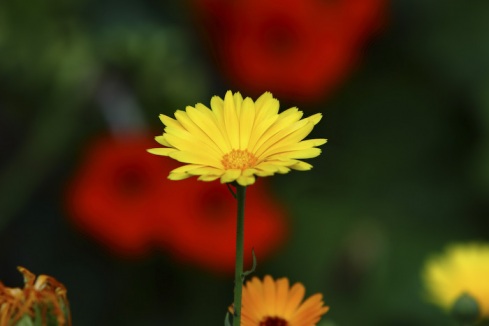
The warmth of the Spring weather this year means that plants and fruits are in bloom ahead of time and any memories of winter is far behind. We can look at the weather and nature today and be reminded of a number of lessons, which help us live our life mindfully:

Spring is a metaphor for transitions. It moves from lifelessness to life and we move from lifelessness to life in each cycle of breathing. If we know change is going to occur we are in a better place to accept it. If we expect things to stay constant we are vulnerable to frustration, disappointment, and resistance.

Spring is also a metaphor for forgiveness. Whatever happened in the last season, life begins anew with no carryover resentment from the past. Spring reminds us, as Pema Chodron says, to start where we are.

Spring shows us the cycle of living and dying on a bigger scale do. Everything comes into being and goes out of being — changing its form.  Spring invites us not to become attached to things, even the most precious things in our life. The invitation is to love things wholeheartedly with the awareness that they will not be with us forever. And, indeed, we, ourselves, will not be here forever. The invitation is to not be afraid to grieve when that grief becomes necessary. Grief is, at times, the admission price to the present moment.

The renewal of spring is the healing from grief, from the inexorable impermanence of things. Spring also demonstrates the tenacity of life and encourages us to persist in whatever we are doing.

So welcome spring and your multifaceted metaphors for mindful living!

Arnie Kozak, on Beliefnet