Present in the midst of change

File:Water-creek-leaves-fall - West Virginia - ForestWander.jpg

How Han-shan Te-Ching (1546 – 1623) came to understand to stay fully present in the moment, not in a perpetual movement of becoming:

When Hanshan got up from his seat and walked around, he did not see things in motion. When he opened the window blind, suddenly a wind blew the trees in the yard, and the leaves flew all over the sky. However, he did not see any signs of motion. He understood what the text spoke of as, “Streams and rivers run into the ocean and yet there is no flowing.”

Step by step

File:Stepping Stones in Japanese Gardens.JPG

The only thing that is ultimately real about your journey

is the step that you are taking at this moment.

That’s all there ever is.

Eckhart Tolle

photo japanese gardens kildare, peter clarke

Perspective

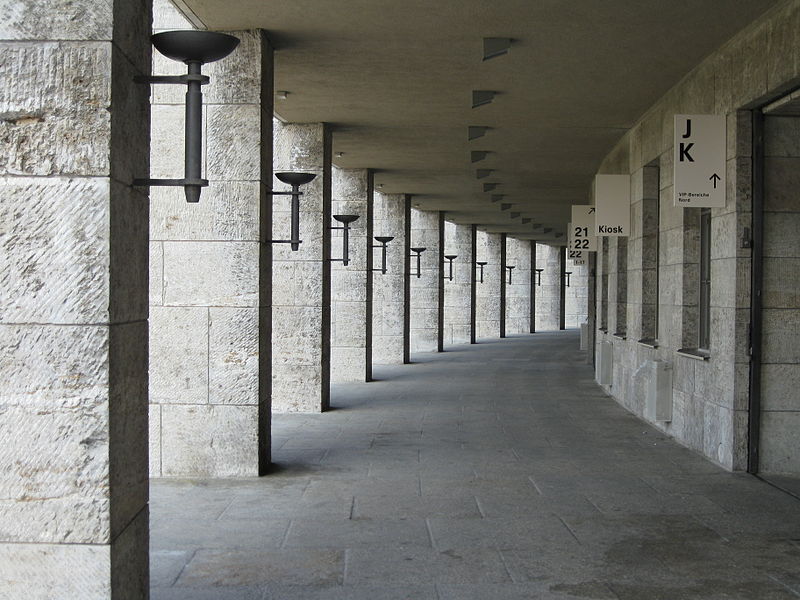
File:2009-04-07 Berlin Olympiastadion 554.jpg

“Is my life meaningful?” When I ask the question this way the perspective is very different. Now my happiness will no longer depend upon my never getting sick, or upon my not getting lonely, or upon my never being misunderstood, or upon my never making wrong choices, or on somehow being exempt from death’s shadow. Life can be frustrating and still be very meaningful. We can be lonely, sick, sorrowful about wrong choices, over-worked and unappreciated, staring old age and death in the face and still experience deep meaning. Happiness will be a by-product of that.

Are my symbols working?  Does my life have a meaning?

The question about happiness comes after that question.

Ron Rolheiser, Happiness and Meaning

Opportunities

File:Frosted leaf - geograph.org.uk - 651482.jpg

There is a simple question that helps me to practice the second step of gratitude: “What’s my opportunity here?” You will find that most of the time, the opportunity that a given moment offers you is an opportunity to enjoy – to enjoy sounds, smells, tastes, texture, colors, and, with still deeper joy, friendliness, kindness, patience, faithfulness, honesty, and all those gifts that soften the soil of our heart like warm spring rain. The more we practice awareness of the countless opportunities to simply enjoy, the easier it becomes to recognize difficult or painful experiences as opportunities, as gifts.

David Steindl-Rast, Awake, Aware and Alert

photo alan murray-rust

Keeping watch

File:Sterkenburg 02.jpg

More on thoughts as constructive or destructive, this time from an early Christian monk who was remarkable for his insights into processes of the mind or heart. His encouragement to be watchful of what thoughts we dwell on and resist negative,  self-critical,  ones, is very similar to one of the descriptions found in ancient texts of mindfulness as a gatekeeper,  and to exercises used in modern Cognitive Behavioural Therapy:

Be the guardian of your own heart and do not let any thought pass through without checking them! Ask each one of them: “Are you from our side or from that of those against us?“.  If they come from your own house, they will fill you full of peace, but if they come from your enemy they will stir up anger and agitate your emotions.

Evagrius Pontius, 345 – 399.

photo guus van der valk

Disapproving

File:Disapproving... (8721304440).jpg

Everyone’s mind likes saying “but.”

Thinking you are doing it wrong, that the conditions of your life stop you from making friends with yourself – these thoughts might get in the way of noticing what it is like to be you. You might disapprove of who you are, but disapproving is just another way of not being here.

In this case, making friends with yourself could mean lowering your standards….

John Tarrant, What’s it Like to be You?

photo Ian Kirk