Do not not freeze possibilities into fixed expectations

The last month of this year begins. Sometimes we can be more conscious of the passing of time, as when we visit home after being away, or go back to a place where we used to live and find that things have changed. We can sometimes find that the event or the return did not live up to what we had looked forward to. Often what happens is that we form fixed ideas or expectations about some things in the future or we look forward so much to seeing someone or doing something that we play out in our minds how it will be. When the actual event turns out differently, we can find that our mood changes. Such expectations are part of a normal mechanism of the mind which thinks that happiness depends on conditions turning out exactly as we imagine or want them to be. We attach our happiness to a fixed expectation, and close out other possibilities. We do it unconsciously many times each day, fixing the manner in which things should turn out. But, as Philip Moffit reminds us here, we are continually changing, and by the time we arrive at any future moment a whole set of conditions have altered. Let us practice today being open to whatever way things happen, not fixing possibilities into determined expectations.

Always the rationalization is the same -“Once this situation is remedied, then I will be happy.” But it never works that way in reality: The goal is achieved, but the person who reaches it is not the same person who dreamed it. The goal was static, but the person’s identity was dynamic.

Philip Moffitt

Choosing to be who we are

Happiness is accepting and choosing life, not just submitting grudgingly to it.  It comes when we choose to be who we are, to be ourselves, at this present moment of our lives; we choose life at it is, with all its joys, pain and conflicts.  Happiness is living and seeking the truth, together with others in community, and assuming responsibility for our lives and the lives of others. It is accepting the fact that we are not infinite, but can enter into a personal relationship with the Infinite, discovering the universal truth and justice that transcends all cultures: each person is unique and sacred. We are not just seeking what others want us to be or to conform to the expectations of family, friends, or local ways of being. We have chosen to be who we are, with all this is beautiful and broken in us. We do not slip away from life and live in a world of illusions, dreams, or nightmares. We become present to reality and to life. We become present to reality and to life so that we are free to live according to our personal conscience, our sacred sanctuary, where love resides within us and we see others as they are in the depth of their being. We are not letting the light of life within us be crushed, and we are not crushing it in others. On the contrary, all we want is for the light of others to shine.

Jean Vanier, Essential Writings

Being alive in each moment

We practice so that every moment of our life becomes real life. And therefore when we meditate. we sit for sitting. We don’t sit for something else. If we sit for twenty minutes, these twenty minutes should bring us joy, life. If we practice walking meditation, we walk just for walking, not to arrive. We have to be alive with each step, and if we are, each step brings real life back to us. The same kind of mindfulness can be practiced when we eat breakfast, or when we hold a child in our arms. Each breath we take, each step we make, each smile we realize, is a positive contribution to peace, a necessary step in the direction of peace in the world.

Thich Nhat Hahn, The Heart of Understanding

All life as practice

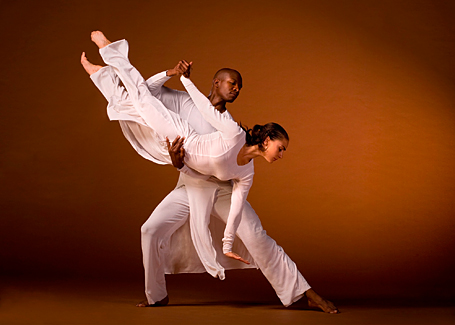
I believe that we learn by practice. Whether it means to learn to dance by practicing dancing, or to learn to live by practicing living, the principles are the same. In each it is the performance of a dedicated precise set of acts, physical or intellectual, from which comes shape of achievement, a sense of ones being, satisfaction of spirit. One becomes, in some arena, an athlete of God. Practice means to perform, over and over again in the face of all obstacles, some act of vision, of faith, of desire. Practice is a means of inviting the perfection desired.

Martha Graham, American dancer and choreographer.

Not seeking elsewhere

Joy isn’t something we have to find.

Joy is who we are if we’re not preoccupied with something else.

When we try to find joy, we are simply adding a thought – and an unhelpful one, at that – onto the basic fact of what we are.

Charlotte Joko Beck

Observing our mental states

Your practice of mindfulness has taught you that it is not your mental states themselves that make you uncomfortable, but your attitude toward them. You may have the idea that mental states are part of your own personality, part of your existence. Then you try to reject the unpleasant ones as if they were foreign bodies. But you cannot really reject them because they were not yours in the first place. Your best response is to maintain a steady practice of observing the mind, without reacting with clinging or aversion to anything that comes up, but skilfully working to free the mind from all unwholesome states. 

Bhante Henepola Gunaratana, Eight Mindful Steps to Happiness