
My most inspiring thought is that this place, if I am to live well in it,
requires and deserves a lifetime of the most careful attention.
Wendell Berry
My most inspiring thought is that this place, if I am to live well in it,
requires and deserves a lifetime of the most careful attention.
Wendell Berry
 Silence, a stilling of not only the voices outside but the inner voices, the roof brain chatter. Now, without the babble or words – inner and outer – I watch my mind, notice when a thought arises. I turn my attention inward, asking, “Who is thinking this thought?” As the mind turns to look, the thinker seems to disappear. But a focus comes from asking, a clearing, a deepening. No “me,” but a presence. Awareness.
When I first worked in a restaurant, I used to daydream of a mute helper, someone who had no interest whatsoever in speaking, She…wouldn’t tell about her plans for vacation, the fights with her mother, the ins and outs of her most recent relationship. In my daydream of a mute helper, I was envisioning a future version of myself, of course. My imagination was sending directions, subtle hints as to how to proceed. How to glimpse the sky, how to open into vastness. The odd thing is that in addition to this sense of spaciousness, I’m starting to feel close to people, to understand and sympathize with them on a new level, to participate in their lives in unexpected ways, to notice those around me as something more than irritants, as subjects rather than objects.

Coming out of the movie, I realized that I want what the crones have: time for all those long deep breaths, time to watch more closely, time to learn to enjoy what I’ve always been afraid of – the sad and the invisibility; the ease of understanding that life is not about doing. The crones understand this, and it gives them all kinds of time – time to get much less done, time for all the holy moments.
 In Italy, today – the Monday after Easter Sunday – is known as La Pasquetta (“Little Easter”) or Lunedì dell’Angelo (“The Monday of the Angel”). Ir is a day for relaxing outside, for going for a walk and having a picnic. It probably has it roots in ancient Spring festivals, when people would gather outdoors to celebrate. It was a day when a journey, a walk, or even a drive in the car had to be made. The religious meaning given to it, at least as it was explained to me, was to remember the journey made by Jesus’ two disciples on the road to Emmaus on Easter Day.
These two disciples set out on Sunday for the village of Emmaus, a walk of a few days. As they were going along, Jesus joined them. They did not recognize him. They were replaying the events of the past – the days of the Crucifixion – and were worrying about what was to happen to them. Their concerns and chatter, their fear-driven desire to run away, did not allow them recognize that God was actually walking with them. In this way, they are just like us, caught in worries about the past, or running away or basing our view of the future on fears. Like us, we often fail to recognize the richness of our life lies in the present moment, when all we can experience is right with us. Often, to be fully alive, all we have to do is see what is being offered to us, right in this moment, rather than thinking our joy lies somewhere else, sometime else. It is sad if we are so focused on getting to a destination, we do not notice what is right beside us now.
The present moment
contains past and future.
The secret of transformation,
is in the way we handle this very moment.
Thich Nhat Hahn, Understanding Our Mind
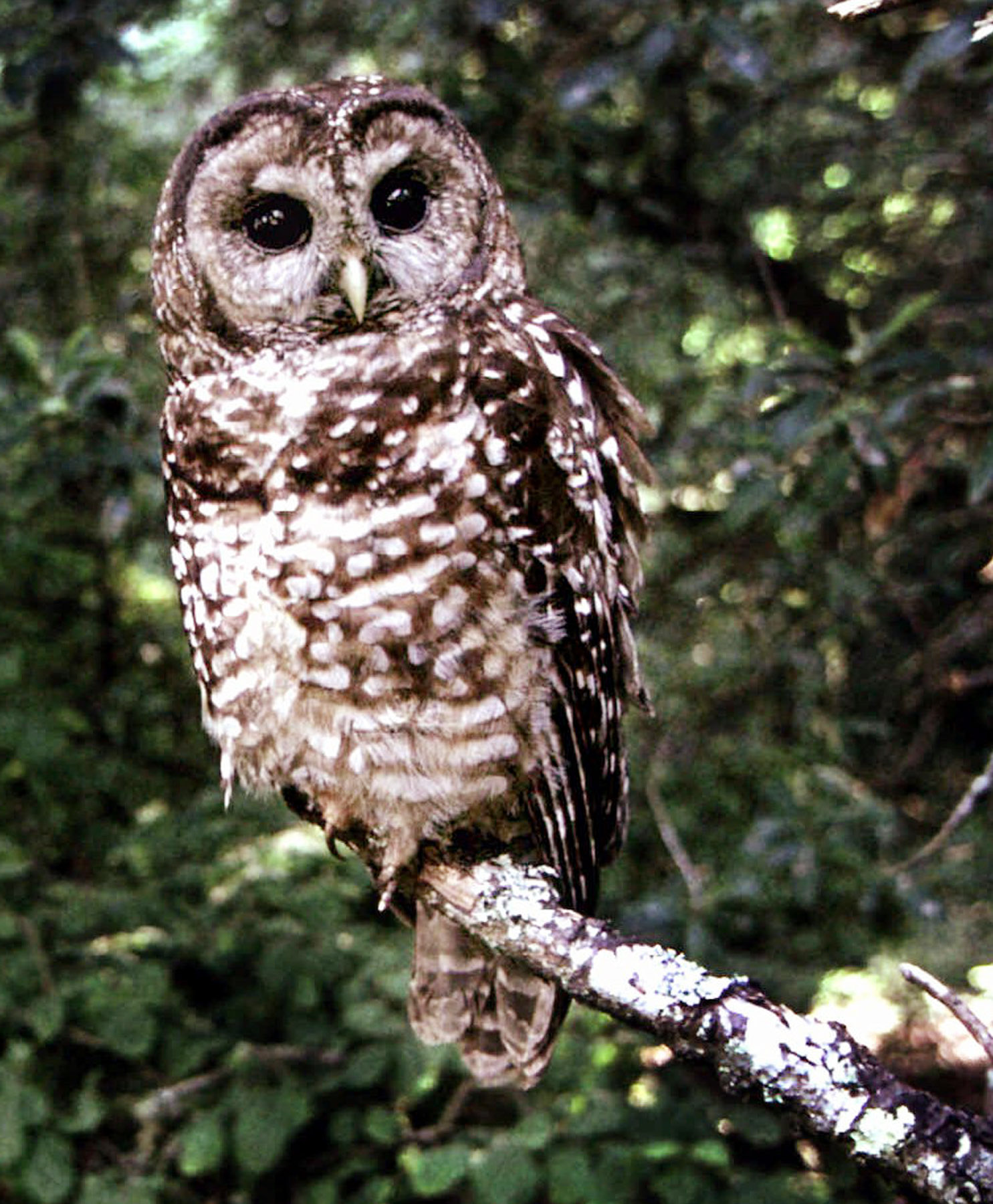 The present moment, like the spotted owl or the sea turtle, has become an endangered species. Yet more and more I find that dwelling in the present moment, in the face of everything that would call us out of it, is our highest spiritual discipline. More boldly, I would say that our very presentness is our salvation; the present moment, entered into fully, is our gateway to eternal life.
Philip Simmons, Learning to Fall
Contemplation is related to art, to worship, to charity: all these reach out by intuition and self-dedication into the realms that transcend the material conduct of everyday life. Or rather, in the midst of ordinary life itself they seek and find a new and transcendent meaning. And by this meaning, they transfigure the whole of life.
Thomas Merton.
 Life is no passing memory of what has been nor the remaining pages in a great book waiting to be read.
It is the opening of eyes long closed.
It is the vision of far off things
seen for the silence they hold.
It is the heart after years
of secret conversing speaking out loud in the clear air.
It is Moses in the desert
fallen to his knees before the lit bush.
It is the man throwing away his shoes
as if to enter heaven
and finding himself astonished,
opened at last, fallen in love with solid ground.
David Whyte

